Hard Krypton has learned that recently, Langsi Technology (referred to as "Langsi") has been selected for the "Industry University Research 1+Program" of the Hong Kong Innovation and Technology Commission, and is expected to receive nearly HKD 100 million in matching funding. At the same time, the company will complete a new round of financing this year to promote its expansion in the energy, semiconductor, and Hong Kong's advantageous industries - life sciences.
Langsi was founded in 2020. As a domestic laser analysis instrument manufacturer that meets WMO standards, Langsi Technology independently develops and produces high-precision laser gas analyzers, gas sensors, laser telemetry instruments and other products based on the accumulation of laser spectral sensing technology at the University of Hong Kong. These products cover real-time online analysis of more than 20 major gas molecules at ppb ppm levels in energy extraction, transportation, storage and ecological environment monitoring. They are mainly used in fields such as oil and gas extraction, pipeline safety, hydrogen energy, ecological environment carbon monitoring, semiconductors, and national major scientific research.
The global market size of laser analysis equipment is close to HKD 43.3 billion per year, with an annual growth rate of 16.6%. But the industry concentration is high, and overseas companies such as ABB and PICARRO have long monopolized technology and markets. As a designated incubation company of the Advanced Laser Spectroscopy Laboratory at The Chinese University of Hong Kong, Langsi is one of the few instrument manufacturers in China that has achieved fully independent technology research and development.
Previously, the conventional detection of hydrogen in domestic hydrogen production processes and hydrogen ammonia mixed combustion could only be achieved through mass spectrometry technology, and the accuracy was limited. Laser online detection of hydrogen concentration remained blank for a long time. In 2022, Langsi controlled the laser light source output to address the weak absorption of hydrogen gas at specific mid infrared laser wavelengths. Subsequently, it developed and produced a laser online hydrogen analyzer through domestic ultra stable cavity technology for signal enhancement. Last year, it completed verification and commercial implementation in multiple key hydrogen energy projects.
Independent technology ensures user oriented product strength. Langsi, who has a background in scientific research, is both an instrument producer and a user. They have noticed that there is a contradiction between the overall integrity of the laser gas analyzer and customized requirements during use, which leads to a ripple effect on the instrument structure. Langsi has innovatively designed the modular laser gas analyzer series MT01, which supports directional disassembly and replacement according to different measurement targets and usage scenarios, without the need to disassemble the entire instrument structure, greatly solving the pain points of "difficult to match" and high cost in the gas analysis market.
MT01 has expanded from the energy industry to online gas detection in the semiconductor wafer processing industry since last year, with a market size of $3.5 billion per year and a growth rate of 19.1%. Compared to safety monitoring in the energy industry, the demand for semiconductors is more inclined towards precision industrial process quality control, involving the detection and analysis of trace etching residual gases such as hydrofluoric acid and hydrogen chloride, with a required sensitivity of 0.1 ppb. At present, Langsi has started cooperation with top domestic wafer fabs.
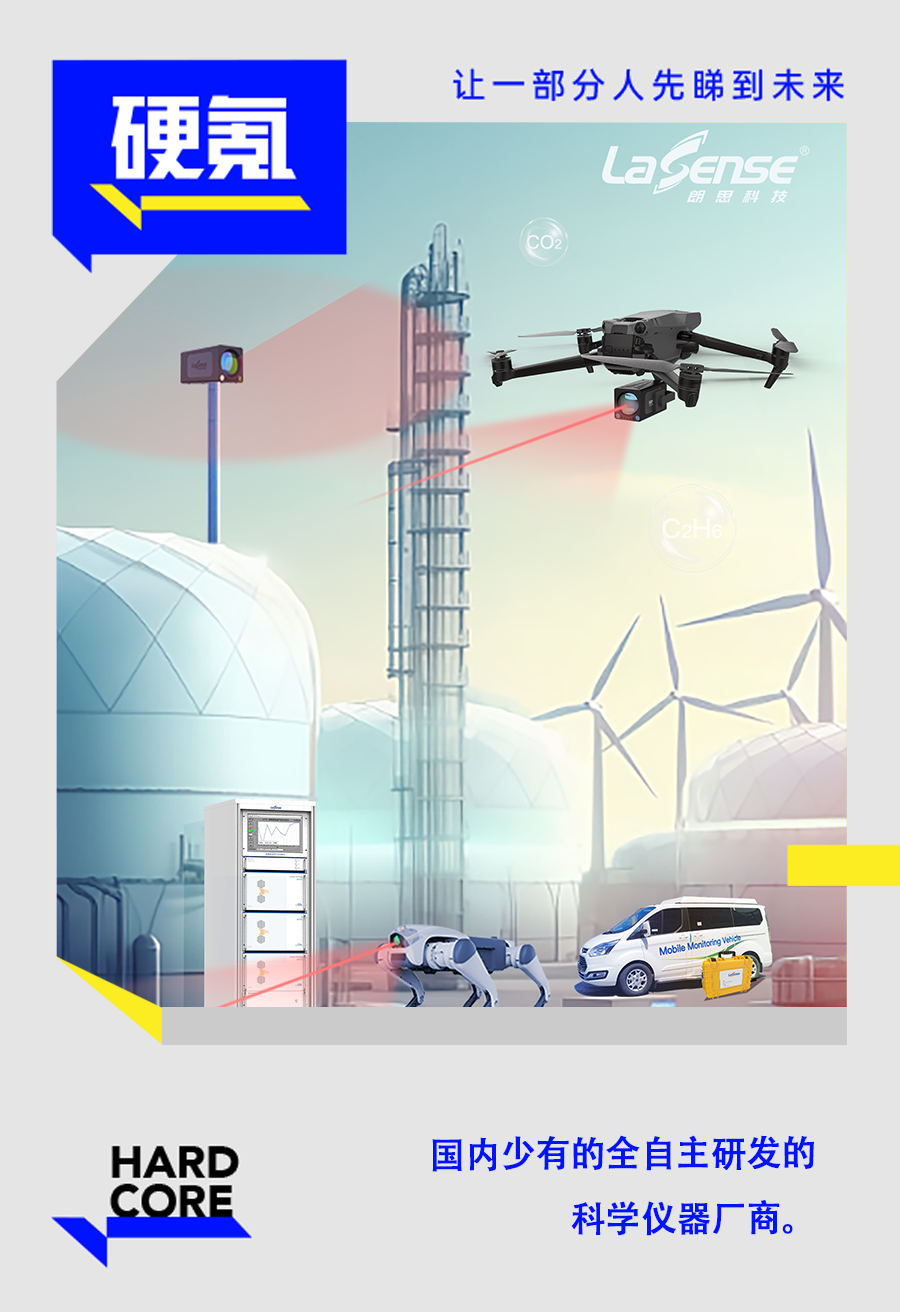
Recently, Langsi has expanded its product layout to the LRS series of laser gas telemetry instruments with long-distance scanning coverage. As a mature market that has been validated in the past five years, the competition in the laser telemetry industry is extremely fierce. Langsi's consideration for entering the market is that the core demand for telemetry instruments has been explored and implemented by the market, and the subsequent "horse race" stage of differentiated product strength is where Langsi's advantage lies. In addition, compared to laser gas analyzers that are expensive due to precise quantification, telemetry instruments that are used in conjunction with industrial gimbals, drones, and other carriers for large-scale, long-distance monitoring focus on product integration, have lower costs, and higher demand, making them an important development path for the industrialization of laser sensing technology.
(Source/Enterprise)
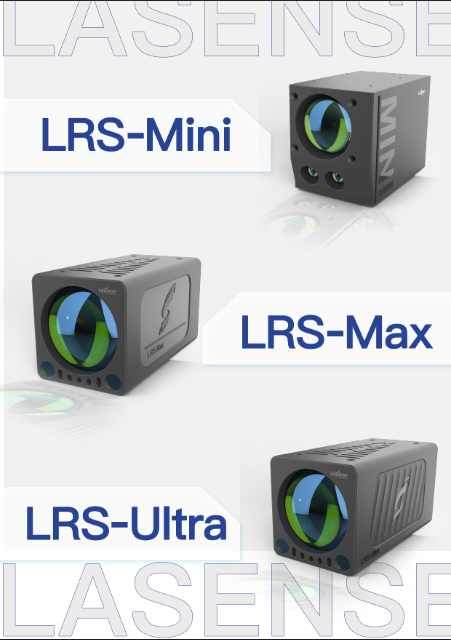
The LRS series has achieved industry breakthroughs in monitoring distance and product weight. At present, it is difficult for laser telemetry products on the market to exceed 300 meters in distance measurement through diffuse reflection. Longfor has extended the effective measurement distance of LRS-ULTRA telemetry instrument to over 500 meters by utilizing the new technology route accumulated in precision instrument research and development and manufacturing. In addition, with the engineering capabilities accumulated during the development of the portable laser gas analyzer NT01, Langsi has compressed the originally nearly 500g telemetry instrument into an ultra small module LRS-MINI weighing less than 80g, matching the lightweight and heavy requirements of unmanned aerial vehicle large-scale inspections in the low altitude economy era.
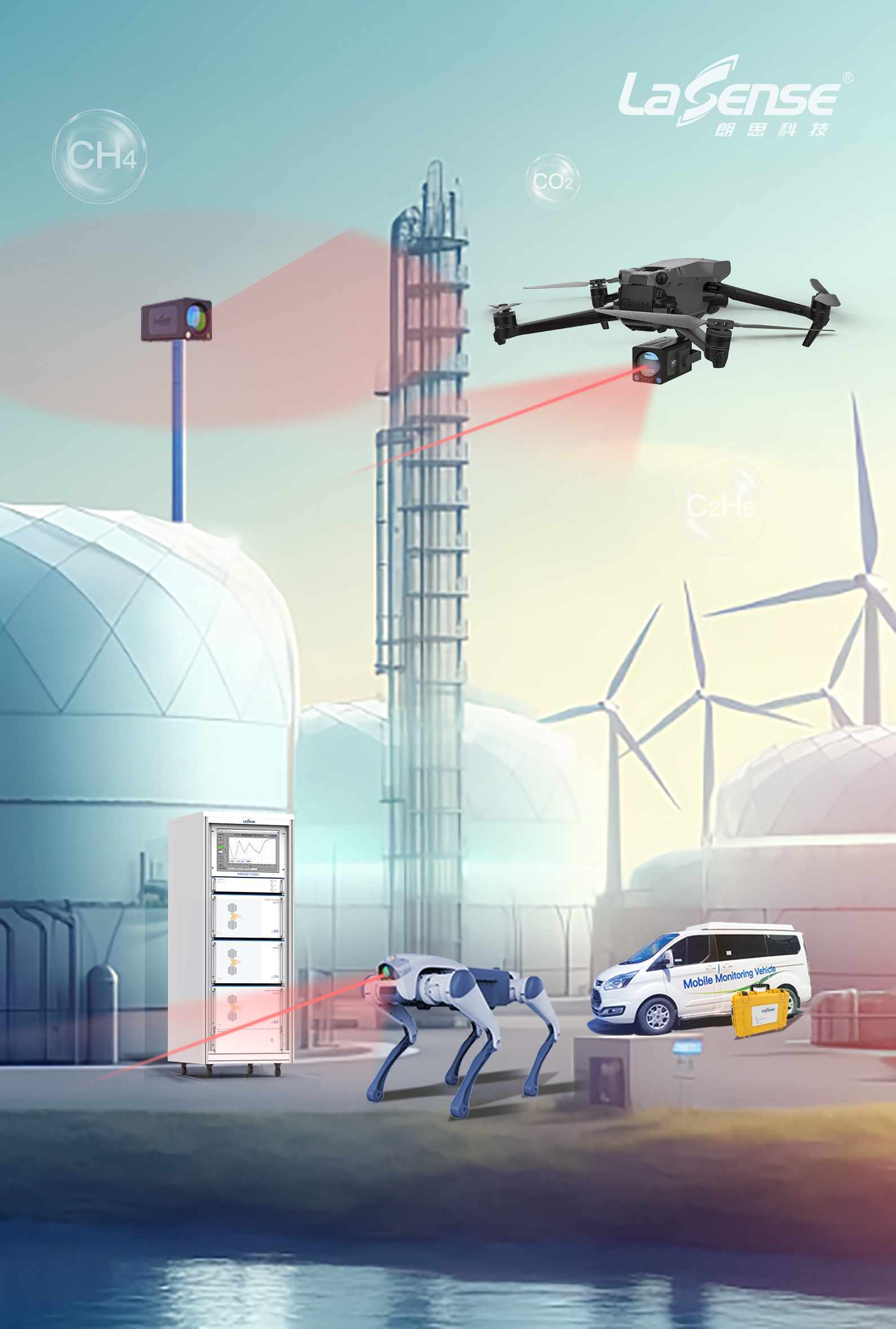
At present, the Longfor LRS series has been put into market application, including cloud platform installation, for online inspection of "leakage" in oil and gas stations or long-distance pipeline networks; Equipped with drones and inspection vehicles, fully automated monitoring of methane leaks in industrial parks and urban gas pipelines.
In addition, the Langsi laser telemetry instrument has innovated the robot inspection function. At present, most inspection robots on the market use point sensors, which are highly dependent on the robot's movement range and susceptible to environmental interference. However, the detection sensitivity of electrochemical sensors is very limited in technology. The laser telemetry instrument extends the monitoring coverage range of robots, and can not only accurately locate, but also perform real-time and quantitative concentration measurement of gases. At present, Langsi has cooperated with leading domestic robot companies, focusing on combining pipeline inspection robots, large-scale event security protection robots, and emergency robots.
(Source/Enterprise)
The successful launch of the laser telemetry instrument has made Langsi one of the few manufacturers in China that provides long-distance gas telemetry and precision analysis instruments. CEO license told Hard Krypton: "In the next two years, the LRS series is expected to quickly contribute more than 50% of the revenue share to Longfor.
The founding team of Langsi comes from universities such as CUHK and Stanford University. Chief scientist Ren Wei studied under Academician Ronald K. Hanson at Stanford, who was one of the earliest explorers of laser analysis of gas substances. After returning to China, he conducted core technology research at the Chinese University of Hong Kong for over ten years and co founded Longfor Technology with his doctoral student license. During the CEO's PhD program, he won the championship of the Hong Kong University Student Innovation and Entrepreneurship Competition and was selected for the Hurun U30 Entrepreneur List after starting his own business.