-
E-mail
Jili@hamilton.ch
-
Phone
13761454369
-
Address
Room 101, Building E, No. 666 Shengxia Road, Pudong New Area, Shanghai
Product Categories
Hamilton (Shanghai) Experimental Equipment Co., Ltd
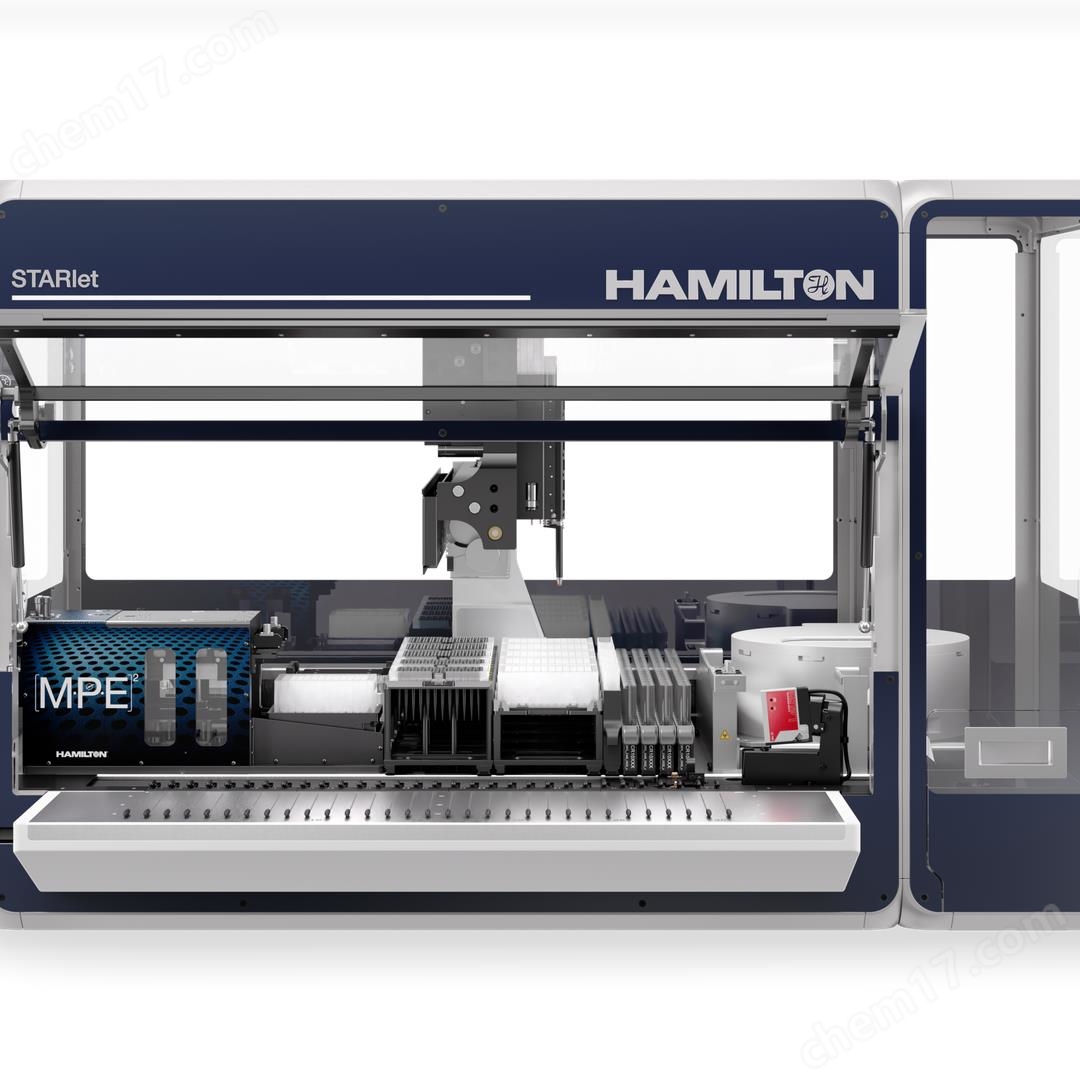
protein science
NegotiableUpdate on 02/08
- Model
- Nature of the Manufacturer
- Producers
- Product Category
- Place of Origin
Overview
Protein science studies the structure, function, and interactions of proteins in biological systems. The research process usually includes protein expression, purification, identification, and quantification. These steps are crucial for characterizing proteins and their roles in cellular processes such as signaling pathways and disease mechanisms.
Product Details
protein science
protein scienceStudy the structure, function, and interactions of proteins in biological systems. The research process usually includes protein expression, purification, identification, and quantification. These steps are crucial for characterizing proteins and their roles in cellular processes such as signaling pathways and disease mechanisms.
The preparation of recombinant proteins occupies a core position in this field and is crucial for the development of biological therapeutic drugs, including monoclonal antibodies and protein vaccines.

exploreHamiltonThe product is crucialprotein scienceApplication in sub fields
protein purification
Deeply explore the protein purification workflow, from automated cell lysis to solid-phase extraction and chromatography.
Protein detection
Explore protein detection methods for quantitative analysis, enzyme activity determination, binding interaction research, and structural analysis.
drug discovery
Innovate the drug discovery process through automation, artificial intelligence, and robotics technology to achieve faster, more accurate, and cost-effective innovation.
Microbial strains and fermentation process development
exploreHamiltonThe integrated48Parallel bioreactor system, equipped with * experimental design(DoE)With high-throughput processing capabilities, it can accelerate the development of biological processes and clone screening.
Cell line development
Accelerate cell line development through automation technology to increase antibody production, optimize high-throughput screening processes, and ensure reliable construction of stable cell lines.
Pre analysis and primary sample processing
Pre analysis and primary sample processing: from specimen collection to stratification and packaging, ensuring the accuracy of the sample preparation workflow.
liquid chromatography-Mass spectrometry combined technology(LC-MS)
exploreHamiltonHow to support liquid chromatography through precise sample preparation and injection solutions-Mass spectrometry(LC-MS)Workflow.
gas chromatography-Mass spectrometry combined(GC-MS)
Explore gas chromatography-Mass spectrometry combined technology(GC-MS)How to achieve precise detection and identification of compounds in various applications.
Dilution and Separation
exploreHamiltonThe dilution and separation solution supports a workflow from manual to fully automated.
protein scienceOverview of commonly used technologies in applications
protein expression
Proteins are expressed in various systems. Glycosylation, molecular weight, and toxicity are factors that need to be considered when selecting an appropriate expression system. Due to its simplicity, its expression in Escherichia coli is still widely used. However, expression or cell-free protein synthesis in eukaryotic systems is becoming increasingly important.
Protein purification and concentration
Effective purification and concentration are crucial for analyzing the produced proteins. The choice of method depends on multiple factors, including protein concentration, post-translational modifications, and biological activity, especially when meeting the requirements of the US Food and Drug Administration(FDA)When waiting for the standards set by regulatory agencies. The common workflow combines multiple steps that are customized based on the characteristics of the target protein, and many laboratories now rely on automated protein purification processes to improve throughput and consistency.
The core purification technologies include:
Chromatographic methods (such as affinity chromatography, ion exchange chromatography, gel permeation chromatography) are used for high-resolution separation.
Precipitation is used for initial enrichment or batch separation.
Filtration and ultrafiltration are used for clarification, concentration, or buffer exchange.
Solid phase extraction(SPE)Especially suitable for the analysis of peptides or small molecule proteins in specific analytical workflows.
Protein characteristic analysis
In order to characterize the produced and purified proteins, various analytical methods will be used based on the specific properties that need to be measured.
The core purification technologies include:
Ligand binding assay (e.g. enzyme-linked immunosorbent assay)(ELISA)Fluorescence resonance energy transfer(FRET))
Activity assay (e.g. kinase activity assay, protease activity assay)
Mass spectrometry analysis (e.g. liquid chromatography)-Tandem mass spectrometry(LC-MS/MS)Matrix assisted laser desorption/ionization-Time-of-flight mass spectrometry(MALDI-TOF MS))
Surface plasmon resonance
Isothermal titration calorimetry
How does protein shape the future of medicine and research?
Proteins play a central role in breakthroughs in medicine, diagnosis, research, and industry. Researchers continuously optimize proteins and enzymes to improve efficiency and explore new application areas. These innovations, with the help of precise tools and automation technology, have driven insulinCas9TheDNAPolymerase and green fluorescent protein(GFP)With the birth of breakthrough achievements, these achievements have become important in medical, diagnostic, and life science researchimportantThe tools. In addition, research on telomerase orP53Proteins and enzymes can provide crucial insights into understanding their physiological functions. These insights lay the foundation for developing next-generation treatment strategies.


