-
E-mail
Jili@hamilton.ch
-
Phone
13761454369
-
Address
Room 101, Building E, No. 666 Shengxia Road, Pudong New Area, Shanghai
Product Categories
Hamilton (Shanghai) Experimental Equipment Co., Ltd

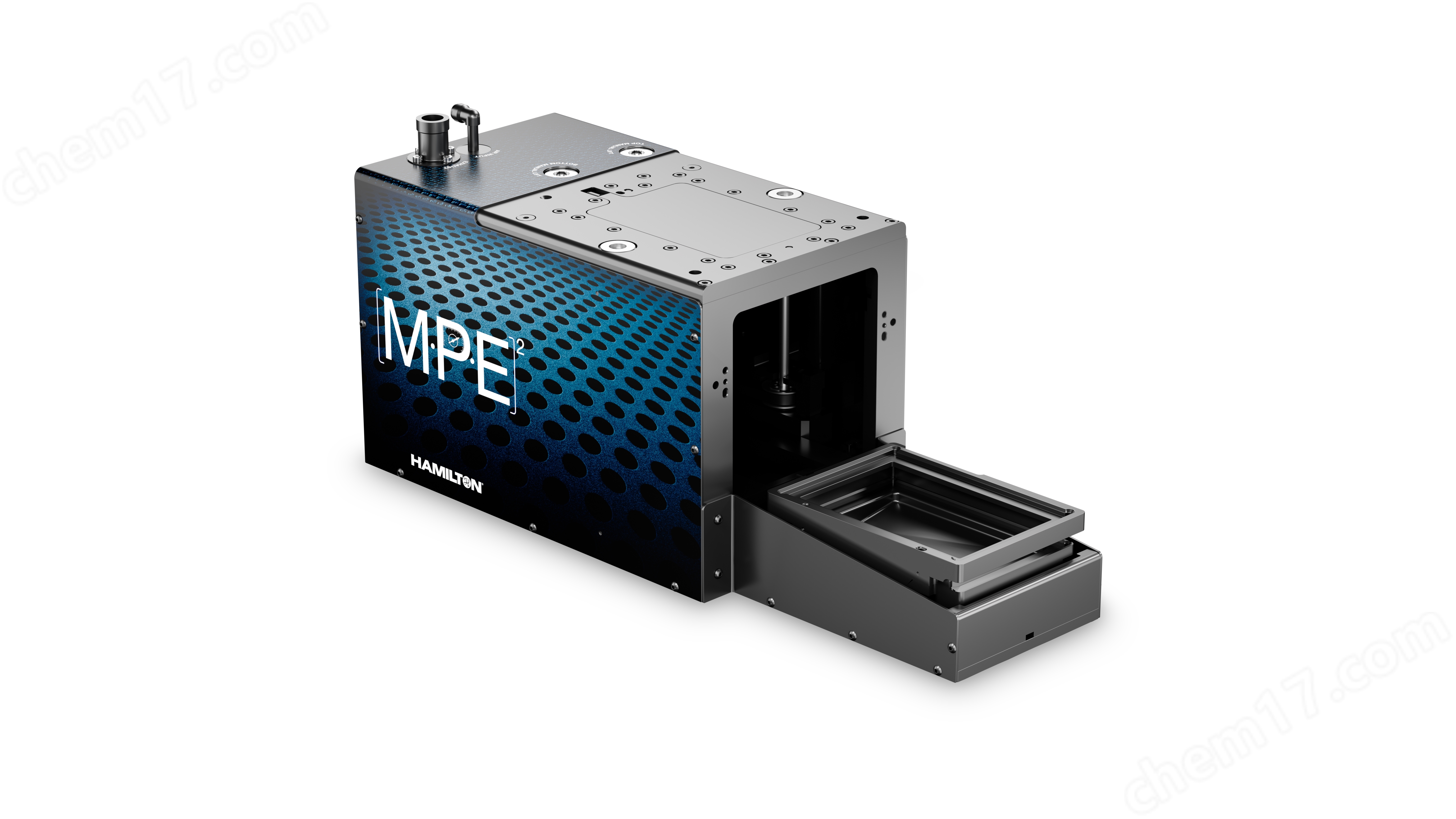
analytical chemistry
NegotiableUpdate on 02/08
- Model
- Nature of the Manufacturer
- Producers
- Product Category
- Place of Origin
Overview
Hamilton provides manual and automated solutions for analytical chemistry, helping them overcome analytical challenges. These solutions are designed for precision, low flux, high flux, and repeatability. Our product has changed sample preparation and chemical analysis by improving efficiency and reliability.
Product Details
analytical chemistry
analytical chemistryCombining scientific discoveries with practical applications to achieve precise quantitative and qualitative analysis. It plays a fundamental role in industries such as pharmaceuticals, clinical diagnostics, food safety, and environmental monitoring. The key technologies include mass spectrometry analysis, spectroscopic analysis, chromatographic analysis, electrochemical methods, and titration. Analytical chemistry supports the needs of various industries in terms of repeatability, efficiency, and compliance with regulatory requirements.
HamiltonHow to support the sample preparation workflow
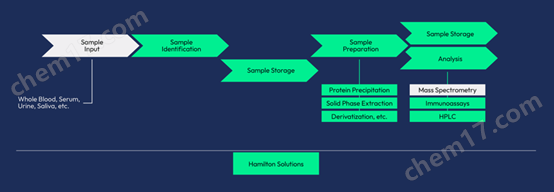
The main steps of the analytical chemistry workflow include:
Sample identification: Ensure that each specimen is correctly labeled and tracked to maintain data integrity and patient safety.
Sample preparation: involving protein precipitation and solid-phase extraction(SPE)And derivatization processes to separate and concentrate target analytes.
Sample storage: Maintain the integrity of the prepared sample under controlled conditions until analysis is performed.
Sample analysis: using mass spectrometry, immunoassay, or high-performance liquid chromatography(HPLC)Waiting for technology to detect and quantitatively analyze target molecules.
HamiltonProvide manual and automated solutions for analytical chemists to overcome analytical challenges, designed specifically for precision, low and high throughput, and repeatability. Our product has changed sample preparation and chemical analysis by improving efficiency and reliability.
We have various analytical chemistry equipment, from manual single channel pipettes to high-performance liquid handling equipment. These tools ensure precise liquid handling for drug monitoring, metabolic research, and quality assessmentHPLCProvide seamless sample preparation for mass spectrometry applications. Solid phase extraction(SPE)The module simplifies the separation of analytes, while the heating oscillation module controls mixing and temperature. The integrated centrifuge and pressure module can automate workflows such as sample stratification or phosphorylated peptide enrichment. *The platform has optimized the workflow of sugar analysis, size exclusion chromatography, and immunoassay to achieve consistent and scalable results.
Overview of Common Techniques in Analytical Chemistry
During the sample preparation process
solid-phase extraction
Solid phase extraction is an important method for separating and purifying analytes from sample matrices. By removing pollutants, the purity of the sample has been improved and the accuracy of downstream chemical analysis has been enhanced.
protein precipitation
Protein precipitation is a sample preparation method used to remove proteins from biological samples, such as plasma or serum, by reducing the solubility of proteins. Analytical chemists aggregate proteins and precipitate them from a solution by adding organic solvents (such as acetonitrile or methanol), acids, or salts.PPTCommonly used to minimize matrix effects and improve the detection and quantification accuracy of the analyte.
Filtration and centrifugation
Filtering and centrifugation are basic sample preparation techniques for separating components based on size and density. Filtering removes particles from liquids or gases by passing the sample through porous materials to ensure sample clarity and prevent equipment contamination. Centrifugation uses high-speed rotation to separate components of different densities. In biological and chemical analysis, centrifugation is commonly used to separate solids, proteins, or cellular debris from liquid samples.
In the process of identifying and quantifying chemical compounds
mass spectrometry analysis
Mass spectrometry analysis identifies and quantifies chemical compounds by measuring the mass charge ratio of ions. It provides molecular information by ionizing compounds and analyzing their fragmentation patterns. As one of the most sensitive analytical methods, it supports qualitative and quantitative analysis across industries.
Enzyme linked immunosorbent assay(ELISA)
ELISAIt is an immunoassay technology based on microplates, used for quantitative determination of peptides, antibodies, or small molecules in biological samples.
gravimetric analysis
Weight analysis is a quantitative analysis technique that determines the content of a substance by measuring its mass. It is usually performed after processing steps such as precipitation, filtration, drying, or combustion. Although it is one of the oldest analytical methods in history, it is still known for its high accuracy and reliability.
What are the advantages of automated sample preparation?
Automated sample preparation can improve repeatability, reduce variability, and significantly increase efficiency. By increasing the flux, it eliminates the problem of sample preparation as a key bottleneck in the analysis workflow. In addition, automated sample tracking ensures process transparency, reduces human errors, and meets strict regulatory standards. Automated Solid Phase Extraction(SPE)Technology is crucial for achieving clean, reliable, and high-quality chemical analysis.
HamiltonHow to ensure integration with analytical techniques?
HamiltonThe platform is compatible with analytical instruments and can be used with high-performance liquid chromatography(HPLC)Gas chromatography-Mass spectrometry(GC-MS)Integrate seamlessly with other workflows. This ensures that the laboratory can fully utilize instrument investment while obtaining data quality.VenusThe software can also easily integrate with any laboratory information management system(LIMS)Integration enables comprehensive sample tracking and complete process traceability.
Why is repeatability crucial in analytical chemistry?
Repeatability is crucial for generating reliable, consistent, and scientifically valid results, which play a critical role in meeting regulatory requirements and ensuring data integrity. Automation technology can reduce human errors, standardize workflows, and improve accuracy, thereby ensuring the reliability and comparability of analysis results.
The main types of analytical chemistry:
Analytical chemistry can be roughly divided into two categories: qualitative analysis and quantitative analysis.
Qualitative analysis: Identifying chemical properties
Qualitative analysis mainly focuses on identifying the chemical composition, structure, and reactivity of substances. This process often uses techniques such as spectroscopy or chromatography to detect components in complex matrices, identify post-translational modifications, or analyze protein folding structures.
HamiltonAutomated systems can simplify the sample preparation process and seamlessly integrate with *'s analytical methods, thereby improving overall workflow efficiency. For example, our automated workflow ensures consistency in sample purification and separation, enabling researchers to obtain accurate analysis results when analyzing various chemical or biological compounds.
Quantitative analysis: measuring chemical composition
Quantitative analysis is used to determine the concentration of chemical components in samples, providing accurate data for quality control, research, and clinical diagnosis. Standard techniques such as gravimetric analysis are used to determine mass, while chromatographic methods are used to separate and quantify substances in complex mixtures.
HamiltonLiquid processing automation solutions can optimize multiple sample preparation methods to meet the requirements of quantitative workflows. Our automated workflow can improve accuracy and increase throughput, ensuring data reliability to meet regulatory compliance requirements and the needs of high-risk applications.


