- Phone
-
Address
289 Fangcheng Avenue
Product Categories
Jiangsu Jiuming Special Steel Co., Ltd


WasPalloy alloy
NegotiableUpdate on 05/06
- Model
- Nature of the Manufacturer
- Producers
- Product Category
- Place of Origin
Overview
WasPalloy alloy is a nickel based superalloys with excellent high-temperature performance and creep resistance, widely used in aerospace, petrochemical and other fields. The heat treatment process includes solid solution and aging treatment to improve strength and heat resistance. In the welding process, it is necessary to control the heat input to ensure the quality of the joint. This alloy is an important high-temperature structural material.
Product Details
WasPalloy alloy
Waspaloy is a Ni Cr Co based precipitation hardening deformation high-temperature alloy, used at temperatures below 815 ℃. Adding cobalt, chromium, and molybdenum elements to the alloy for solid solution strengthening, adding aluminum and titanium elements to form a γ 'precipitation strengthening phase, and adding boron and zirconium elements to purify and strengthen grain boundaries. The alloy has high yield strength and fatigue resistance at 760-870 ℃, and good oxidation and corrosion resistance in gas turbine atmosphere below 870 ℃. It has good processing plasticity and stable microstructure and properties. Suitable for manufacturing parts such as turbine disks, working blades, high-temperature fasteners, flame tubes, shafts, and turbine casings.
Waspaloy corresponding brand:
GH4738, GH864, Waspaloy (USA), NC20K14 (France), W.NR 2.4654,UNS N07001,AWS 170
Overview and Special Requirements of Waspaloy Application:
Suitable for manufacturing turbine discs, blades, and sealing rings for aircraft engines, as well as flue gas turbine blades, turbine discs, and large bolts. This alloy is widely used in the fields of aviation, aerospace, petroleum, chemical, and power generation equipment rotating parts abroad, such as compressor blades, turbine discs, valve bodies, rings, and shaft rotating parts.
Waspaloy superalloy is a kind of nickel base superalloy with excellent high temperature performance and creep resistance, which is widely used in aerospace, petrochemical, shipbuilding and other fields. Its chemical composition mainly includes elements such as nickel, cobalt, chromium, molybdenum, aluminum, titanium, as well as small amounts of elements such as carbon, silicon, and iron. The hardness of Waspaloy alloy is usually between 28-38 HRC, with a density of 8.19g/cm ³.
Waspaloy high-temperature alloy processing technology:
1. Heat treatment: Waspaloy can achieve optimal mechanical properties through solution annealing and aging treatment. Solid solution annealing is carried out at high temperatures to solve the difficulty of solid solution in alloys, and then the properties and microstructure of the material are further controlled through aging treatment.
2. Cutting and Cutting: When cutting and cutting Waspaloy, it is best to use hard alloy cutting tools or hard alloy wire cutting lines, and take appropriate cooling measures to avoid overheating and excessive wear.
3. Forming and forging: Waspaloy can be processed through forming processes such as hot forging, hot rolling, and cold forging. During the forming process, it is necessary to control the deformation temperature and deformation rate of the alloy to ensure the required microstructure and mechanical properties. In addition, due to Waspaloy's high hardness and strength, there are also high requirements for the equipment.
4. Processing: When processing Waspaloy, it is usually necessary to use hard alloy cutting tools and appropriate cutting conditions. Effective cooling and the use of cutting fluid are also important for controlling temperature and extending tool life. At the same time, the heat generated during the processing needs to be dissipated in a timely manner to avoid overheating and loss of material properties.
5. Welding: Waspaloy can be welded using conventional gas shielded welding techniques such as TIG welding and MIG welding. During the welding process, it is necessary to control the welding temperature, weld seam design, and appropriate welding process parameters to ensure the quality and high-temperature performance of the welded joint.
WasPalloy alloyCommon mechanical properties:
Yield strength: typically in the range of 1100-1250 MPa under heat treatment at 25 ℃.
Tensile strength: typically in the range of 1250-1350 MPa under heat treatment at 25 ℃.
Elongation rate: typically within the range of 15-30% under heat treatment at 25 ℃.
Hardness: Under heat treatment at 25 ℃, it is usually around 30 HRC.
Waspaloy 合金化学成分:
Iron Fe: ≤ 2.00
Carbon C: 0.02~0.10
硅 Si:≤0.15
Manganese Mn: ≤ 0.10
Phosphorus P: ≤ 0.015
Sulfur S: ≤ 0.015
Chromium Cr: 18.00~21.00
Molybdenum Mo: 3.50~5.00
Titanium Ti: 2.75~3.25
Boron B: 0.003-0.01
Aluminum Al: 1.20~1.60
Cobalt Co: 12.00~15.00
Copper Cu: ≤ 0.10
Zirconium Zr: 0.02~0.08
Performance characteristics of Waspaloy alloy:
Excellent mechanical properties, especially below 980 ℃
Excellent corrosion resistance and oxidation resistance
Suitable for gas turbine operation in high-temperature environments
Waspaloy alloy still has considerable strength and oxidation resistance in the temperature range of 760-870 ℃, making it suitable for gas turbine engine working environments up to 870 ℃. Within the temperature range of 620-650 ℃, the creep fracture strength of Waspaloy alloy is significantly better than other alloys. Physical properties of Waspaloy alloy:
Density: 0.296 pounds per cubic inch
Melting point: 2425-2475 ℉
Based on the above information, the following two questions can be raised and answered:
Question 1: What are the mechanical properties of Waspaloy alloy compared to Q345B steel at high temperatures?
Answer: At a high temperature of 700 ℃, the yield strength of Q345B steel decreases by more than 60%, while Waspaloy alloy only decreases by less than 13%. Therefore, Waspaloy alloy has better high temperature resistance compared to Q345B steel.
Question 2: What are the typical applications of Waspaloy alloy?
Answer: Waspaloy alloy is commonly used in the environment, mainly for components such as blades, seals, rings, shafts, and turbine disks in gas turbines. In addition, Waspaloy alloy is also used to make standard samples for X-ray fluorescence spectrometers and has been applied in some aerospace applications in high-temperature environments, such as the fairing of the TSR-2 supersonic attack aircraft of British Aircraft Corporation.
In summary, Waspaloy is a nickel based superalloys with excellent high-temperature performance and corrosion resistance. It exhibits mechanical properties below 980 ℃ and has good antioxidant properties, making it suitable for service in the environment. Compared with Q345B steel, the mechanical properties of Waspaloy alloy decrease less at high temperatures, only about 13%, demonstrating its excellent high-temperature resistance.
The heat treatment process for Waspaloy high-temperature alloys usually includes solution treatment and aging treatment. The solution treatment temperature is usually in the range of 1095-1175 ° C, and the aging treatment temperature is 760-870 ° C. Appropriate solution treatment and aging treatment can effectively improve the strength and heat resistance of the alloy.
In terms of mechanical properties, Waspaloy alloy has high yield strength and tensile strength, as well as excellent high-temperature durability. At the same time, the alloy also has good oxidation and corrosion resistance, and can maintain stable performance in high temperature, high pressure, and corrosive environments.
In terms of mechanical properties, Waspaloy high-temperature alloy can still maintain high strength and hardness at high temperatures, and has good fatigue resistance and creep resistance. It is suitable for the manufacturing of components that work in high-temperature, high stress, and corrosive environments for a long time.
Waspaloy high-temperature alloy has a wide range of applications, including turbine blades, turbine discs, gas turbine components, aerospace composite materials, petrochemical equipment, boiler components, turbine blades, and other high-temperature and high-pressure applications in aviation engines.
In terms of welding processes, Waspaloy high-temperature alloys usually use special welding processes for high-temperature alloys such as inert gas shielded welding, electron beam welding, or laser welding. Strict control of heat input, welding speed, and subsequent heat treatment processes is required during the welding process to ensure the quality and performance of the welded joint.
Overall, Waspaloy high-temperature alloys have been widely used in aerospace, petrochemical and other fields due to their excellent high-temperature performance, creep resistance and corrosion resistance, and have become important high-temperature structural materials.
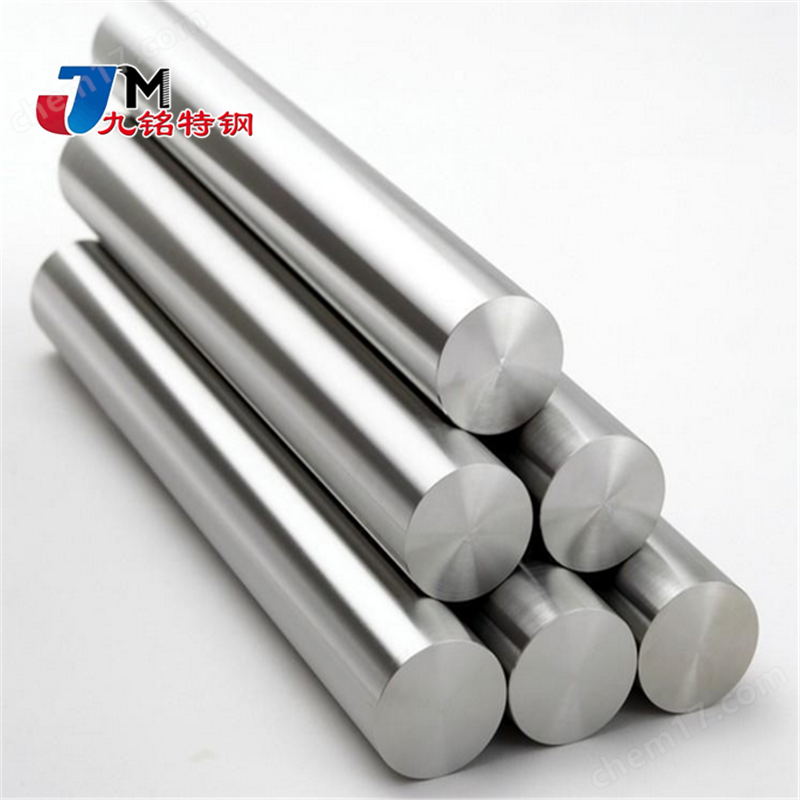
Supply form of this material: plate, rod, tube, steel strip, wire rod, forging, forged tube, forged plate, forged rod, round rod, plate, thin plate, seamless tube, welded tube, round steel, wire, steel plate, coil, strip
