- Phone
-
Address
289 Fangcheng Avenue
Product Categories
Jiangsu Jiuming Special Steel Co., Ltd
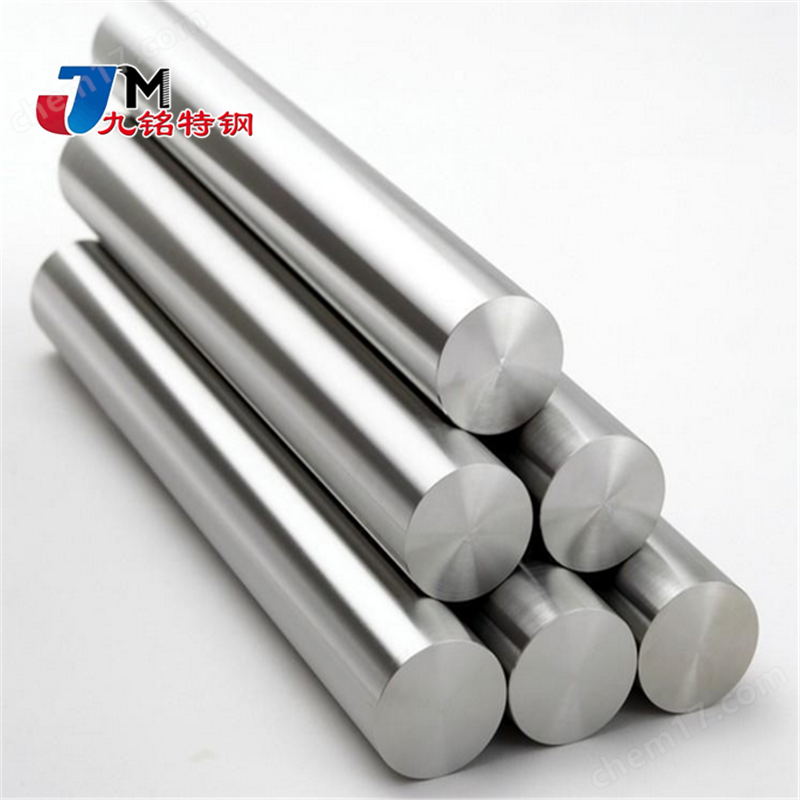


2.4686 corrosion-resistant alloy round steel
NegotiableUpdate on 05/06
- Model
- Nature of the Manufacturer
- Producers
- Product Category
- Place of Origin
Overview
2.4686 corrosion-resistant alloy round steel is a corrosion-resistant alloy with a very low silicon carbon content. It is mainly resistant to wet chlorine, various oxidizing chlorides, chloride salt solutions, sulfuric acid and oxidizing salts, and has good corrosion resistance in low and medium temperature hydrochloric acid. Therefore, it has a wide range of applications in harsh corrosive environments, such as chemical, petrochemical, flue gas desulfurization, pulp and paper, environmental protection and other industrial fields.
Product Details
2.4686 corrosion-resistant alloy round steel
1、 Material and Chemical Composition
ASTM B575, ASME SB575 2.4686 is a nickel based alloy that typically follows the chemical composition standards of ASTM B575. According to ASTM B575 standard, the chemical composition of 2.4686 alloy includes elements such as nickel (Ni), molybdenum (Mo), chromium (Cr), and iron (Fe). Specifically, the chemical composition of 2.4686 alloy typically includes nickel (Ni) at around 50-63%, molybdenum (Mo) at around 15-17%, chromium (Cr) at around 14.5-16.5%, iron (Fe) at around 7%, tungsten (W) at around 4.5%, copper (Cu) at around 3.5%, manganese (Mn) at around 1%, silicon (Si) at around 0.08%, carbon (C) at around 0.01%, phosphorus (P) at around 0.04%, and sulfur (S) at around 0.03%. In addition, the 2.4686 alloy may also contain small amounts of other elements, but the content of these elements is usually very low.
In addition to chemical composition standards, 2.4686 alloy also needs to meet other physical and mechanical performance standards to ensure its stability and reliability under specific working conditions. For example, 2.4686 alloy usually needs to meet the requirements of ASTM B575 standard for performance indicators such as tensile strength, yield strength, and elongation.
Overall, the chemical composition standards for 2.4686 alloy are very strict, and manufacturers need to strictly follow the relevant standards in production to ensure that their products meet customer requirements and can perform well in specific working environments.
2.4686 corrosion-resistant alloy round steel
2.4686: In depth analysis of materials, chemical composition, hardness, and application fields
2.4686 is an alloy with excellent corrosion resistance and high temperature performance, widely used in aviation, energy, chemical and other fields. This article will comprehensively analyze the material, chemical composition, hardness, density, heat treatment, mechanical properties, mechanical properties, application fields, and welding processes of 2.4686.
2、 Hardness and density
The hardness of Hastelloy 2.4686 depends on the heat treatment conditions during its manufacturing process. In the solid solution treatment state, the hardness of 2.4686 is usually around the HRC electric temperature. Its density is approximately 8.9 g/cm ³, and compared to other high-temperature alloys, 2.4686 has a relatively high density.
3、 Heat treatment
Heat treatment is a key process that affects the performance of 2.4686. By appropriate heat treatment, the microstructure of materials can be optimized and their mechanical properties can be improved. Common heat treatment methods include solution treatment and aging treatment, which help to strengthen the tensile strength and yield strength of 2.4686. The selection of temperature, time, and cooling method for heat treatment is crucial for the final performance of materials.
4、 Mechanical Properties and Mechanical Properties
Alloy 2.4686 has mechanical and mechanical properties. Its tensile strength is usually between 1100-1300 MPa, and its yield strength is between 950-1150 MPa. In addition, 2.4686 also has good fatigue resistance and creep resistance, and can maintain stable performance in high temperature and corrosive environments. These excellent properties have enabled it to be widely used in fields such as aerospace, energy, and chemical engineering.
5、 Application Fields
Due to its excellent high-temperature strength and oxidation resistance, as well as outstanding corrosion resistance, 2.4686 is widely used in aerospace, energy, chemical and other fields. In the aviation field, 2.4686 is used to manufacture high-temperature components of aircraft engines, such as turbine discs, blades, and combustion chambers. In the energy sector, 2.4686 is used to manufacture key components in high-temperature furnace tubes, steam generators, and nuclear reactors. In the chemical industry, 2.4686 is used to manufacture equipment such as high-temperature reactors and pipelines.
6、 Welding process
Welding is an important process for connecting 2.4686 components. Choosing the appropriate welding method (such as tungsten inert gas arc welding, melting electrode argon arc welding, or laser welding) and preheating and post heat treatment as needed can reduce the possible occurrence of cracks and heat affected zones during the welding process. After welding, non-destructive testing should be performed on the weld seam to ensure its integrity.
Summary: As an important engineering material, the performance of 2.4686 directly affects the reliability and lifespan of industrial equipment. By gaining a deeper understanding of its material, chemical composition, hardness, density, as well as its heat treatment, mechanical properties, and application areas, we can better utilize this material and improve the stability of equipment in high temperature and corrosive environments. Meanwhile, mastering the correct welding process is also crucial for ensuring the quality of 2.4686 components.
Supply forms of this 2.4686 material: plates, rods, tubes, steel strips, wires, forgings, forged pipes, forged plates, forged bars, round bars, plates, thin plates, seamless pipes, welded pipes, round bars, wire materials, steel plates, coils, and strips

