-
E-mail
360091932@qq.com
-
Phone
13439993923
-
Address
B802-002, 8th floor, north side of Guangyang Street, Changyang Town, Fangshan District, Beijing
Product Categories
Beijing Pinzhi Chuangsi Precision Instrument Co., Ltd



Super Depth of Field Microscope System
NegotiableUpdate on 01/11
- Model
- Nature of the Manufacturer
- Producers
- Product Category
- Place of Origin
Overview
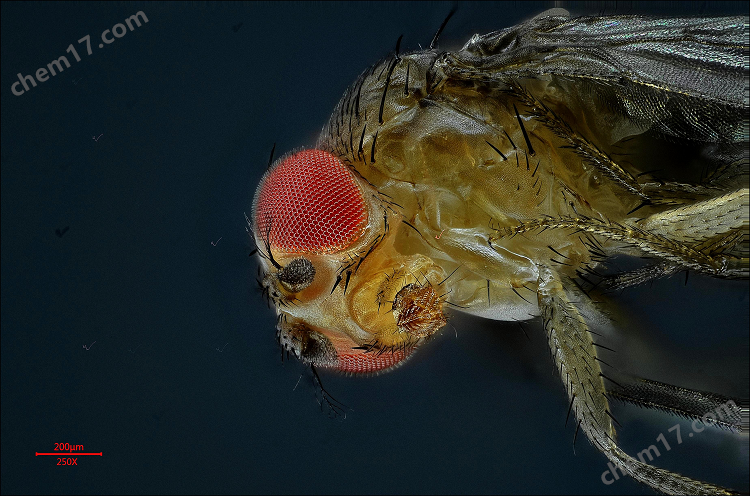
The super depth of field microscope system is a high-performance microscopy imaging system that combines depth of field extension technology and 3D reconstruction, mainly used in the fields of chemistry, materials science, and chemical engineering. The system achieves high-resolution and large depth of field imaging through techniques such as focus scanning and optical transfer function adjustment, with a maximum magnification of up to 50000 times in maximum mode. Its portable structure and handheld analytical capabilities are suitable for on-site observation in experiments such as cement concrete and soil environment analysis.
Product Details
Super Depth of Field Microscope SystemIntroduction of
The multi angle photography microscope of the super depth of field video material analysis system is an analytical instrument that integrates optical technology, photoelectric conversion technology, and electronic display technology. Its core feature is to combine stereo microscopy technology with metallographic microscopy technology, break through the depth limit of traditional optical microscopes, and achieve three-dimensional spatial imaging function. The system utilizes circular illumination technology and parallel light path zoom system, and has multiple functions such as 3D morphology imaging, particle size measurement, height and width measurement. Mainly used in fields such as earth science research, observation of biological samples, surface analysis of cultural relics, and precision testing in the electronics industry.

Super Depth of Field Microscope Systemparameters
Sensor: 24BIT true color CCD, daylight/light type, D65 light source calibration
Optical system: CFS multifocal converging optical system
*Output pixels: 2K (1920X1080)/4K (4325X2430)
Horizontal resolution:>2000 TV lines
Sensor type: HP CCD (line scan)
Data type: True color 24Bit R × G × B × 8
Target size: 1/2 inch
Scanning method: line by line scanning
Spectral response: 400nm~1000nm (supporting fluorescence microscopy system)
Sensitivity: 1.0V/ lux-sec@550nm
Scanning method: line by line scanning
White balance: high-speed automatic tracking+manual
Exposure time: adjustable automatically or manually (38 milliseconds -5000 milliseconds)
Color mode: Black and White/Color
Contrast: manually or automatically adjustable
Gamma value: manually or automatically adjustable
2. Interface and ruler standard C-MOUNT interface is built-in, which can connect any conventional microscope. The 0.01mm calibration ruler enables accurate quantification of the microscope system
Two high and low magnification optical lenses (optical amplification part)
2.1 Optical lens assembly integrated coaxial lens body and PZ-WN-YH400L low magnification lens
*Optical zoom ratio: 12:1
Magnification method: Continuous magnification while maintaining a constant working distance
Working distance: WD 80mm (constant working distance)
*Magnification factor: 24X (MIN) -280X (MAX), continuously variable magnification
Field of view: 12mmx8mm - -------1mmX0.75mm
*Magnification method: electric magnification, intelligent recognition display of magnification
*Coaxial optical path: already installed in the main optical path
Lighting mode: Supports ring lighting/oblique incidence lighting/coaxial lighting
2.2 PZ-WN-YH400C integrated coaxial high-power objective lens group, quick replacement type objective lens

Application of Super Depth of Field Microscope
In the electronics and semiconductor industries, it can be used for observing and measuring burrs in lithium batteries, observing PCB panels, semiconductor gold cakes, tin beads, welding penetration, scratches on LCD screen film, optical films, surface defects on semiconductor silver wires, etc.
In the chemical industry, it can be applied to observe the morphology of fibers, glass cracks, and photovoltaic panel cross-sectional grid lines.
In the metal industry, it can be applied to observe tool fractures, mirror bearings, aluminum tube walls, determine the source of metal fracture cracks, and measure the height of convex points on the surface of metal materials for ships.
In the geological industry, it can be applied to observe prepared geological samples, such as thin slices and polished pieces; Unprepared geological samples, such as microfossils, mineral particles, rock samples, rock cores, microscopic slides, fossils.
In the food and pharmaceutical industry, it can be used to observe the rupture of packaging bags, the surface coating film of tablets, and the identification of tea leaves.
In the life science industry, it can be applied to observe hair scales on the surface of hair, as well as observe plant leaves and insect tissue sections.
Provide a complete solution for ultra deep field microscopes.


Similar Product Recommend


