-
E-mail
kew689@126.com
-
Phone
15805823165
-
Address
www.kw689.com
Product Categories
- In vitro microvascular tension measurement system
- Autonomous activity wheel system
- Rat intravenous self-administration experimental system
- Skinner Experimental Analysis System
- Rotary fatigue tester
- Small animal anesthesia machine
- Animal Behavior Analysis System
- Sleep Deprivation Device
- Small animal treadmill
- Cold and hot plate pain tester
Nanjing Calvin Biotechnology Co., Ltd


Skinner Box Experiment System
NegotiableUpdate on 01/09
- Model
- Nature of the Manufacturer
- Producers
- Product Category
- Place of Origin
Overview
The Skinner Box Experiment System was invented by behaviorist Skinner in 1938 and was used in animal manipulation experiments. The user behaviors that designers need to cultivate may be diverse, but these behaviors have not yet been accepted by users. If you want to cultivate the habit of "paying the price", you need to establish a connection between "cost" and "demand".
Product Details
Skinner Box Experiment SystemSkinner box is a psychological experimental device. Behaviorist Skinner invented it in 1938 and conducted experiments on animal manipulation conditions. Its basic structure: On one side of the box wall, there is a lever (mostly a metal plate) that can be pressed, and next to the lever, there is a small box that can hold food tightly against the small hole on the box wall. Outside the small hole is a food release device, which stores granular food. The animal presses the lever inside the box, and a piece of food falls into the small box through the small hole, which the animal can eat. After fasting for 24 hours, a white mouse was placed in a box and began to explore inside. Occasionally, the lever was pressed to obtain food pills. At first, the white mice may not notice the food falling, but after several repetitions, they develop a conditioned reflex to press the rod for feeding. In the future, there will be some improvements, such as outsourcing soundproof speakers and program-controlled food release devices. It can be tested whether animals can learn to press the lever three times to obtain food, or press the lever at certain intervals to obtain food. The design may vary slightly for different species of animals. This device is actually an improvement on the Thorndike puzzle box, which was later used for psychological research on animal learning ability, self stimulation, and cooperative behavior. The system has adopted electronic circuits, making it more convenient to use.
Skinner Box Experiment SystemIt is a new generation based on network system design, and its advantage is that the Skinner box does not need to be connected by signal lines. When multiple channels work simultaneously, there is no need for wiring and only a power supply needs to be plugged in, making the laboratory simpler as a whole. The device comes with an IoT chip module for automatic networking, allowing users to view the device's working status anytime and anywhere. The software is set up in the cloud, maintenance free, and eliminates the trouble of software updates caused by computer upgrades. The system supports operation on desktop computers, laptops, tablets, mobile phones, and other devices. It can also meet the development requirements of informatization and networking, and achieve a paperless experimental reporting process.
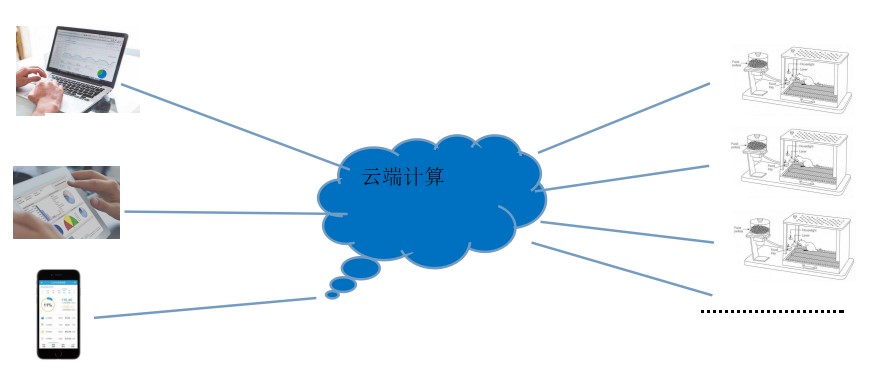
2、 Product features:
1. Multi channel: The number of experimental cages is not limited, allowing for simultaneous experiments in multiple channels
Check device status and data anytime and anywhere: The device can work for a long time, and users do not need to guard it for a long time. They can extract experimental data and assign animal tasks in the office.
Maintenance free device software: As the software is set up on a cloud computer, users do not need to worry about computer upgrades or malfunctions.
Device hardware without connection: The device adopts an automatic networking connection, eliminating the trouble of connecting lines for users, and can be used immediately after startup.
5. Experimental dashboard: capable of monitoring animal operation status, effective and ineffective triggers, as well as feeding frequency, experimental progress, etc
6. Animal management: animal numbers and groups can be added freely
7. Project management: Experimental projects can be added arbitrarily, and experimental attribution can be selected during the experiment.
8. Experimental data: All animal data or individual animal data can be queried, as well as all data for project groups
9. The software provides a pulse frequency chart for animal operation, making it easy to view the frequency chart of animal operation
10. Experimental data can be exported to a computer in Excel format
3、 Technical parameters
1Rat experimental cage animal activity area specification: 310x265x300mm, mouse: 200X200x280mm
2. Overall size of rat experimental cage: 510X290X400mm, mouse: 430x270x400mm
3. Number of channels: 1-256 channels to choose from
4. Animal triggering method: pedal and touch nose optional
5. Particle range of food dispenser: 3-6mm
6. Food dispenser capacity: 170ml
7. Water injection method: Injection pump accuracy 0.01ml (optional)
8. Feeding trigger time: 10ms~9000S
9. Feeding mode: fixed, fixed multiple times, progressive, conditional task multi-mode
10. Equipment working power supply: 12V2A
11. Adapter power supply: 100-240V/50Hz
12. Pedal size: 40X40mm for rats and 25X25mm for mice
13. Conditional signal, cage light, red light, green light, yellow light
14. Number of pedals: 2
15. Each channel has an independent pulse signal recording line, making the animal operation process clear at a glance.
4、 Software:
1. Experimental dashboard: capable of monitoring animal operation status, effective and ineffective triggers, as well as feeding frequency, experimental progress, etc
2. Animal management: Users can add and delete animal groups, animal quantities, etc
3. Project management: A system can add multiple experimental projects
Similar Product Recommend


