-
E-mail
hndshimo@163.com
-
Phone
18006769399
-
Address
Beicheng Development Zone, Beicheng Street, Huangyan District, Taizhou City, Zhejiang Province
Product Categories
Taizhou Hongnaide Carbon Products Co., Ltd
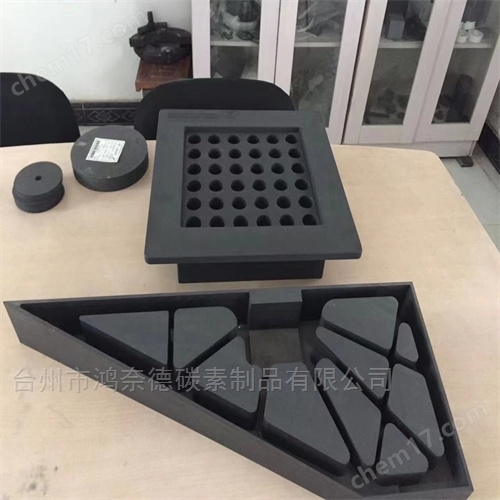


SGL graphite R5500 graphite piece graphite block
NegotiableUpdate on 12/15
- Model
- Nature of the Manufacturer
- Producers
- Product Category
- Place of Origin
Overview
Sigli graphite R5500 graphite piece graphite block, especially in the semiconductor packaging process, uses graphite fixtures to carry and fix semiconductor chips to ensure stable bonding with other components during the sintering process at high temperatures and specific atmospheres.
Product Details
SGL graphite R5500 graphite piece graphite block
The heater is a very important component in the thermal field. It is a direct heating element. The highest temperature can reach over 3000 degrees. There are three common shapes of heaters: cylindrical, cup-shaped, and spiral.
The heater is a very important component in the thermal field. It is a direct heating element. The highest temperature can reach over 3000 degrees. There are three common shapes of heaters: cylindrical, cup-shaped, and spiral.
The shape of monocrystalline silicon heaters in contact with graphite is usually straight. Usually, heaters are treated with high-purity graphite.
The function of graphite electrodes is to stabilize the heater and directly heat it through graphite.
Therefore, the electrode should be thick, sturdy and durable, and the surface should be smooth and stable to ensure good contact with our surface. There are no sparks when the power is turned on. Graphite electrodes are also treated with high-purity graphite.
The crucible support rod, crucible, and tray together form the support body of the graphite crucible. Require a firm connection with the lower shaft and good neutrality. When the lower axis rotates, the swing of the support rod and tray is less than or equal to 0.5 millimeters.
What is a graphite heater? 5 key points
Graphite heater is a specialized heating element made of high-purity carbon composite material.
It is renowned for its excellent thermal performance and chemical resistance.
These components are widely used in high-temperature applications, especially in vacuum furnaces used for processes such as quenching and brazing.
Compared with traditional heating elements, graphite heaters have multiple advantages, including better temperature uniformity, service life, mechanical strength, and repeatability.
Graphite heaters are designed to operate at temperatures up to 3000 ° C in inert gas environments and 2200 ° C in vacuum environments, making them an ideal choice for a wide range of thermal applications.
5 key points: Benefits of graphite heaters
Material composition and properties
High purity carbon composite material: The graphite heater is made of high-purity carbon composite material, which has excellent temperature uniformity, service life, mechanical strength, and repeatability.
This material selection ensures that the heater can withstand high temperatures and pressures without degradation.
Heat and chemical resistance: Graphite is known for its thermal and chemical resistance, making it an ideal material for a wide range of thermal applications.
It is less susceptible to thermal shock and will not degrade due to frequent heating and cooling cycles.
Design and operational features
Circular edges and appropriate spacing: The design of graphite heating elements includes circular edges and appropriate gap spacing to reduce gas ionization at high temperatures.
This design feature increases the expected lifespan and maximum achievable temperature of the heater.
Unique power connection: The power connection of the graphite heating element adopts a unique conical fit instead of a threaded nut.
This design simplifies the disassembly and installation of heating elements, making maintenance easier.
Application and advantages
Vacuum furnace: Graphite heating elements are becoming increasingly popular in vacuum furnaces used for general heat treatment processes such as quenching and brazing.
Due to improvements in materials and manufacturing technology, the use of graphite heating elements has surpassed that of molybdenum heating elements.
Durability and Wear Resistance: Graphite heating elements are more durable than molybdenum heating elements and more resistant to operational accidents, such as accidental breakage or spillage of brazed alloys.
They have lower thermal mass than the previous generation of graphite rods or graphite strips, resulting in higher efficiency.
Precautions and limitations
Volatility in a vacuum environment: Graphite is prone to volatilization in a vacuum environment, forming a carbon environment.
This may be a limiting factor for some materials that cannot be processed in a vacuum furnace.
Mechanical shock resistance: Although graphite heating elements are only moderately resistant to mechanical shock, they are more durable than molybdenum heating elements.
However, caution should be taken when handling them to prevent damage.
Insulation and support
Graphite insulation: Graphite insulation is used around heaters and provides excellent insulation performance to reduce heat loss.
These materials are made of hard graphite fiber sheets or graphite felt, and the insulation thickness varies depending on the required maximum operating temperature and the size of the hot zone.
Graphite electrode: Graphite electrode is a component that inputs electrical energy into graphite heater, which in turn converts electrical energy into heat.
This setup ensures effective heat generation and distribution within the furnace.
In short, graphite heaters are excellent heating elements made of high-purity carbon composite materials, with outstanding thermal performance and chemical resistance.
They are designed specifically for high-temperature applications in vacuum furnaces, with excellent temperature uniformity, service life, mechanical strength, and repeatability.
Despite their limitations, their advantages make them suitable for various thermal applications.


SGL graphite R5500 graphite piece graphite block
Process analysis and optimization of Hongnaide precision graphite processing
2、 Optimize the precision graphite processing flow
1. Optimize raw material preparation
In the raw material preparation stage, the structure of graphite materials can be made more uniform through fine cutting and classification, improving the quality and efficiency of processing. At the same time, high-quality graphite materials can be used to improve the performance and service life of the product.
2. Optimize processing technology design
In the process design stage, the efficiency and quality of processing can be improved by selecting processing methods and adjusting processing parameters reasonably. For example, a multi pass machining process can be used to improve machining accuracy and surface quality by separating rough machining and precision machining in steps.
3. Optimize processing operations
In the processing operation stage, reasonable selection of processing equipment and tools, optimization of processing technology, reduction of waste and energy consumption, and improvement of processing efficiency and quality can be achieved. For example, new technologies such as high-speed cutting, high-pressure cooling, and liquid polishing can be used to improve the speed and accuracy of machining.
4. Optimize quality inspection
In the quality inspection stage, excellent testing equipment and methods can be used to improve the accuracy and efficiency of inspection. At the same time, a comprehensive quality management system can be established to strictly control each link and ensure the quality and stability of the product.
In short, by analyzing and optimizing the precision graphite processing flow, the efficiency and quality of processing can be improved, costs and energy consumption can be reduced, and the competitiveness of enterprises can be enhanced. At the same time, it can also improve the performance and service life of the product, meeting the needs and expectations of customers.


Similar Product Recommend


