-
E-mail
jingjing.xu@perkone.com
-
Phone
13738004372
-
Address
Building 8, Keliangzhu Technology Park, Zhejiang University, No.1 Jingyi Road, Yuhang District, Hangzhou City
Product Categories
- Rapid viscosity analyzer
- Wheat hardness index tester
- Experimental rice huller
- Grain Quality Tester
- Hammer type cyclone mill (low-temperature type)
- Incomplete grain analyzer (for wheat, corn, soybeans, and rice)
- Incomplete grain analyzer (wheat, corn)
- Rice freshness tester
- Large scale rice huller
- Fully automatic sampler
Hangzhou Peike Ang Technology Co., Ltd

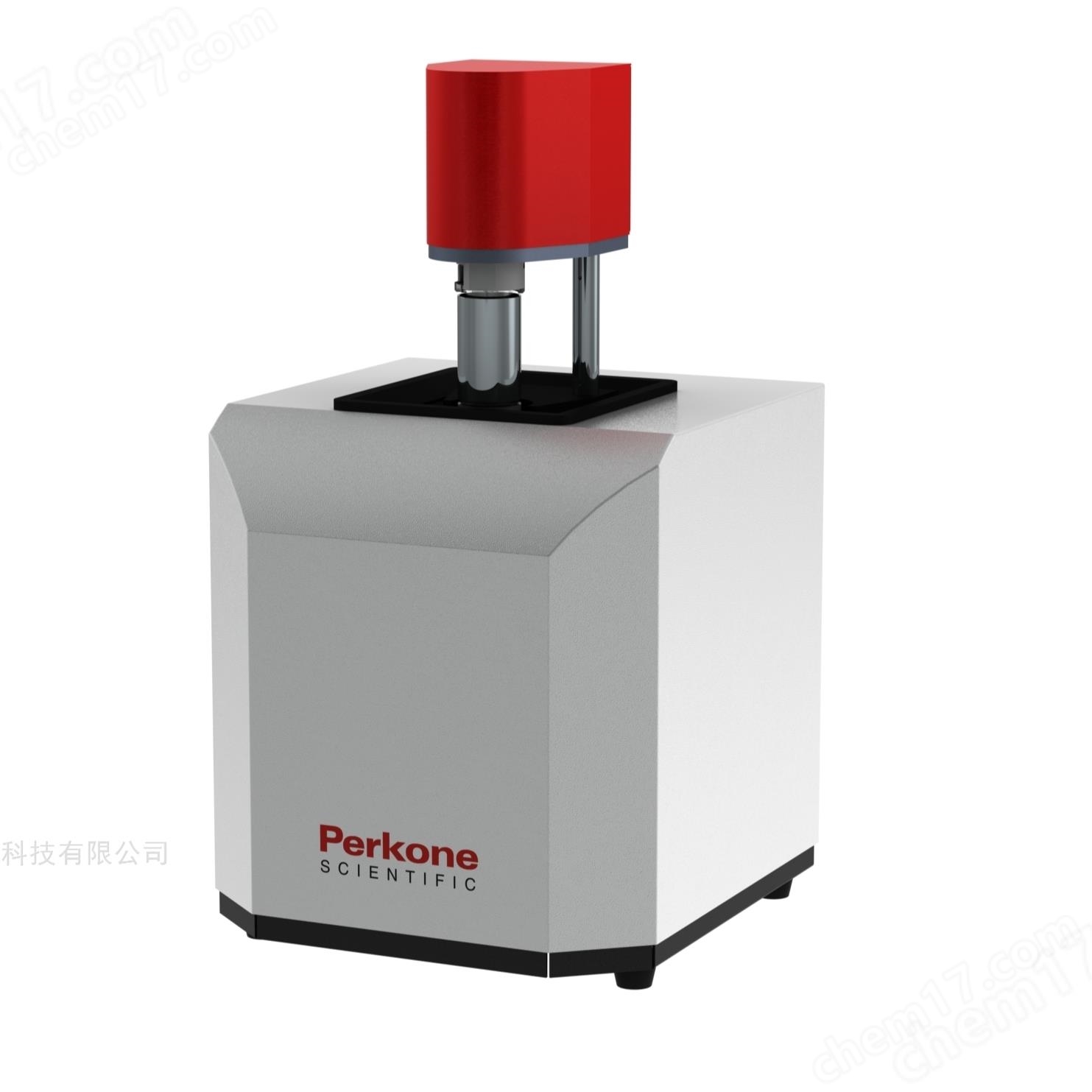
Rapid viscosity analyzer 5290 model
NegotiableUpdate on 01/07
- Model
- Nature of the Manufacturer
- Producers
- Product Category
- Place of Origin
Overview
The 5290 rapid viscosity analyzer is an instrument for quickly detecting the stirring and gelatinization characteristics of starch, suitable for determining the starch quality of grains and crops such as wheat, corn, rice, sorghum, potatoes, lotus roots, etc. It is a rotary viscosity analyzer with programmed temperature control and variable shear force. By connecting a high-resolution torque sensor to the blade, the variation curve of its viscous resistance over time can be accurately measured. Through reliable analysis by software, the viscous changes of the sample under specific conditions can be accurately evaluated.
Product Details
Rapid viscosity analysis 5290 instrumentFeatures:
Adopting an efficient heating and cooling system and a temperature sensor for direct temperature measurement in the sample bowl, the heating and cooling rates are precisely controllable, ensuring the repeatability and accuracy of the test
The special geometric shape of the blade ensures thorough and uniform mixing of the sample, without any starch particle precipitation
Short measurement time, simple and convenient operation
Adjustable speed of rotating sample bowl
High temperature control range
Rapid viscosity analyzer 5290 modelProduct Technical Parameters
1. Power supply: 220-230V, 50Hz;
2. Usage environment: Temperature: 10 ℃ -45 ℃; Relative humidity: 10-90%;
3. Comply with GB/T24852-2010, GB/T24853-2010, GB/T 22427.7-2023, built-in AACC No.61-02 rice pasting properties, AACC No. 76-21 wheat or rye flour, GB/T 24852 rice and Rice noodles pasting properties determination, RVA milk cake powder quality analysis method, RVA cross-linking and substituted starch test method, RVA beer brewing accessories analysis method (enzyme addition and pH), RVA beer brewing accessories analysis method (including starch accessories), RVA rice starch quality test method wheat flour quality determination method, RVA wheat gluten quality test ethanol method, RVA wheat gluten viscosity determination method dilute acid Methods There are at least 40 methods in total, including RVA dry malt quality determination method, STD-1 general RVA gelatinization analysis method, STD-2 general RVA gelatinization analysis method, etc;
★ 4. Use heating copper metal blocks for heating and have overheat protection function;
5. Automatically analyze: peak viscosity, attenuation, retention strength, rebound value, final viscosity, stirring value, gelatinization temperature, corresponding viscosity;
★ 6. Up to 128 test program steps can be designed;
7. Sample dosage: 2-3 grams;
★ 8. Adopting program-controlled heating, the maximum speed can reach 18 ℃/min;
★ 9. Adopting program-controlled cooling with cooling water device, the maximum speed can reach 15 ℃/min;
10. Temperature accuracy: not exceeding ± 0.3 ℃ (under 25 ℃ conditions);
★ 11. Temperature control range: 0~150 ℃;
12. Speed range: computer-controlled, adjustable within the range of 20~10000rpm;
13. Speed accuracy: ± 1% (160rpm);
14. Usage units: cP and RVU;
15. Viscosity range: 20~50000cP (80rpm); 10-25,000 cP(160rpm);
16. Viscosity accuracy: The relative deviation between the average peak viscosity measured by two samples and the average value should be less than or equal to ± 3% (S2000 oil, 5000cP);
★ 17. Tower cap lifting control system: stepper motor controls lifting, lifting speed: 0-10mm/s;
18. Blade rotation control system: brushless motor control;
19. The calculation list includes peak gelatinization temperature, peak viscosity time, corresponding viscosity, final viscosity, decay value regeneration value, velocity area, temperature area, viscosity area, and sets 20 sets of extended analysis results: speed to reach the target temperature, speed to reach the target time, speed to reach the target viscosity, speed to reach the peak viscosity, speed to reach the corresponding viscosity, temperature to reach the target speed, temperature to reach the target time, temperature to reach the target viscosity, time to reach the corresponding viscosity, viscosity to reach the target speed, viscosity to reach the target temperature, viscosity to reach the target time, viscosity at the end of the test, peak viscosity within the time range, valley viscosity within the time range, etc. The results can be selected for addition, and each calculation item has its own result. Explanation; ;
▲ 20. There are no highly harmful substances in the product ingredients, and the test results meet the REACH certification requirements. The solvents used in the production of the sealed product contain highly concerned harmful substances, including but not limited to mercury, polybrominated biphenyls (PBBs), and polybrominated diphenyl ethers (PBDEs), which should not exceed 0.1% of the mass percentage in the product;
21. The software comes with a knowledge base of physical properties, rheology, thermodynamics, electricity, etc., with no less than 100 sets of terminology analysis. The software can search for relevant knowledge analysis of physical properties at any time, and has at least 5 instructional videos and FAQ videos for operation;
22. The software comes with a standard testing method library, including GB, ICC, AACC, ISO, etc., which can be directly called by the software. The methods include specific sample names for testing, preparation methods before sample testing, test parameter settings, experimental curve graphs, and how to analyze results after testing;
23. The software comes with experimental reports, including experimental information, experimental parameters, experimental graphs, and experimental results. The experimental report can be exported with one click and cannot be edited, allowing for experimental traceability;
24. The curve has a playback function, and the color display and data display of the test curve can be selected according to needs;
25. The software interface provides six languages: Chinese, English, Western, French, Russian, and Japanese;
26. The software comes with 20 or more data algorithms, including but not limited to 3D Principal Component Analysis (PCA), LDA, PLSR, 3D SVM, etc. It can perform big data classification methods such as dimensionality reduction analysis and classification analysis;
27. The software has a copyright registration certificate;
28. Equipment result data and curves can be exported to EXCEL, PDF, and integrated into LIMS system;
Supporting equipment: Host1 unit; Consumables: 1 box (200 sets) of testing tanks and mixing blades; One branded computer (8GB memory, 512GB solid-state drive, 21 inch LCD display); One set of data analysis software and one coolant circulation device.