- Phone
-
Address
No. 4-4 East Jianshe West Road, Jinhu Industrial Concentration Zone, Huai'an City, Jiangsu Province
Product Categories
Jiangsu Zhongwei Measurement and Control Instrument Co., Ltd


Quartz glass plate level gauge
NegotiableUpdate on 05/13
- Model
- Nature of the Manufacturer
- Producers
- Product Category
- Place of Origin
Overview
Quartz glass plate level gauge is used for liquid level indication of low-temperature equipment in industries such as chemical and petroleum. A steel ball is installed inside the needle valve of the liquid level gauge. When the glass plate breaks due to an accident, the steel ball automatically closes under the pressure of the container medium to prevent a large amount of medium from flowing out of the container. After the needle valve * is opened, the rear seat sealing structure cuts off the valve liquid chamber from the packing chamber *, preventing direct contact between the medium and the packing to reduce cooling loss.
Product Details
Liquid level gauge series>>ZW-UWBQuartz glass plate (water) level gauge:
1、 Instrument Overview:
Quartz glass plate level gaugeIt can be used to directly indicate the liquid level height in sealed containers, with the advantages of simple structure, intuitive reliability, and durability. However, the medium in the container must not corrode steel, steel paper, and graphite pressure rings.
The upper and lower valves of the instrument are equipped with flange joints, which are connected to the container through a connector. The container and liquid level are directly indicated through a glass plate, and the "jacket type" is equipped with heating or cooling devices. The device can be heated with steam and cooled with circulating water, which can adjust the flow performance. The jacket type connecting pipe has a ZG1/4 internal thread size.
Steel balls are installed inside the upper and lower valves. When the glass plate is damaged due to an accident, the steel balls will automatically seal under the pressure of the container, preventing the liquid inside the container from continuing to flow out.
The upper needle valve of the instrument is equipped with a blocking screw for air release, and the lower needle valve is also equipped with a blocking screw. Can be used for emptying, sampling, discharging, and cleaning.
2、 Measurement principle:
Glass plate level gaugeIt is designed based on the principle of a connector, and the liquid passage composed of the main body is connected to the measured container through a flange or tapered pipe thread to form a connector. The liquid level observed through the glass plate is the same as the liquid level inside the container, that is, the liquid level height. The needle valves at both ends of the level gauge not only serve as shut-off valves, but also have the function of check valves with their internal steel balls. When the level gauge is accidentally damaged or leaked, the steel balls can automatically close the liquid channel under the pressure of the medium, preventing a large amount of liquid from flowing out and providing safety protection. Changing the material of the parts or adding some auxiliary components of the liquid level gauge can achieve functions such as corrosion prevention, insulation, frost prevention, and lighting.
3、 Applicable occasions:
Quartz glass plate level gaugeIt is used to directly indicate the liquid level height in pressure vessels and open containers. Its characteristic is that the indicated liquid level has no blind spots. It changes the shortcomings of the previous blind spot free combination, such as bulky, large volume, and difficult observation. It improves the main channel structure, smooth medium flow, and enhances the anti viscosity and anti blocking ability of the instrument. It is widely used in the fields of petroleum, chemical, power, metallurgy, etc., especially suitable for liquid level indication of heavy oil, residual oil, and pure ammonia storage tanks.
4、 Performance characteristics:
1. Clear display, no blind spots, uninterrupted, continuous indication;
2. No leakage, no blockage;
3. Easy to maintain.
5、 Technical indicators:
1. Measurement range: 300, 500, 800, 1100, 1400, 1700... mm;
2. Work pressure: 6.3MPa;
3. Working temperature: ≤ 200 ℃;
4. Automatic closing pressure difference of valve: 0.2MPa;
5. Steam jacket joint: G1/2 "external thread;
6. Process connection: ZW-UWB type connection thread: external thread G3/4 "or M27 × 1.5;
7. Connection flange: HG20592~20635-97DN20~DIN) Please specify when placing an order;
8. Liquid receiving material: heat-resistant carbon steel; stainless steel
6、 The classification and scope of use of liquid level gauges are as follows:
1. Heat tracing glass plate: mainly used in situations where the measured medium needs insulation;
2. Frost proof glass panel: mainly used in situations where the operating temperature of the tested medium is -196~0 ℃ and the glass is prone to frost formation;
3. Blind spot free glass panel: mainly used in situations where continuous observation is required and blind spots are not allowed within the visible range;
4. Double color glass plate: mainly used in situations where the medium is a colorless transparent liquid and the liquid level is not easy to observe;
5. UV resistant glass panel: mainly used in situations where the tested medium is sensitive to ultraviolet light;
6. Wide liquid chamber glass plate: mainly used in situations where the viscosity of the measured medium is relatively high or where the volume of the instrument is required to be relatively large;
7. Illuminated glass panel: mainly used in places where observation is required at night.
7、 The difference between glass plate level gauge and glass tube level gauge:
Liquid level gauge is a commonly used flow measurement instrument with certain applications in multiple industries. There are many types of liquid level gauges, among which glass tube level gauges and glass plate level gauges are commonly used. Have you all understood the differences between the two? Today, the editor will introduce the differences between glass tube level gauges and glass plate level gauges in detail, hoping to help everyone.
Glass tube level gauge:
Glass tube level gauges can come in various forms according to usage requirements. For those with low requirements, they can be made from scratch. For precision containers, the liquid level can be read using a flat, smooth, and coarse glass tube (to reduce capillary phenomena) and a more precise vernier scale.
A floating magnet (also known as a float) 1 is installed in the glass tube connected to the container, and dry spring relays 2 are installed at the upper and lower ends of the glass tube outside. In this way, when the float approaches the reed relay, the relay produces a switch action, which can control or alarm the upper and lower limits of the liquid level.
The glass tube level gauge is suitable for direct indication of liquid level in low-pressure, open or sealed containers.
Glass plate level gauge:
Its structure consists of a thin groove on a thick tempered glass plate 1, with the lower end connected to the liquid being measured in the container through a metal tube 2, and the upper end connected to the liquid level above the container through a metal tube 3. A valve 4 is installed at the connection point with the container for easy operation.
Glass plate level gauges are capable of withstanding high pressures (up to 40 kgf/cm2) and can measure the liquid levels of various media (such as water, weak alkali, ammonia solution, various oil products, propylene copper, benzene, isopropyl alcohol, etc.). If measuring liquid levels from a larger range, such as 3-4 meters, several sections of glass plates can be connected to form a glass plate level gauge that has both a larger range and higher pressure resistance.
8、 Outline dimension diagram:
1. Needle valve 2. Body 3. Cover 4. Gasket 5 Glass panel 6. Nut 7. Gasket 8. U-bolt 9. Stud 10. Heating jacket
|
|
|
|
|
|
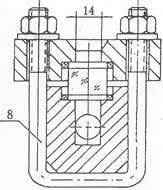
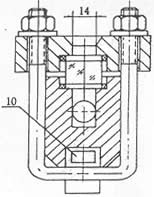
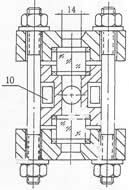
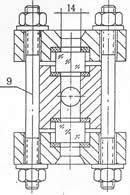
9、 Installation, use and maintenance of liquid level gauge:
1. In order to ensure that the automatic sealing exceeds the planned function, the pressure of the medium inside the container shall not be less than 0.2 MPa. When opening the upper and lower valves, the valve stem shall exit at least 4 revolutions (so that the steel ball does not touch the top of the valve stem when sealing the door).
2. Instruments in use should be regularly inspected. Clean the dirt on the inner and outer walls of the glass panel to make the liquid level display clear.
3. When tightening bolts during the maintenance and assembly of glass panels, close attention should be paid to the uneven force on the glass panels that may cause them to break. Therefore, the bolts must be clamped multiple times in the order shown in Figure 1, 2, 3 to 10, 11, and 12 in a cross pattern.
10、 Selection List:
| ZW-UWB | (Zhongwei Measurement and Control) | |||||||
|
| 1 | Transparent type, generally used for colorless and transparent liquids, in situations with good light | primitive type | |||||
| 2 | Transparent steam jacket, used for viscous and easily frozen liquid media | |||||||
| 3 | Reflective, commonly used for slightly colored liquids with good lighting conditions | |||||||
| 4 | Reflective steam jacket, used for viscous and easily frozen liquid media | |||||||
| 5 | Frost proof, used in low-temperature environments | |||||||
| 6 | Illumination type, used in situations with poor lighting conditions | |||||||
|
| G | Improved type, yesASD-UWBFor flange connection | Installation type | |||||
|
| A | carbon steel | Main material | |||||
| B | 1Cr18Ni9Tior304SS | |||||||
|
|
| C | 316SSor316L | |||||
|
|
|
| 1 | 300mm | 4 | 1100mm | measurement range | |
|
|
|
| 2 | 500mm | 5 | 1400mm | ||
|
|
|
| 3 | 800mm | 6 | 1700mm | ||
11、 Please provide the following parameters when placing an order:
1. Model specifications;
2. Name of the tested medium: Density of the medium: If the density is not known, you can tell us the name of the medium. The mixed liquid should know which types of liquids it is composed of;
3. Instrument measurement range: also known as nominal length, which is the center distance between two flanges;
4. Work pressure: maximum ability to withstand pressure;
5. Working temperature: measure the lowest and highest temperature of the liquid;
6. Material requirements: For liquid handling materials, if you don't know which material to use, you can consult us (usually we can use whatever material is used for liquid filling);
7. Whether to provide supporting accessories such as flanges, bolts, nuts, valves, sealing gaskets, etc;
8. Flange standard: The nominal diameter of the flange, with the most commonly used flange being DN20 or DN25;
9. Special requirements: Please specify in detail before placing an order, such as whether remote transmission, insulation jacket, etc. are required.
After-sales service
1. The instrument series products sold by Zhongwei ensure the sale of products and spare parts at the same price within two years, and provide corresponding free of charge according to the requirements of the demand.
2. If there are any quality problems with the products provided by our company within one year (excluding vulnerable parts or accessories), we will be responsible for free repairs and provide free skill training for the employees of the demand side.
3. Due to quality issues with the products provided by our company, after verification by our technical department, we will dispatch professional technicians to the site to handle the problem until customer satisfaction is achieved.
4. Outside the warranty period, the product will be returned to the company for repair or sent to the user for repair.
5. Join hands with Zhongwei Measurement and Control to create a better future! Welcome to your visit!


