- Phone
-
Address
Jiangsu Nanpai Municipal National Networking Engineering Company: Wenzhou Jinhua Suzhou Taizhou Yangzhou Changzhou Anqing Nanchang Fuzhou Wuhan Xi'an Weinan Taizhou Ningbo Weifang Wuhu Anhui Liaocheng Binzhou Ganzhou Shishi Nanning Shenzhen Guilin Xiamen Chongqing Shaanxi Hainan Hangzhou Guizhou Shaanxi Sichuan Jiujiang Northeast Guangxi Jiangxi Zhejiang Hefei Henan Hubei Hunan Shandong Shanghai Beijing Guangdong Xi'an Nanjing Fujian
Product Categories
Jiangsu Nanpai Municipal Construction Engineering Co., Ltd


Partial resin spot curing repair of pipeline CIPP
NegotiableUpdate on 05/06
- Model
- Nature of the Manufacturer
- Producers
- Product Category
- Place of Origin
Overview
In situ partial solidification point repair resin and high-strength glass fiber cloth for Jiangsu Nanpai municipal pipelines, non excavation repair of urban pipeline networks and in-situ lining repair of CIPP ultraviolet curing pipelines, partial solidification point repair of pipeline defects, short pipe lining repair method for pipeline deformation and collapse, and UV curing for non excavation repair of Jiangsu Nanpai municipal professional urban municipal pipelines The local resin curing method refers to the use of point repair airbag expansion method to repair the original pipeline to be repaired position, using a special point repair airbag expansion method, and using glass fiber to uniformly
Product Details
Partial resin spot curing repair of pipeline CIPP In situ partial solidification point repair of Jiangsu Nanpai municipal rainwater and sewage pipeline, and in-situ partial solidification point repair of pipeline CIPP. The main materials used in situ solidification method (CIPP) are glass fiber fabric and resin. The auxiliary materials include needle punched felt, glass fiber, additives, fillers, polymer coatings, adhesives, etc. Among them, resin is the main structural element of the system.

1. In situ resin curing repair of pipeline CIPP
Resin can usually be divided into three categories: unsaturated polyester resin, ethylene resin, and epoxy resin. Each type has its own chemical corrosion resistance and structural properties. Unsaturated polyester resin is a commonly used curing material in the CIPP process. Ethylene resin and epoxy resin have special corrosion resistance, solubility resistance, and high stability, mainly used in industrial pipelines and pressure pipelines. The characteristics of various resins.

imported resin
Using fully imported high-temperature and chemical resistant silicate resin produced by Singapore REACH TECH (SINGAPORE) company, this product has the ability to adapt to high and low temperatures, and does not contain volatile organic compounds (excluding styrene). The material will not shrink (<0.6%); After testing, it has been proven that the product has a lifespan of over 50 years (10000 hours of testing).
Silicic acid resin belongs to room temperature curing resin, and the curing time is usually around 1 to 2 hours. The curing time can be adjusted according to specific circumstances, and in actual construction, the construction quality will not be affected by the presence of a small amount of residual water source in the pipeline.
The resin is divided into two groups: A-BS616 and B-BS617. The cured material has high hardness, good toughness, strong impact and bending resistance, and also has very strong corrosion resistance.

The resin used in in-situ curing method should meet the following requirements:
(1) It has good durability, corrosion resistance, tensile resistance, crack resistance, and good compatibility with hoses. The premise should be to meet the strength requirements after construction and curing.
(2) The resin should be able to cure at room temperature, and the initial curing temperature should be below 80 ℃.
(3) The viscosity is between 1500-2500MPa · s, and if it is lower than 1500MPa · s, the resin viscosity is not enough. The felt itself is relatively thin, and there is less resin carried by the lining, which can cause uneven distribution of resin and result in bubbles or even collapse of the lining composite material. Resin viscosity higher than 2500MPa · s can cause difficulties in impregnating the resin, and the lining composite material is prone to adhesion, making it difficult to construct the lining.
(4) The bonding strength requirement is high, and the resin should be able to bond the lining composite material with the pipeline to be repaired.
2. Fiberglass fabric
(1) Fiberglass fabric and resin should be tightly fused, and after curing, there should be no separation phenomenon.
(2) Has good acid and alkali resistance, sufficient tensile and bending resistance, sufficient flexibility to withstand installation pressure, and adapts to irregular pipe diameter changes or bends when lining; Has good heat resistance and can withstand the curing temperature of resin.
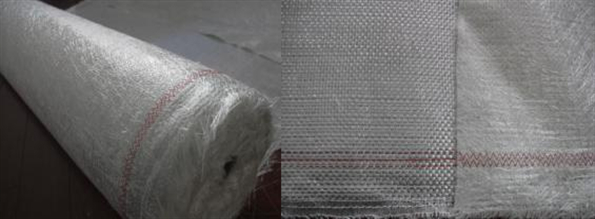
Partial resin spot curing repair of pipeline CIPP
(1) The lining tube is durable and practical. The lining material is corrosion-resistant, wear-resistant, strong, and has high pressure bearing capacity. The service life is not less than 30 years according to design requirements, and can reach up to 50 years.
(2) After repair, the pipeline has no joints and the inner wall surface is smooth, continuously increasing the pipeline flow without scaling.
(3) Suitable for repairing long-distance pipelines (900m), the entire pipeline has no joints, and the construction inner diameter is 150-2200mm. It can adapt to non-circular cross-sections and curved pipelines.
(4) Occupying a small amount of road surface and having minimal impact on road traffic, without excavating the road surface, ensuring smooth traffic flow.
(5) The construction speed is fast and the cycle is short. The construction period from the transportation of lining materials to the construction site, preparation of lining, and curing on site generally does not exceed 24 hours.
(6) The construction equipment occupies a small area and is simple. Only small boilers and thermal circulation pump equipment are needed, with low noise.
(7) No production of garbage, no pollution, and minimal impact on the surrounding environment.
(8) Reducing engineering investment results in good economic and social benefits.
(9) Suitable for repairing pipes of various types and shapes (cast iron pipes, steel pipes, concrete pipes, ceramic pipes, PVC pipes, etc.).
(10) Strong integrity, can seal existing holes, cracks, and gaps, prevent seepage, and solve the problem of groundwater infiltration.
1. Applicable scope of in-situ local solidification repair for pipelines
(1) The in-situ solidification method is generally formed by flipping and solidifying, which is suitable for rainwater and sewage drainage pipelines with geometric cross-sections such as circular, square, horseshoe shaped, etc., and pipeline materials such as reinforced concrete pipes, cement pipes, steel pipes, and various plastic pipes.
(2) Suitable for local and overall repair of drainage pipes with a diameter of 150-2200mm, inspection well walls, and arch ring cracks. UV heating curing is more suitable for drainage pipes with a diameter less than 600mm.
(3) The structural defects of the applicable pipeline include rupture, deformation, misalignment, disconnection, leakage, and corrosion, and the interface misalignment should be less than or equal to 15% of the pipeline diameter. The pipeline foundation structure is basically stable, and there is no significant change in the pipeline alignment.
(4) Suitable for repairing local sand holes, exposed stones, peeling and other diseases on the inner wall of pipelines.
(5) Suitable for preventive repair when the pipeline interface is in a leakage warning period or critical state.
(6) Suitable for repairing damaged inspection wells of various materials.
2. Not applicable scope
(1) Not suitable for repairing structural defects such as pipeline foundation rupture, pipeline rupture, pipeline disconnection in an inverted state, severe misalignment of pipeline interfaces, and severe deformation of pipeline alignment.
(2) Not suitable for inspection wells with severe settlement and serious misalignment and damage to pipeline interfaces.
Selection of non excavation repair technology

In situ solidification method (CIPP) for pipeline repair technology and traditional excavation repair

For urban roads and repair projects that have a significant impact on the surrounding area, in-situ solidification lining non excavation repair technology is economically applicable.
Similar Product Recommend


