-
E-mail
3060018047@qq.com
-
Phone
18158431310
-
Address
Fengxian District, Shanghai
Product Categories
Shanghai Chuanyu Experimental Instrument Co., Ltd


Optional porous plate for liquid processing workstation
NegotiableUpdate on 02/01
- Model
- Nature of the Manufacturer
- Producers
- Product Category
- Place of Origin
Overview
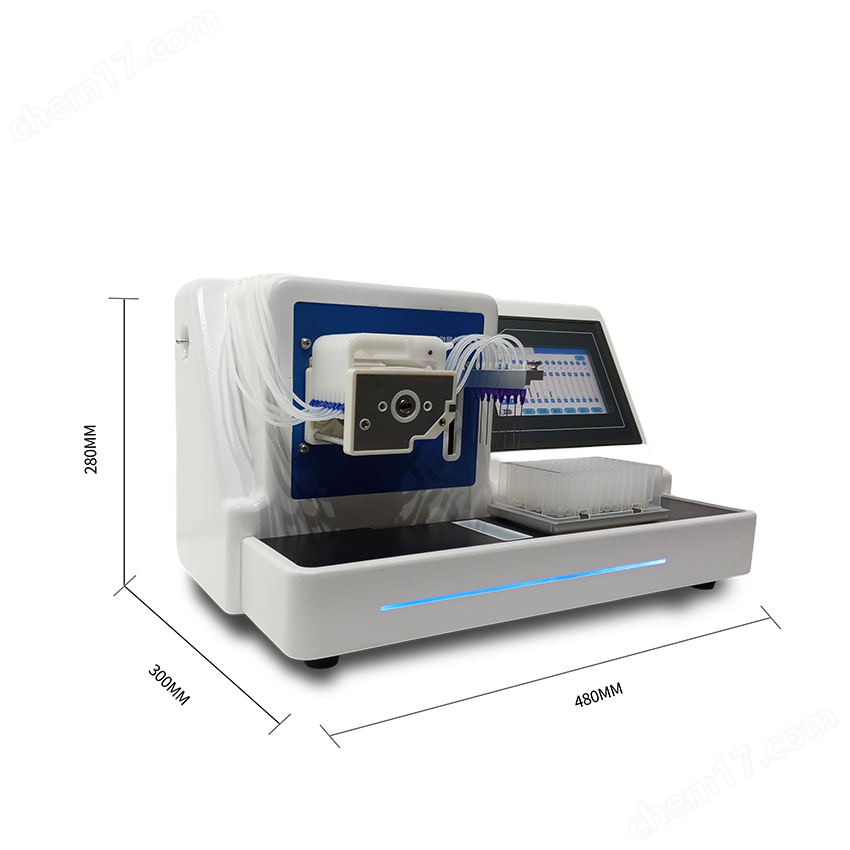
The liquid processing workstation's porous plate is an optional 96 channel device that can automatically complete operations such as loading and unloading suction heads, suction, and separation without manual operation. It is widely used in genomics, proteomics, immunology, cytology, biology, and other research fields
Product Details
Optional porous plate for liquid processing workstationMain features:
1. Adopting a 7-inch LCD touch screen, the interface is simple and clear, with single machine control and easy operation;
2. Adopting ultra compact and lightweight design, it is easy to move and place ultra clean tables, fume hoods, safety cabinets, etc. in the laboratory for working in narrow spaces;
3. Multiple functions such as one click pipetting, continuous separation, gradient dilution, and even mixing, without the need for manual operation;
Prevent the difference in sample addition reaction time when pipetting with channel 4.96, and match your different needs;
5. Compatible with most SBS standard experimental consumables, sample tubes, suction head boxes, microplates, suction tanks, injection tanks, etc.

Technical Specifications:
Model: CHZDFY-96
Position: 2-6 workstations can be optionally selected
Applicable version: 96/384 orifice plate
Transfer principle: air displacement type
Sample size: 96 channels
Range: 20ul, 200ul, 1000ul (3 options available)
Liquid separation increment: 1ul
Display mode: 7-inch high-definition touch screen
Sampling accuracy: 10ul CV ≤ 3.0%, accuracy ≤ 5%, 200ul CV ≤ 1.5%, accuracy ≤ 3%, 1000ul CV ≤ 1%, accuracy ≤ 1%
Function: Continuous liquid separation, dilution, blowing and mixing
Body size 810 * 340 * 550mm
Pipette workstation is a core equipment in modern scientific research laboratories, and its precise operation plays an important role in ensuring experimental quality and improving research efficiency. The following are the basic operating steps of the pipetting workstation:
1. Preparation work
Before operating the pipetting workstation, a series of preparatory work is required to ensure the smooth progress of the experiment. Firstly, the pipetting workstation should be placed steadily on the experimental platform and powered on. After the instrument is initialized, select a suitable pipette head according to the specific requirements of the experiment and install it on the suction device. At this point, it is important to ensure that the connection between the pipette head and the suction device is tight and leak free to ensure the accuracy of the transfer.
2. Set pipetting parameters
After the preparation work is completed, set the pipetting parameters through the instrument interface. These parameters include but are not limited to suction volume, discharge volume, pipetting speed, and pipetting frequency. After setting up, it is necessary to confirm again that all parameters are correct to ensure the smooth progress of the experiment.
3. Liquid suction and discharge
During the pipetting process, the operator should gently insert the pipette head into the liquid to be aspirated to avoid the formation of bubbles or liquid splashing. After pressing the suction button, wait for the liquid to be sucked into the pipette head before releasing the button. When draining, move the pipette head above the target container and press the drain button to ensure that the liquid is accurately drained.
4. Daily maintenance
It is crucial to clean the pipette head promptly after completing the transfer task. At the same time, it is necessary to regularly maintain the pipetting workstation, including checking the connection of various components of the instrument, cleaning the interior of the instrument, and replacing worn parts. In terms of maintenance, the following points should also be noted: first, keep the pipette workstation clean and dry to avoid damage to the instrument caused by dust or moisture; Secondly, regularly check whether the power and data cables of the instrument are intact to ensure that the instrument can supply power and communicate normally; The third is to regularly calibrate the pipetting workstation to ensure its long-term high precision and stability.
The above are the basic operating steps of the pipette workstation. It should be noted that there may be some operational differences between different pipetting workstations, so in actual operation, the equipment's operating manual should be strictly followed
Optional porous plate for liquid processing workstation1. Clearly define the type of pipetting workstation to be purchased
As mentioned earlier, pipetting workstations are mainly divided into two types: one is used in the field of life sciences, and the other is used in the field of general physical and chemical analysis. This is what we need to understand clearly before purchasing, and we need to choose based on our own experimental content.
2. Working range of pipetting workstation
When choosing a pipette, we all know that we need to choose the appropriate pipette range based on our experimental project. When purchasing a pipette workstation, we also need to choose the range that is suitable for our own experiment. For example, the pipetting workstation used in the field of physical and chemical analysis has different pipetting ranges for organic and inorganic projects. The pipetting range for organic projects is generally in the uL range, while the range for inorganic projects is generally in the mL range. This requires us to pay attention when purchasing.
3. Adaptation of the bracket
According to our experimental requirements, we need to choose suitable scaffolds to fit the containers we need, such as 96 well plates or 384 well plates used in the field of life sciences, as well as centrifuge tubes of various volumes, and so on.
4. Brand selection
At present, many pipette manufacturers produce pipette workstations. Considering the universality and compatibility of consumables among manufacturers of the same brand, we can prioritize the selection of pipette workstations based on the pipette brand we use. In addition, the compatibility with relevant experiments, the efficiency of the pipetting workstation, the accuracy of pipetting, and so on are all issues that we need to consider when purchasing. Therefore, we should conduct on-site inspections or trials of the actual machine as much as possible in order to better choose the appropriate pipetting workstation for ourselves.


Similar Product Recommend