- Phone
-
Address
Room 303, Building 1, Juke Biological Park, 466 Yindu Road, Xuhui District, Shanghai
Product Categories
Shanghai Kunmeng Biotechnology Co., Ltd

Molecular experiment Molecular interaction: EMSA gel migration retardation experiment
NegotiableUpdate on 05/06
- Model
- Nature of the Manufacturer
- Producers
- Product Category
- Place of Origin
Overview
EMSA technology, namely gel migration or electrophoretic mobility experiment, is used to study the interaction between DNA/RNA binding proteins and their related DNA/RNA binding sequences
Product Details
1、 Technical Introduction
EMSA technology, namely gel migration or electrophoretic mobility experiment, is used to study the interaction between DNA/RNA binding proteins and their related DNA/RNA binding sequences;
2、 Technical principles
Incubate the purified protein or cell crude extract with the labeled DNA or RNA probe. In the non denaturing polyacrylamide gel electrophoresis, the mobility of the DNA protein or RNA protein complex is slower than that of the unconjugated probe, so as to detect the activated protein transcription or regulatory factors that bind to DNA or RNA.
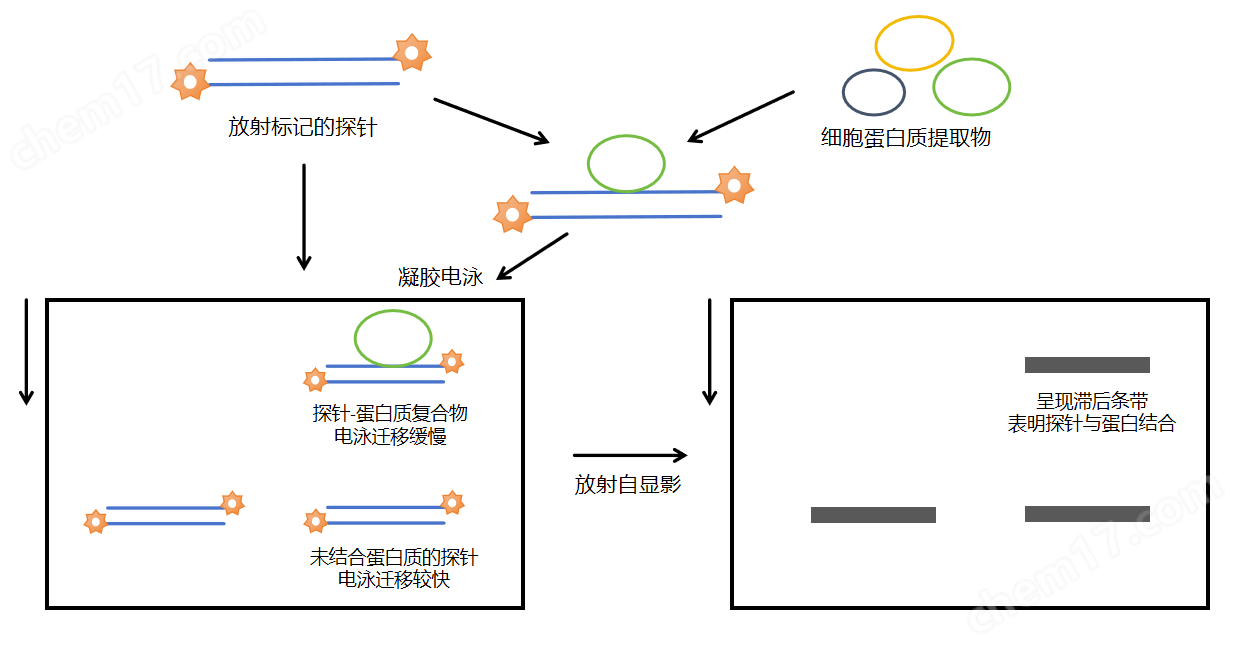
3、 Application scenarios
1. Research on gene expression regulation: Determine the binding sites and characteristics between transcription factors and DNA, and study the regulatory mechanisms of gene expression.
2. Disease mechanism research: Analyze the abnormal expression regulation of disease-related genes and explore the mechanism of disease occurrence and development.
3. Drug target discovery: Screening and identifying DNA binding proteins associated with diseases to provide targets for drug development.
4. Signal pathway research: Study the activity changes of DNA binding proteins in the signal pathway and their effects on downstream genes.
4、 Technical advantages
1. The experimental operation is relatively simple, and the requirements for experimental conditions are not strict.
2. It can detect various sizes and structures of nucleic acid molecules, as well as a wide range of protein sizes, and can detect the binding of different proteins and nucleic acid molecules in a single reaction system.
3. Biotin labeled probes are stable, safe, accurate, and have high affinity.
5、 Sample type
Fresh cells (adherent cells/suspended cells), frozen cells, frozen tissues, nuclear protein samples, or purified transcription factors, some experiments may also use recombinant expressed proteins.
6、 Sample requirements
Cell samples: approximately 1 × 10 ^ 7 (can be stored in a 10cm dish, suspended in a centrifuge tube, or in a T75 bottle);
Frozen tissue: approximately 400mg;
Plant tissue: about 2g; nuclear protein, purified transcription factors, recombinant expressed proteins, etc.: each membrane provides at least 50ul, with a concentration of not less than 0.5mg/ml.
7、 Sample preparation&transportation
Live cell samples: Fresh cell samples stored in dishes/T75 bottles/centrifuge tubes can be transported by express delivery at room temperature (with the latest delivery the next day) for those who are closer. Within the city, they can be delivered by flash or in person. For those who are farther away, cells can be frozen at -80 ℃ and transported by dry ice;
Organizational samples&other liquid samples: -80 ℃ frozen dry ice transportation.
8、 Required reagents
More than 50ul of protein specific antibodies are bound, with a concentration greater than 0.5mg/ml.
9、 Experimental cycle
2-3 weeks
10、 Other
If there is no probe sequence, please provide information or relevant literature on DNA binding proteins.

Similar Product Recommend


