- Phone
-
Address
3rd Floor, Building 2, Wuzhou International Trade City, Mingzhu Road, Jianhu County
Product Categories
Yancheng Galaxy Technology Co., Ltd

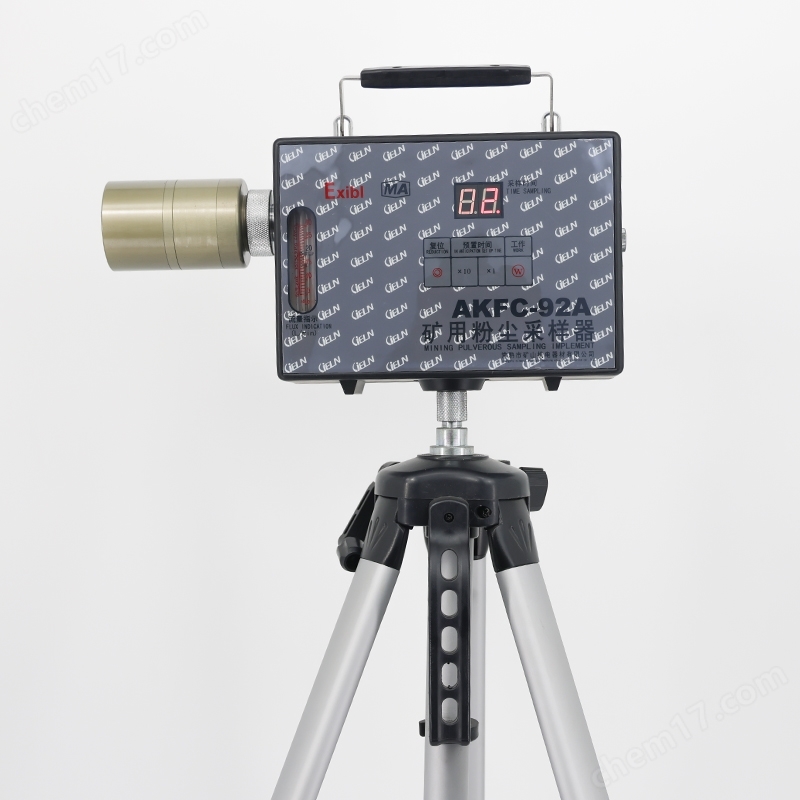

Mining dust sampler
NegotiableUpdate on 05/06
- Model
- Nature of the Manufacturer
- Producers
- Product Category
- Place of Origin
Overview
The mining dust sampler consists of a high-performance suction pump, automatic time control circuit, flow regulation circuit, automatic feedback constant current circuit, undervoltage protection alarm circuit, safety power supply, etc. It is also equipped with various dust pre collectors. The total dust pre collector is used to measure the total dust concentration; Another type of impact pre collector used to determine the concentration of respiratory dust, this pre collector can separate respiratory dust and non respiratory dust that are harmful to the human body. It can collect both respiratory and non respiratory dust samples at once, and its separation efficiency meets the "BMRC" curve standard. It is a reliable and practical dust pre collector
Product Details
Introduction
AKFC-92A typeMining dust samplerComposed of high-performance suction pump, automatic time control circuit, flow regulation circuit, automatic feedback constant current circuit, undervoltage protection alarm circuit, safety power supply, etc., it is also equipped with various dust pre collectors. The total dust pre collector is used to measure the total dust concentration; Another type of impact pre collector used for measuring the concentration of respiratory dust can separate respiratory dust and non respiratory dust that pose a threat to human health. It can collect both respiratory and non respiratory dust samples at once, and its separation efficiency meets the "BMRC" curve standard, making it a reliable and practical dust pre separation device.
This instrument adopts an ExibI (150 ℃) level intrinsic safety explosion-proof structure, which is particularly suitable for use in coal mines and other workplaces containing explosive gases. The casing of this machine is made of high-strength ABS engineering plastic and has undergone special treatment for moisture, dust, and static electricity prevention. The instrument has the advantages of no pulsating airflow, high negative pressure and load capacity, automatic timed sampling, safety and reliability, durability, easy portability and on-site use.
1、 Technical indicators and performance parameters:
1. Flow range: 5-30L/min, sampling flow rate: 20L/min
2. Flow meter accuracy: Level 2.5
3. Negative suction pressure:>3000Pa
4. Load capacity: ≥ 1000Pa
5. Dust collection range: total dust, respiratory dust
6. Timing range: freely set within 0-99 minutes
7. Timing error ≤± 0.1%
8. Built in nickel hydrogen rechargeable battery, can work continuously for more than 180 minutes when fully charged
9. Work noise: ≤ 55dB (A)
10. Explosion proof form: mining intrinsic safety type IBI (150 ℃), suitable for sampling in flammable and explosive workplaces and underground coal mines
11. Applicable environment: Temperature -5~35 ℃, relative humidity ≤ 95% RH
12. Dimensions: 200 × 140 × 80mm
2、 Working principle
AKFC-92A typeMining dust samplerWorking principle diagram, as shown in Figure 1:

This dust sampler is designed based on the detection principle of dust concentration weighing method. Before sampling, the weighed clean filter membrane must be loaded into the pre trap, and the floating dust in the air should be trapped on the filter membrane of the pre trap through the suction pump inside the instrument. After sampling, remove the filter membrane and dry it before weighing it on a balance. Subtracting the weight before and after can obtain the increment of the filter membrane and the mass of dust captured. At the same time, during the sampling process, multiplying the flow rate and sampling time can determine the volume of air passing through the pre collector during sampling, and then calculate the concentration of dust in the collected air according to the prescribed formula.
3、 Instructions for using the instrument
Before operating the sampler for testing, it is necessary to familiarize oneself with the instrument. Based on the outline drawing of the dust sampler, the main components should be introduced as follows:
1. Sampling head connector: During sampling, connect the pre collector tightly to the sampler without air leakage or looseness. The connection port should be kept clean to prevent contamination or foreign object inhalation.
2. Flow meter: Directly display the visual flow rate of the sampler, and observe the position of the float top plane of the flow meter to read the sampled flow rate value.
3. Sampling time display: Display the preset sampling time within "00~99" minutes. After the sampling starts, count by "1" and stop working when the timer reaches zero. The display time unit is in minutes (min), and when the decimal point starts flashing, it indicates that the timer has started to subtract "1".
4. Automatic switch: When the automatic switch is turned on, the sampler can automatically sample for a preset time. Automatically stop sampling when "00" is displayed.
5. Manual switch: When the manual switch is turned on, the instrument starts working, and the sampling time is manually controlled. (When both automatic and manual are turned on, manual takes priority, and the instrument works in manual mode)
6. Flow adjustment button: During the operation of the sampler, if it is necessary to adjust the set flow rate, this button can be used to adjust it.
7. Charging socket: After using the sampler or hearing a buzzing undervoltage alarm during operation, it must be charged on the ground. When charging, simply insert the charging plug into the instrument charging dock, and the charging indicator light will turn on to indicate the start of charging. The normal charging time is 14-16 hours.
8. Work button
9. 10. Counting button: Press these two buttons to set the time arbitrarily within the range of "00" to "99" minutes.
11. Reset button: When errors are found during sampling or when resetting is required, press this button to reset and reset.
12. Tripod bracket fixing nut: This nut seat is used to fix the sampler to the tripod bracket during on-site operation.
13. Air outlet: used for exhausting the pump body.
In addition, the explosion-proof measures taken by this machine include:
1. Battery pack: GNY2.5Ah x 6 cells, connected in series with 4 non inductive wire wound resistors of 0.51 Ω/10W as current limiting resistors, and sealed with 704 silicone gel to form an intrinsic safety battery pack.
2. Motor M: Two diodes are encapsulated with silicone to eliminate back electromotive force and form a protective component.
4、 Method for measuring dust concentration
There are two types of pre collectors as standard, and now we will explain the method for measuring dust concentration based on the characteristics of the pre collectors.
1. Total dust determination method (total dust)
A、 The use of all dust pre collector
(1) Principle: Extract a certain volume of dusty air and gradually accumulate dust on the filter membrane when passing through a full dust pre collector. After the sampling is completed, the total mass of dust contained in a unit volume of dusty air can be calculated based on the increment of the filter membrane.
(2) Required equipment:
1. Dust sampler host;
2. Pre collector: All dust pre collector;
3. Filter membrane: equipped with ¢ 75mm or ¢ 40mm vinyl chloride fiber filter membrane;
4. Balance: A fully automatic electronic analytical balance with a sensitivity of one ten thousandth;
5. Drying machine; When using a regular dryer, color changing silicone gel should be placed for observation;
6. Tweezers: Stainless steel clock tweezers
(3) Measurement program
1. Firstly, use tweezers to remove the clean filter membrane, remove the backing paper on both sides, weigh and record it on a balance, press it into the filter membrane clamp, and then place it in the labeled sample box for future use. When using a ¢ 75 filter membrane, it should be installed in a funnel shape in the total dust pre collector, with the membrane surface facing towards the air inlet direction.
2. The first step in on-site sampling is to choose a suitable sampling location. If fixed sampling is required, a dedicated tripod should be opened, and the dust sampler should be horizontally and stably fixed on the tripod platform.
3. Tighten the pre collector with installed filter membrane onto the sampling head connection seat, and place the inlet of the pre collector in the airflow containing dust.
4. The sampling time is pre-set based on the type, concentration, and operational conditions of the dust on site. The recommended sampling time is usually 20-25 minutes, and in places with high dust concentration, it can be pre-set for 2-5 minutes.
5. After the sampling is completed, the filter membrane clamp should be gently removed and placed in the corresponding sample box. Weigh and record after drying treatment.
(4) Calculation of dust concentration T=(f1-f0)/(Q × h) × 1000 (mg/m3)
In the formula: T total dust concentration (total dust) (mg/m3)
Mass of filter membrane before f0 sampling (mg)
Quality of filter membrane after F1 sampling (mg)
Sampling time (min)
Q sampling flow rate (L/min)
(5) Attention:
1. The filter membrane clamp should be wiped clean, and the pre trap should be cleaned with clean water, degreased cotton balls or gauze. Organic solvents should not be used for scrubbing.
2. After on-site sampling, attention should be paid to protecting the samples from contamination and dust.
2. Method for determination of respiratory dust
B: The use of impact pre catcher
(1) Principle: Extract a certain volume of dusty air and use an inertia based separation device to impact larger and coarser dust particles onto a glass capture plate coated with silicone oil. Fine dust particles passing through the surrounding cavity of the capture plate are trapped on the filter membrane. After sampling, the mass of respirable dust, non respirable dust, and total dust per unit volume of dusty air can be calculated by the increment of the glass capture plate and filter membrane, respectively.
(2) Required equipment
1. Dust sampler host
2. Pre catcher: Use an impact pre catcher. When the sampling flow rate is required to be 20L/min, the separation characteristics of the pre collector meet the "BMRC" curve standard, and the pre collector efficiency is 100% for dust particles with a diameter of 7.07um or more, 50% for 5um, and 10% for 2.2um.
3. Glass capture plate: colorless quartz crystal chip with a diameter of ¢ 25mm.
4. Filter membrane: 40mm PVC fiber filter membrane.
5. Silicone oil: Methyl silicone oil with a viscosity of 60000.
6. Balance: It is better to use an electronic balance with a sensitivity of one hundred thousandth for conditional units.
7. Drying machine: When using a regular drying machine, color changing silicone gel should be placed for easy observation of color;
8. Tweezers: Stainless steel clock tweezers.
9. Scraper: Stainless steel small scraper.
(2) Measurement program
1. The glass trap plate is first soaked in neutral detergent to remove surface stains, rinsed with clean water, and then wiped clean with a cotton ball and alcohol.
2. Dip a small amount of silicone oil into a clean scraper and apply it to the center of the trap. Scrape the silicone oil to the side and spread it out until it forms a circle of ¢ 15mm. Due to the high viscosity of silicone oil, it takes several hours for uniform diffusion to occur. Therefore, the application of silicone oil on the capture plate should be carried out in advance before sampling, and it should be ensured that it is not contaminated. Experiments have shown that the application of silicone oil on the capture plate should be controlled within the range of 0.5-5mg, and the dust capture effect will not be affected.
3. Weigh the trap plate coated with silicone oil on a balance and keep a record for future use. Place it in a labeled sample box. When working, remove the glass trap plate from the sample box and install it on the trap plate seat at the front of the pre trap separation device. Use a metal snap ring to press it down, and then screw on the intake cover of the pre trap. The dust obtained on the glass capture plate is non respiratory dust.
4. Weigh and record the clean 40mm filter membrane, removing the backing paper on both sides, on a balance. Press it into the filter membrane clamp and place it in a labeled sample box for future use. When working, remove the filter membrane clamp that has been installed with the filter membrane, install it on the metal mesh of the separation device base, and screw on the pre collector front section that has already been installed to complete the installation. The dust obtained on the filter membrane is respiratory dust.
5. At the selected sampling location, firmly install the sampler on a dedicated tripod, with a height that matches the height of the breathing belt on site. Remove the pre collector and install it on the sampler, and place the air inlet into the dusty airflow. The startup sampling should be based on the type of dust and environmental conditions on site, and the sampling time is generally controlled within 20-25 minutes. For places with high dust concentration, the sampling time should be set at 2-5 minutes. Before sampling, the increment of dust on the capture plate and filter membrane should be estimated, which should not be less than 0.5mg or more than 10mg, to avoid affecting the accuracy of sampling.
6. After sampling, the dust sample should be carefully taken out and placed in the corresponding sample box. The sample should be dried before weighing and recording.
(4) Calculation of dust concentration
(Calculation method at constant flow rate of 20L/min)
1. Respiratory dust concentration R
R=(f1-f0)/20×h]×1000(mg/m3)
2. Total dust concentration
T={[(m1-m0)+(f1-f0)]/20h}×1000(mg/m3 )
In the formula: R respiratory dust concentration (mg/m3)
Total dust concentration (mg/m3)
Mass of filter membrane before f0 sampling (mg)
Mass of filter membrane after sampling (mg)
Mass of the capture plate before m0 sampling (mg)
Mass of the capture plate after m1 sampling (mg)
Sampling time (min)
(5) Precautions
1. The glass trap and filter membrane clamp should be cleaned and wiped dry. The pre trap should be cleaned with clean water, degreased cotton balls or gauze, and organic solvents should not be used for scrubbing.
2. After on-site sampling, attention should be paid to protecting the samples, handling them gently to prevent contamination and dust.
3. The sampling flow rate should preferably use a constant flow rate of 20L/min for sampling, otherwise it may affect the capture efficiency of the pre collector for respiratory dust and affect the accuracy of the measurement.
5、 Random accessories
host1 unit
1 charger
Triangle frame 1 payment
Impact sampling head1 piece
Dust sampling head1 piece
40mm filter paper sample box5 pieces
40mm filter paper clip5 payments
25mm sample box5 pieces
thermal paste1 bottle
special tool1 set
impact plate5 pieces
40mm filter paper (100 pieces per pack)1 box
75mm filter paper (50 pieces per pack)1 box
instrument case1 piece
User Manual1 copy


