- Phone
-
Address
No. 6, Lane 1118, Jintong Road, Putuo District, Shanghai
Product Categories
Shanghai Kangdeng Electric Technology Co., Ltd


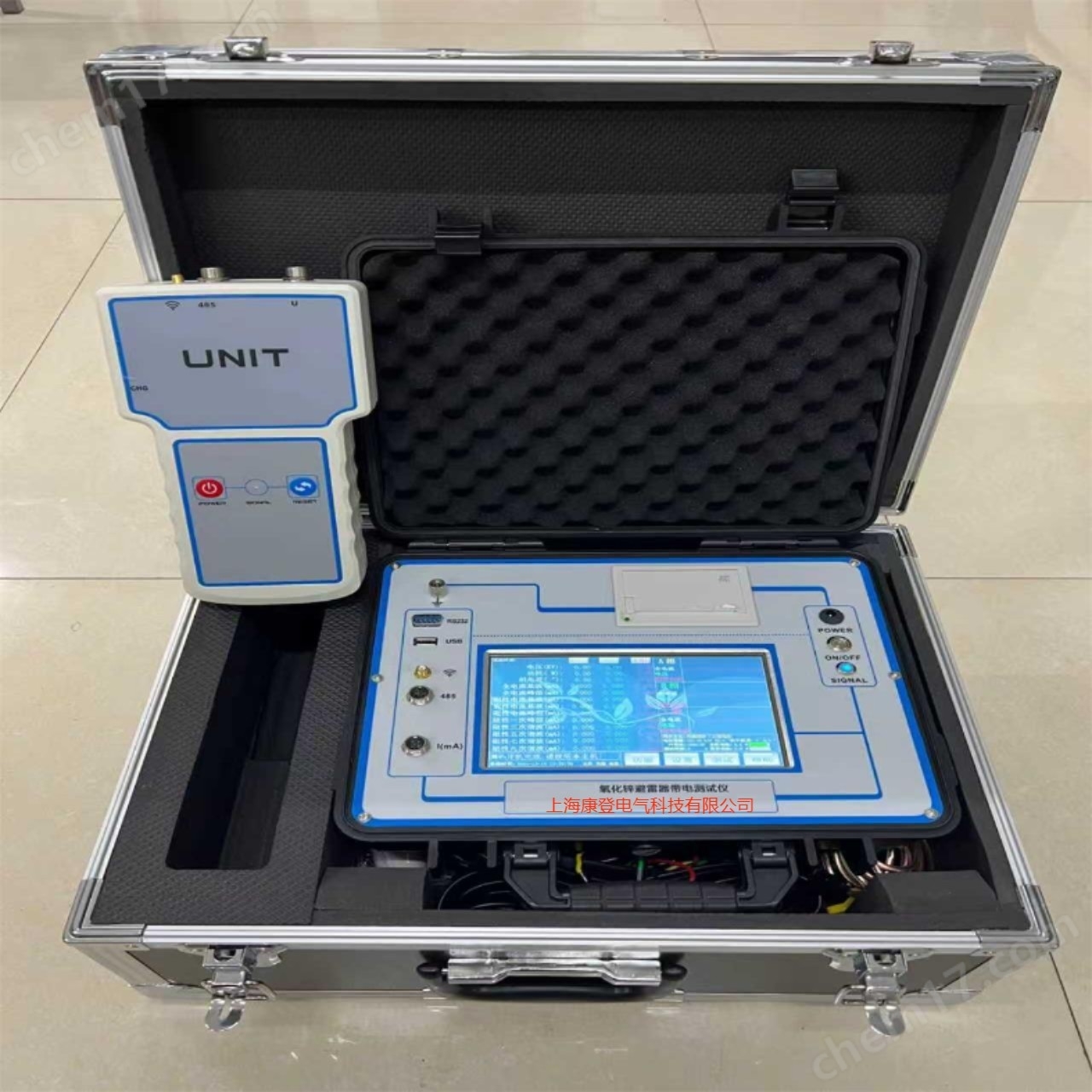
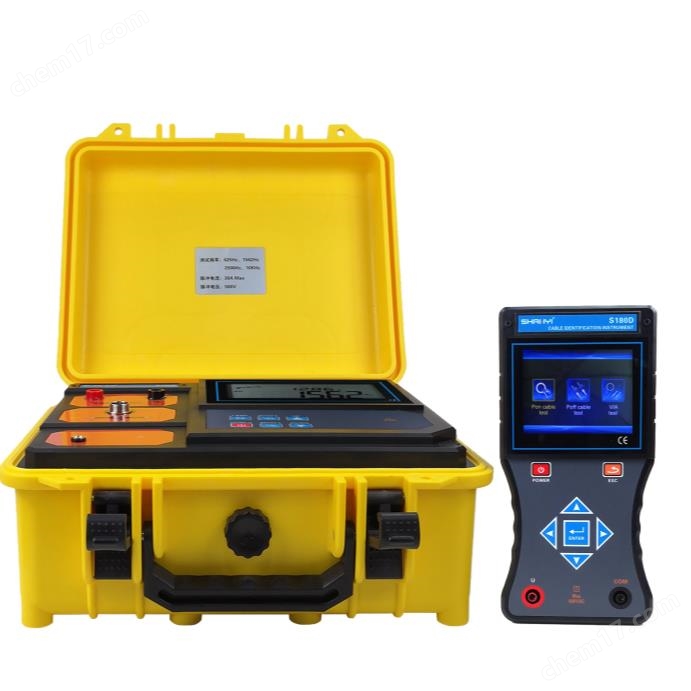
MOA-30KV Zinc Oxide Surge Arrester Detector
NegotiableUpdate on 05/14
- Model
- Nature of the Manufacturer
- Producers
- Product Category
- Place of Origin
Overview
The MOA-30KV zinc oxide lightning arrester detector is specifically designed to detect internal defects in the MOA valve plate performance of gapless zinc oxide lightning arresters used in 10kV and below power systems. According to the provisions of 16.1 in the "DL/T596-2021 Preventive Test Code for Power Equipment" and "GB/T 11032-2020 AC gapless metal oxide lightning arresters", power plants and substations should perform leakage current detection on metal oxide lightning arresters under DC 1mA voltage (U1mA) and 0.75 U1mA before and when necessary during the thunderstorm season each year. According to the measurement regulations, it should
Product Details
1MOA-30KV Zinc Oxide Surge Arrester DetectorOverview
MOA-30KV Zinc Oxide Surge Arrester DetectorIt is specifically used to detect internal defects in the MOA valve plate performance of gapless zinc oxide lightning arresters used in 10kV and below power systems. According to the provisions of 16.1 in the "DL/T596-2021 Preventive Test Code for Power Equipment" and "GB/T 11032-2020 AC gapless metal oxide lightning arresters", power plants and substations should conduct leakage current detection of metal oxide lightning arresters under DC 1mA voltage (U1mA) and 0.75 U1mA before and when necessary during the thunderstorm season every year. According to the measurement regulations, the ambient temperature and relative humidity during the test should be recorded. This instrument has achieved the function of automatically measuring ambient temperature and relative humidity.
This instrument combines DC high-voltage power supply, measurement and control system organically, reducing the size and weight of the instrument. This instrument is suitable for testing under various conditions such as substations, repair workshops, manufacturers, and laboratories. It replaces traditional bulky testing instruments and methods and is an essential equipment for on-site inspection of power systems and zinc oxide lightning arrester production plants.
This instrument has user-friendly operation settings, which can be operated through touch screen, remote control with remote control, wireless operation through mobile Bluetooth APP, RS232/RS485 wired operation (optional), external IO wired control operation (optional) and other measurement methods, with high flexibility.

IIMOA-30KV Zinc Oxide Surge Arrester DetectorInstrument Introduction

Figure 1 is a reference image, please refer to the actual product
1. Remote control: This machine comes standard with a 4-point remote control, with the combination key "A ->C ->B" to start and the key "D" to stop.
2. High voltage output (HV OUT): Output the test voltage and connect it to the upper end of the test object. Do not touch it during testing.
Grounding: Connect the ground terminal of the test object and do not touch it during testing.
3. High voltage indicator light (HV LED): When high voltage is output, the red light is on.
4. Color touch screen: 320X240 pixel dot matrix touch color LCD screen, which is very clear in both sunlight and dark environments.
5. Thermal printer: The printer is a thermal printer, and thermal paper is divided into front and back sides (one side can be typed, the other side cannot). The printed content can only be retained on thermal paper for about three months and cannot be used for archiving.
Power switch (ON/OFF): Power switch button.
6.12.6V charger interface (CHARGE): When the battery level is low, please plug in the standard 12.6V charger for charging.
7. Customizable communication interface (RS232): Conventional devices do not come with communication! Various communication interfaces can be customized (RS232/RS485 according to Modbus RTU standard protocol), other protocols for the Internet of Things can be customized, and line control interfaces can also be customized (to control the start and stop of instruments, and output qualified/unqualified signals).
Optional
8. USB export interface: Export test data, generate WORD documents, and facilitate report generation.
9. Bluetooth interface: The device comes standard with an Android Bluetooth app. Installing the app on your phone or tablet can be connected to the device's Bluetooth for testing, stopping, uploading, sharing, printing, and generating WORD documents. If you need the app, you can contact the manufacturer for free and it is not included with the package.
IIIMOA-30KV Zinc Oxide Surge Arrester DetectorProduct features
1. One click test: One click automatic completion of the test, directly displaying the test results.
2. Color touch screen: 320 × 240 high-definition color touch screen, human-machine dialogue.
3. Built in lithium battery: Comes with a high-energy lithium-ion battery as standard, especially suitable for situations without power supply.
4. Built in calendar clock: Built in calendar clock provides a time basis for printing and saving data.
5. Temperature and humidity testing: high-precision display of current temperature and humidity data.
6. Massive storage of experimental data: This machine is equipped with large capacity storage to store massive amounts of data. It has data storage and browsing functions, as well as power failure protection function.
7. USB export test data: equipped with USB export data function, exporting Word files.
8. Bluetooth control and data upload: Standard Bluetooth function, equipped with Android Bluetooth APP, can be installed on mobile phones or tablets to test, stop, upload, share, and generate Word files.
9. Built in training materials: The screen is equipped with various wiring methods to guide on-site use.
10. Chinese input of experimental information: Relevant sites, equipment, personnel, notes, etc. can be entered in Chinese for easy identification and storage of experimental data, as well as for easy identification and printing of experimental data.
11. Switching between Chinese and English: The interface can be directly switched between Chinese and English, compatible with both Chinese and foreign usage scenarios (optional).
12. Thermal printer: On site thermal printer can print test results, and an external wireless Bluetooth printer can also be optionally selected.
13. Customizable communication serial port: Standard devices do not include communication interfaces! If a customized serial port RS232 or RS485 MODBUS communication is required, an IoT MQTT test control upload can be selected. (Optional)
14. High speed sampling: High speed sampling frequency, advanced digital signal processing technology, strong anti-interference performance, measurement result accuracytall.
15. Convenient to carry: The chassis of this machine is small in size, light in weight, and easy to carry.
4Technical parameters of MOA-30KV zinc oxide lightning arrester detector
1. Measurement range: Voltage: 0-30kV (customizable)
Current: 0-1000 μ A (customizable)
Ripple factor: ≤ 1.5%
2. Resolution: Voltage: 0.01 kV Current: 0.1 μ A
3. Accuracy: Voltage: 5% rdg ± 10dgt Current: 5% rdg ± 10dgt
4. Power supply method: Rechargeable lithium battery power supply (charger: AC220V/50Hz input 12.6V output). Charging time: 2-3 hours, usage time: ≥ 4 hours
5. Effective distance of remote control: 120M
6. Environmental temperature: -10 ℃ to 50 ℃
7. Relative humidity: ≤ 85% at 25 ℃
8. Altitude: < 1000M
9. Battery capacity: 12.6V/4000mAH.
10. Instrument appearance: 320mm × 270mm × 230mm.
11. Instrument weight: 4.8kg.
5MOA-30KV Zinc Oxide Surge Arrester Detectorworking principle
This machine adopts the testing principle of adjustable constant voltage source, and the principle block diagram is shown in Figure 2:

VIMOA-30KV Zinc Oxide Surge Arrester Detectorwiring method
Connect the black wire terminal of the machine to the lower end of the test object with transparent copper wire, then connect it to the ground, and finally connect it to the discharge rod (self provided or optional). Connect the high-voltage output line to the upper end of the test sample, and try to suspend it as much as possible (the length can be customized according to the actual situation), as shown in the following figure.

Figure 3

7MOA-30KV Zinc Oxide Surge Arrester DetectorUsage
The general operation steps are: shutdown wiring, startup, setup, testing, saving, printing, discharging, and shutdown rewiring.
1. First, connect the wires
Connect the wires of the test sample as shown in the diagram, and also connect the discharge rod in advance.
2. Main interface
Press the power button once to power on and enter the boot page. After a few seconds, it will automatically enter the main interface, as shown below:

picture4 Guide Page

picture5 Main Interface
Upper display area: displays temperature and humidity.
Lower display area: Display system time, battery level icon, and voltage.
Middle display area: Three buttons: "Test Interface", "Historical Data", and "System Parameters".
Middle and lower display area: Display prompt content.
Experimental interface: Enter to conduct experiments.
Historical data: The experimental historical data saved at the time of the experiment.
System parameters: Enter to set the system time, set the backlight brightness and standby time of the display screen, check the wiring method, and perform maintenance functions by the manufacturer.
3. Test interface
On the main interface, press the "Test Interface" button to enter, as shown below:

Figure 6 Experimental Interface
The left side is the experimental parameters, the right side is the experimental results (no data before the experiment) and prompt area, and the lower side is the relevant buttons.
Settings: Set parameters.
Note: Relevant information for setting up the experiment (site, equipment, personnel, other). Convenient for archiving and generating reports.
Save: After the experiment is completed, press "Save" to save the current experimental data to the historical database.
Print: Press "Print" to print the current experimental data.
Test: After wiring, startup, and setup are completed, the test can be conducted.
Exit: Exit to the main interface.
Qualified (abnormal) icon of test results: After the test, according to the criterion of voltage greater than voltage and current less than current, a qualified icon is displayed. Otherwise, an abnormal icon is displayed. Please refer to the regulations of the test sample to set the voltage and current criteria (which can be freely set here due to different regulations).
Remote control test: The remote control test shows A ->C-B, and the start button is a combination key A ->C-B (to prevent arbitrary start). Press key A on the remote control in any interface to enter the test interface. Quickly press key C and then press key B to start the test.

Figure 7 Interface in the experiment
Remote control stop: During the experiment, press button D to immediately stop the test.
High voltage icon: The high voltage icon is consistent with the high voltage output indicator light (HV LED) on the panel. When high voltage is output, the high voltage icon flashes and the red indicator light lights up.
3.1 Setting action test parameters
Press the "Settings" button to set parameters, as shown in the following figure:

Figure 8 Interface for Setting Action Test Parameters
Parameters can be set through the numeric keypad or drop-down menu items. Pressing the "OK" button will save the parameters to FLASH memory for easy use next time, without being affected by shutdown.
Voltage mode: You can choose between "working" and "testing" modes, usually using the working mode. The working mode is to boost the voltage to reach the target current, and then raise it to the corresponding target voltage according to the current mode. The inspection method is used when a third-party organization sends the voltage and current values for testing.
Limiting voltage: Set the limiting voltage, which cannot be exceeded during boosting (the maximum setting cannot exceed the voltage range of the machine).
Target current: It can be set in five levels: 1mA, 10mA, 20mA, 30mA, and 40mA (the maximum setting cannot exceed the current range of the machine). This value is specifically set according to the reference regulations for the current.
Current mode: I [75% U], I [50% U], and the leakage current at the percentage voltage value of the "target current reached voltage" can be set. This value is specifically set as a percentage of the reference regulations.
Voltage basis: Set this voltage value according to regulations. The regulations for some test samples require this value, and if not, it can be set to 0.
Current basis: Set this current value according to regulations, which generally have requirements for this value.
The voltage and current basis are used to determine the test results, and if they meet the display requirements, they will be displayed as qualified; otherwise, they will be displayed as abnormal.
3.2. Setting test notes
Press the "Remarks" button to enter the following image:

Figure 9 Experimental Remarks Interface
On this interface, you can input information in both Chinese and English to set up site related, equipment related, personnel related, and remark related settings for identifying the test sample, which can be saved along with the experimental data.


picture10 Chinese English keyboard and numeric keypad
3.3 Experimental Process
(1) Experiment
Step 1: Wiring

Step 2: Power on and turn on the device
Step 3: Set parameters and experiment notes
Set "Voltage Mode: Working", "Limit Voltage", "Target Current", "Current Mode", "Voltage Basis", "Current Basis".
Step 4: Press the "Test" button (remote control A ->C ->B combination key, RS232/RS485 communication test, mobile Bluetooth APP communication test) to start the test:
The instrument quickly steps up to the "target current" and records this voltage, immediately steps down and then steps up to this voltage in the "current mode", records the percentage of leakage current, and finally steps down. During the experiment, the machine is protected against short circuit, overload, overvoltage, etc., and will be immediately interrupted. During the experiment, if a "stop" is received (remote control D key, RS232/RS485 communication stop, mobile Bluetooth APP communication stop), it will be immediately interrupted.
Step 5: Save and print (RS232/RS485 upload, mobile Bluetooth APP upload)
Press the 'Save' button to save the current experimental data. You can browse this experimental data through the "Historical Data" button on the main interface. It can be exported to a USB drive and generate WORD documents, etc.
Press the 'Print' button to print the current experimental data. The printer is a thermal printer, and thermal paper is divided into front and back sides (one side can be typed, the other side cannot). The printed content can only be retained on thermal paper for about three months and cannot be used for archiving.
Step 6: Shutdown
Press the power switch directly to turn off the screen,Complete - AllShut down.
Step 7: Discharge
Discharge only when turned off!
Use a discharge rod to discharge the test sample. Connect the ground wire of the discharge rod to the rear hole for a discharge of 3 seconds, and then connect the ground wire of the discharge rod to the front hole for a discharge of 3 seconds. Ensure thatComplete - AllDischarge.
Step 8: Remove the thread
In the shutdown state andComplete - AllDischarge is required for wiring and disconnection.
(2) Sending for inspection, testing voltage, testing current
Step 1: Wiring
The detection of voltage and detection of current need to be separated, and the load capacity of this machine is limited.
Voltage detection: Please connect the wire to a high-precision measuring instrument. The load should not be too large. If it is inconvenient to detect low voltage, a light load can be added. The method of selecting the resistance value (three times the voltage range/current range) is recommended.
Detecting current: Please connect the wire to a high-precision measuring instrument. The series load should be moderate, and the method for selecting the resistance value (one-third of the voltage range/current range) should be appropriate.

Step 2: Power on and turn on the device
Step 3: Set parameters and experiment notes
Set "Voltage Mode: Inspection", "Limiting Voltage", "Target Current", "Current Mode", "Voltage Basis", and "Current Basis".
Step 4: Press the "Test" button (remote control A ->C ->B combination key) to start the test:
The instrument quickly boosts the voltage to the "limit voltage" and records this voltage, and finally steps down. During the experiment, the machine is protected against short circuit, overload, overvoltage, etc., and will be immediately interrupted. During the experiment, if you receive a 'stop' (remote control D key,), immediately interrupt.
Step 5: Shutdown
Press the power switch directly to turn off the screen,Complete - AllShut down.
Step 6: Discharge
Discharge only when turned off!
Use a discharge rod to discharge the test sample. Connect the ground wire of the discharge rod to the rear hole for a discharge of 3 seconds, and then connect the ground wire of the discharge rod to the front hole for a discharge of 3 seconds. Ensure thatComplete - AllDischarge.
Step 7: Remove the thread
In the shutdown state andComplete - AllDischarge is required for wiring and disconnection.