- Phone
-
Address
No. 33 Gaojia Road, Niutang Town, Wujin District, Changzhou City, Jiangsu Province
Product Categories
Jiangsu Quanfeng Environmental Protection Technology Co., Ltd


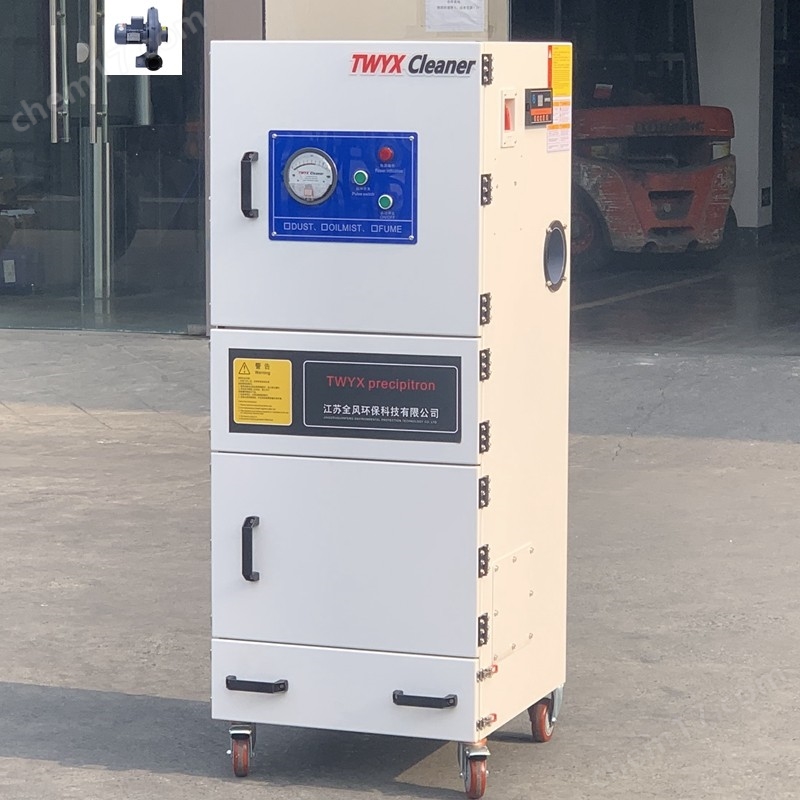
MCJC-5500 industrial pulse dust collector has strong suction power
NegotiableUpdate on 05/06
- Model
- Nature of the Manufacturer
- Producers
- Product Category
- Place of Origin
Overview
The MCJC-5500 industrial pulse dust collector has strong suction power and is mainly equipped with a vortex air pump or fan for exhaust. After impurities enter the machine through the suction nozzle and suction pipe, they enter a filter bag, usually made of non-woven fabric. After primary filtration, the air carrying small dust passes through a special filter and is discharged through the secondary fan exhaust outlet. The filtration efficiency can reach over 96%.
Product Details
MCJC-5500 industrial pulse dust collector has strong suction power
Polishing industrial dust collectorCommon application scope: Specific application scope: Workshop dust collector can be used in mechanical processing and manufacturing industry to clean various metal chips and dust, especially in cast iron processing to demonstrate its effectiveness. The workshop dust collector can be used in the glass fiber manufacturing industry to absorb dust and residue generated during the grinding of hardened surfaces in glass fiber product manufacturing. Workshop dust collectors can be used in the biopharmaceutical industry for dust removal and purification in production workshops. Workshop dust collectors can be used in the food industry to absorb oil fumes, moisture, and food residues. The workshop dust collector can be used for grain items: for large-scale grain handling, transportation, warehousing, and cleaning. The workshop dust collector can be used in chemical plants to absorb welding fumes, welding fumes, and harmful substances in powder and granular form. Workshop dust collection machines can be used in thermal power plants to clean up deposited dust and debris, especially for daily cleaning of boilers and removal of accumulated dust during regular maintenance. Workshop dust collectors can be used in the microelectronics industry for dust removal, purification, and recycling of cutting materials in production workshops. The workshop dust collector can be used in the battery manufacturing industry for cleaning and waste recycling in production workshops. Workshop dust collectors can be used in the textile industry: to purify workshops and remove fiber floating objects from the air. Workshop dust collectors can be used in the casting industry: for cleaning slag and scrap metal blocks in pouring pits and furnace pits; Remove the waste sand, metal burrs, and oxide scale generated during the casting process; Clean up the silt. Grinding machine vacuum cleaner can be used in cement plants for cleaning, loading and unloading, and suction of intermediate products of raw materials to avoid secondary pollution. Especially in the process of packaging cement, the absorption and purification of dust can improve the working environment for workers. Workshop dust collector is used for cleaning the surfaces of steelmaking, ironmaking, coking, sintering plants, workshop and equipment conveyors, transfer stations, high-rise platforms, cranes, and rolling mills in steel plants; Reduce downtime and improve production efficiency. The workshop dust collector can be used in automobile and ship manufacturing: for the removal of internal welding slag, dust, and dirt, as well as for polishing and dust removal operations before painting.


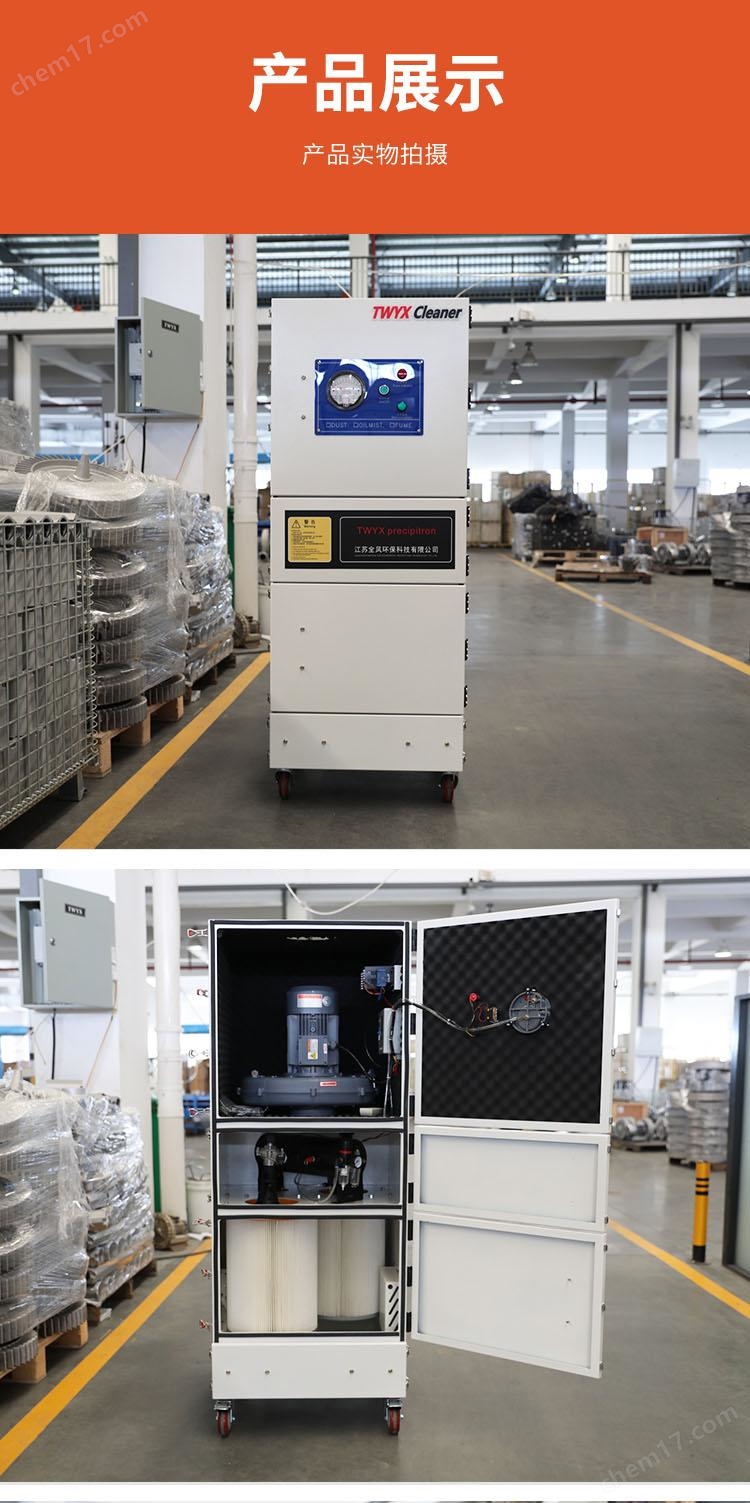

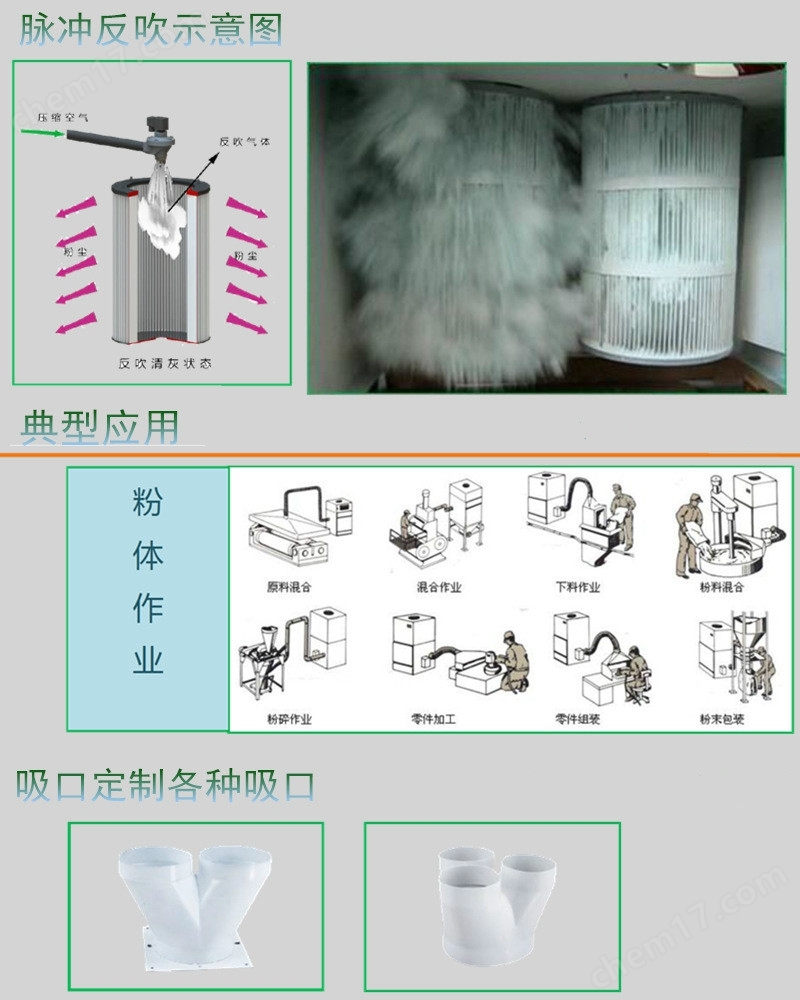

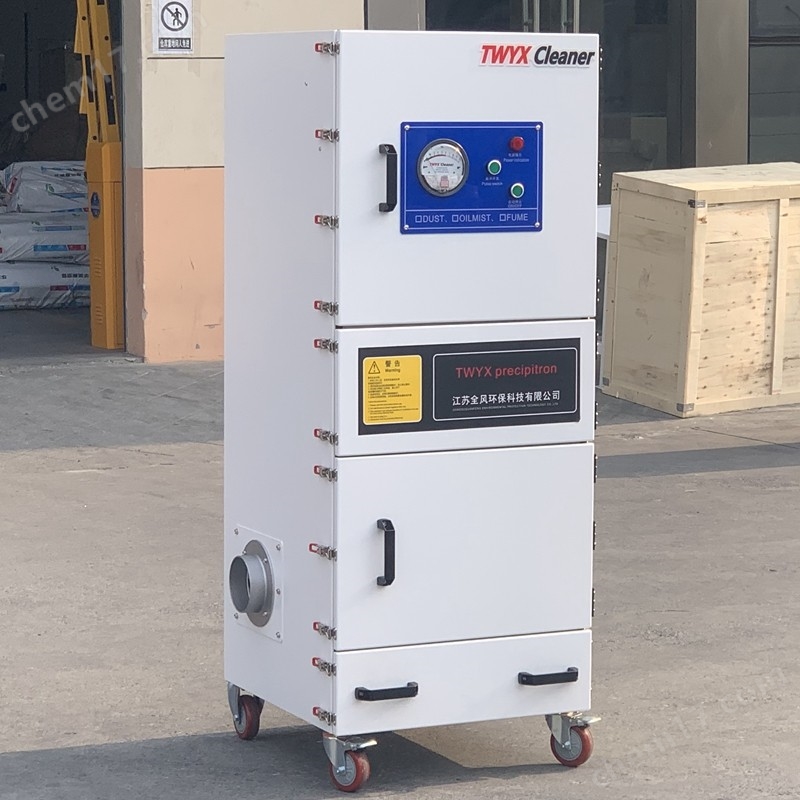
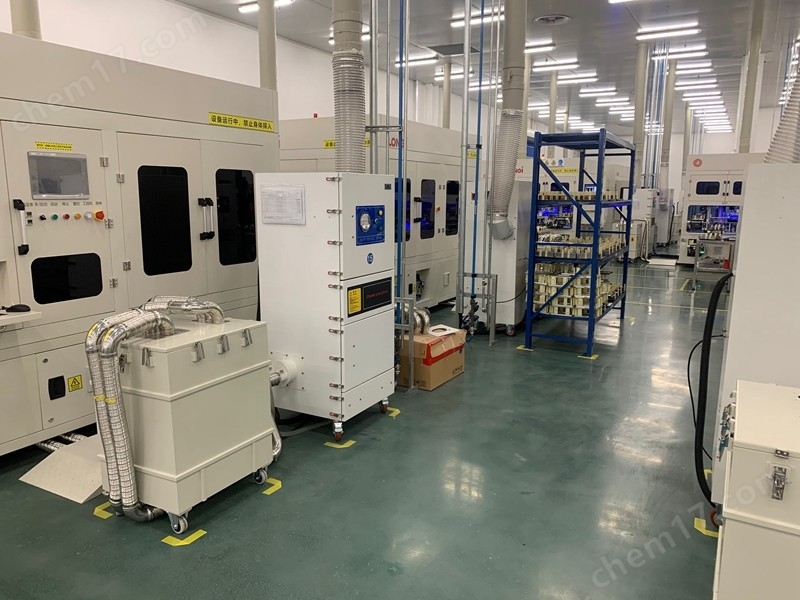

MCJC-5500 industrial pulse dust collector has strong suction power
-Air blowing and dust removal during the cutting and drilling process of integrated circuit motherboards
-Removal of dust generated by drive components such as conveyor belts, chains, hydraulic cylinders, etc
-Dust removal on the surface of parts before the painting process
-Dust removal for precision metal parts processing
-Dust removal in the assembly and inspection process of electronic instruments
Industrial dust collector application | Multi functional industrial dust collectors can choose different filter cartridges to meet different dust properties. They use filter cartridge filters, each of which is equipped with a partition core for good filtration effect, easy replacement of filter cartridges, long service life, and an accuracy of 0.3UM. Centrifugal fans have high air pressure, large air volume, and adopt noise reduction measures. The dust collector components adopt a suction bucket structure and use pulse back blowing automatic dust cleaning, which is very convenient for removing dust.
Application of Industrial Dust Collector | Features of Multi functional Industrial Dust Collector
-Ultra small, lightweight, low noise, high performance
-*Compact design that can be installed on other small devices
-Can operate continuously for 24 hours *
-Dust is collected in a single filter bag, and the filter bag replacement is simple
-Dust removal efficiency of 1 filter bag: 45 µ particles, over 95%
-Dust removal efficiency of secondary filter: 0.3 µ particles, over 98%
-Can achieve cleanliness level: 100000 to 10000
-Configure touch panel
Characteristics and advantages of dust suction and collection machine
1. High precision filter material, with a sub micron filtration efficiency of over 99%, ensuring compliance with emission standards
2. Efficient dust removal fan with strong suction, large air volume, low noise, high efficiency, and smooth operation
3. The filter bag is installed upright, with a uniform filtering surface. When the machine is stopped, it is vibrated and cleaned to avoid secondary adsorption of dust
4. Stainless steel cabinet type body has a small footprint and can be equipped with universal casters to increase equipment applicability
5. The equipment has overheat and short circuit protection functions to ensure stable and safe operation
6. The combination of filter bags is convenient to use and cost-effective, mainly used for collecting dry and high concentration dust
7. Suitable for use in situations without compressed air sources, greatly increasing the applicability of dust collectors
Application cases and industries of industrial pulse dust collectors: equipment used for collecting and absorbing waste media particles, dust, smoke, oil and water generated during production, operation, and transportation processes for industrial purposes. Industrial vacuum cleaners use AC power and have high power, generally divided into two types: 220V and 380V. Their working principle is to use a motor to drive a high-voltage unit (or an integrated machine) to generate negative pressure within a limited volume, thereby generating suction force. After the medium is sucked in, it is filtered through a filter bag or a filter barrel for secondary filtration. The ordinary type can only absorb dry media with water content, while the dry wet dual-use type can absorb oil, water, etc. generated during the processing. After installing an exhaust pipe, industrial vacuum cleaners can be used to remove smoke, gases, and other substances generated during production operations.
For the collection and treatment of floating and suspended dust with a large amount of dust, adding an automatic discharge valve under the ash hopper has the advantages of stability, reliability, small volume, good sealing performance, easy maintenance, and long service life. Its speed is 24r/min, and different power discharge valves can be selected according to different dust collection amounts to achieve a win-win effect of practicality and economy. After PTFE coating treatment, the filtration efficiency of dust above 0.3 µ m reaches over 99%, and this filtration accuracy has a good removal effect on PM2.5. It is suitable for working conditions that generate large amounts of dust, such as steel, cement, furniture, ceramics, chemicals, construction, hardware, plastics, powder operations, cutting operations, grinding operations, sandblasting operations, and organic glass processing operations.
For the properties of dust and dusty gases, the following points should be fully understood to the greatest extent possible:
Firstly, it is necessary to clarify the particle size distribution of dust. The particle size of dust is its fundamental characteristic, which is a collection of particles with different sizes. It is not enough to characterize this collection solely by the average particle size.
Secondly, it is necessary to understand the viscosity of dust. Viscosity is a characteristic of mutual attraction between dust particles or between dust particles and surface molecules of objects. For bag filters, the influence of viscosity is more prominent, as the dust removal efficiency and filtration resistance largely depend on the ability to remove dust from the filter material.
Thirdly, the bulk density or bulk density of dust should be clarified, that is, the weight of dust per unit volume. The unit volume includes the volume of the dust particles themselves, the volume of air adsorbed on the surface of the dust particles, the micropores of the dust particles themselves, and the gaps between the dust particles. Understanding the bulk density of dust is of great significance for ventilation and dust removal, as it is closely related to the dust cleaning performance.
Fourthly, it is necessary to clarify the physical and chemical properties of dusty gases, such as temperature, moisture content, chemical composition, and properties. The determination of these parameters is directly or indirectly related to the additional dust removal measures and the selection of filtration wind speed. If some dusty gases contain chemical components such as chlorides, chlorides are generally prone to "moisture absorption". If no additional measures are taken, it may lead to "bag sticking".
Similar Product Recommend


