-
E-mail
qeservice@enli.com.tw
-
Phone
18512186724
-
Address
Room 409, Building A, No. 169 Shengxia Road, Pudong New Area, Shanghai
Product Categories
Guangyan Technology Co., Ltd

Loss analysis - quasi Fermi level detector
NegotiableUpdate on 01/27
- Model
- Nature of the Manufacturer
- Producers
- Product Category
- Place of Origin
Overview
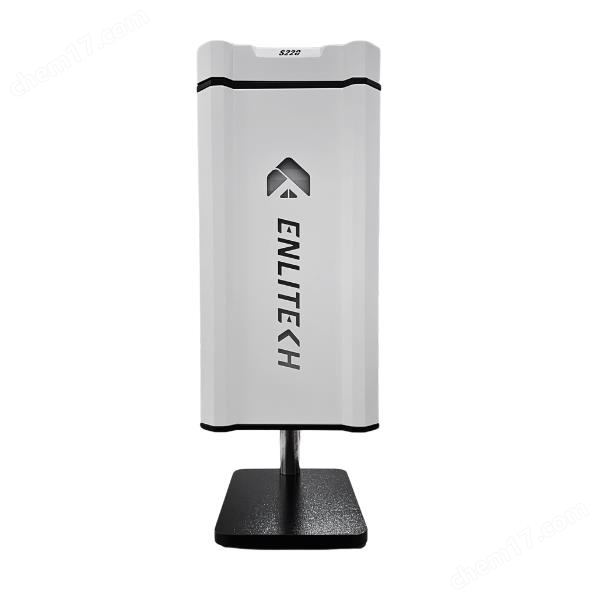
Enlitech is pleased to launch the QFLS Maper loss analysis quasi Fermi level detector, which visually presents QFLS images and allows for a comprehensive understanding of sample QFLS, Pseudo J-V, PLQY, EL-EQE, and more at a glance; The maximum material efficiency can be evaluated through Pseudo J-V within 2 minutes at the fastest; In just 3 seconds, you can understand the distribution of QFLS Fermi levels, grasp the overall material organization at a glance, evaluate material potential in 2 minutes, and analyze QFLS state samples in 3 seconds.
Product Details
Product Introduction
What is QFLS?
QFLS Quasi Fermi Level SplittingUsed to describe the non-equilibrium energy level distribution between photo generated carriers (electrons and holes) under illumination.
Used to quantify the Voc potential of materials and help researchers understand the sources of non radiative composite losses.
Evaluate the impact of different preparation processes on material properties through layer by layer testing, providing a basis for interface engineering and material optimization
Quasi Fermi Level Splitting (QFLS) is an important physical parameter in solar energy research, widely used in the performance evaluation of semiconductor materials and optoelectronic devices. QFLS describes the energy difference between the quasi Fermi levels of electrons and holes in an non-equilibrium state, and its relationship with the open circuit voltage (V) of photovoltaic devicesOC)And it is closely related to Power Conversion Efficiency (PCE). This article aims to comprehensively explore the basic concepts and definitions, background and importance, measurement methods, calculation formulas, and applications of QFLS in photovoltaic devices, and analyze its future development directions.
In the experiment, QFLS can be quantified through photoluminescence (PL) measurement technology. For example, using photon quantum yield (PLQY) and photoluminescence spectroscopy data, QFLS values can be calculated to further obtain iVOC, which can be used to evaluate the photoelectric conversion potential of materialsThe correlation between QFLS and Pseudo J-V Pseudo J-V curve (mimetic J-V)It is a current density voltage (J-V) curve derived and reconstructed based on measurement data theory, commonly used to evaluate the efficiency potential of solar materials or components. Unlike the actual measured J-V curve, the Pseudo J-V curve is not affected by the component structure (such as electrodes or transport layers).
Assist in analyzing the theoretical efficiency limit of materials and provide reference for device design.
Quickly screen materials with high efficiency potential before device preparation to reduce experimental costs and time

feature
QFLS-MaperLoss analysis - quasi Fermi level detector
● Analyze material limits:

within 3 secondsObtain QFLS visual image
Within 2 minutesMeasured Pseudo jv
Quickly provide you with the iVoc and optimal IV curve of photovoltaic materials
●Visual presentation:

QFLS Image visualizes the overall quasi Fermi level distribution of materials, providing a clear view of their quality
●Multi modal functionality:

Measurable key parameters of solar cells such as QFLS, iVoc, Pseudo jv, PL image, PLQY, ELimage, EL-EQE, etc
Specifications
QFLS-MaperLoss analysis - quasi Fermi level detector
| project | Specifications |
|---|---|
| Spectral detection range |
|
| Optical intensity dynamic range |
|
| measure speed |
|
| Scan Type |
|
| Multi modal functional module |
|
application
●Single junction perovskite solar cells
●Perovskite thin film material
Similar Product Recommend