-
E-mail
yangli@top17.net
-
Phone
19032001373
-
Address
No. 182 Xijiu Road, Gongshu District, Hangzhou City, Zhejiang Province
Product Categories
Zhejiang Top Cloud Agriculture Technology Co., Ltd

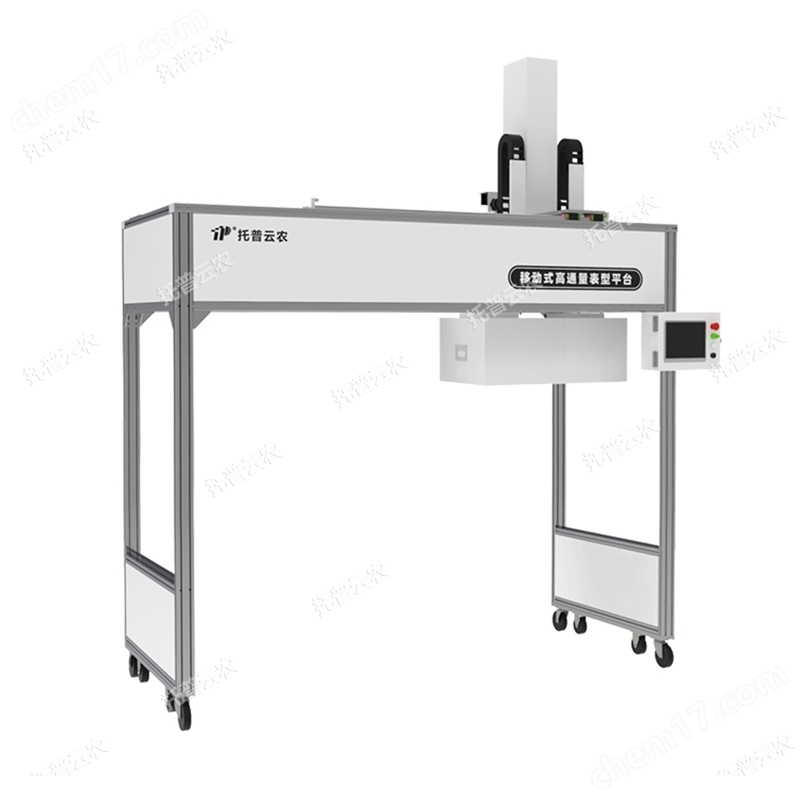
Longmen style high-throughput phenotype acquisition and analysis platform (column style)
NegotiableUpdate on 12/20
- Model
- Nature of the Manufacturer
- Producers
- Product Category
- Place of Origin
Overview
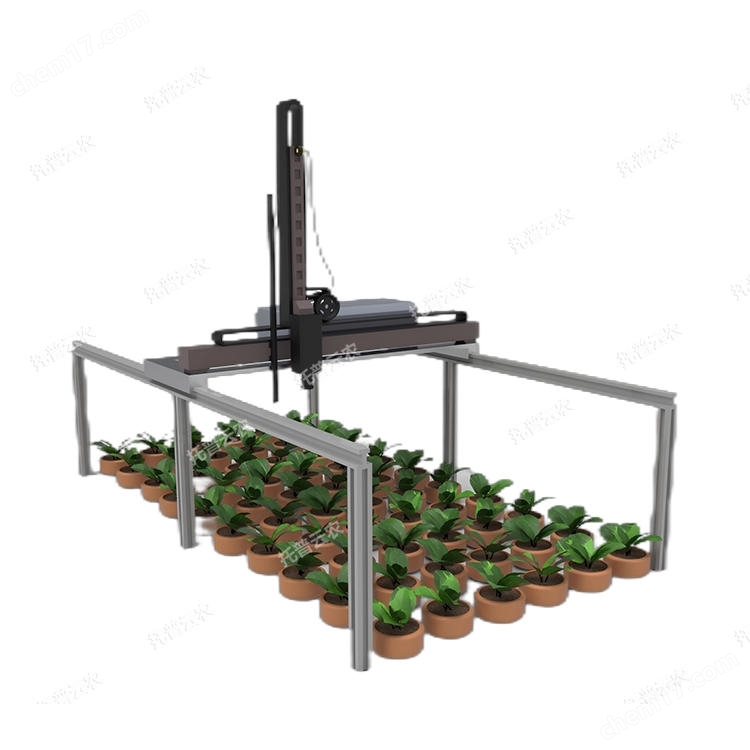
The Longmen style high-throughput phenotype acquisition and analysis platform (column style) is designed for plant phenotypes in terms of gene and expression; A field track based phenotype monitoring device has been developed for long-term continuous dynamic monitoring of plant phenotypes, which exhibits spatiotemporal dynamic changes under environmental interaction. The central imaging unit supports the configuration of multiple types of imaging sensors, effectively ensuring high compatibility between the platform and construction requirements. Continuous measurement of organ scale phenotypic characteristics and physiological parameter changes during crop growth in field environments can be achieved, enabling high-throughput analysis of physiological traits such as photosynthetic efficiency, stress and stress resistance, and screening of stress tolerant varieties.
Product Details
1、 Product Introduction
Longmen style high-throughput phenotype acquisition and analysis platform (column style)It is a field orbital phenotype monitoring device developed for long-term continuous dynamic monitoring of plant phenotypes under the interaction of genes and environment, which exhibits spatiotemporal dynamic changes. The central imaging unit supports the configuration of multiple types of imaging sensors, effectively ensuring high compatibility between the platform and construction requirements.Longmen style high-throughput phenotype acquisition and analysis platform (column style)Continuous measurement of organ scale phenotypic characteristics and physiological parameter changes during crop growth in field environments can be achieved, enabling high-throughput analysis of physiological traits such as photosynthetic efficiency, stress and stress resistance, and screening of stress tolerant varieties.
2、 Functional Features
1. Multi scenario application: It can collect and apply high-throughput phenotype parameters of crops in field or indoor scenarios, adapt to field environment, crop cultivation requirements, user experimental requirements, and crop physiological requirements, meet the field operation needs of different planting densities, and can be used in various scenarios such as growth research, stress response, and disease research in experimental applications.
2. Multimodal imaging system: optional RGB, multispectral, thermal imaging, and chlorophyll fluorescence imaging modules, supporting detection of leaf morphology, chlorophyll content, and water stress.
3. XYZ three-axis automatic movement: The system is based on PCL fully automatic control system, which realizes the full automatic movement and acquisition operation of the central imaging unit, reducing manual operation errors.
4. Equipped with data acquisition and analysis software: integrating multiple optical sensor acquisition interfaces, the software can operate the system for fully automatic operation and acquisition and analysis of various imaging units, and the analysis results are automatically stored in experimental data.
5. High throughput data acquisition: highly integrated collection and analysis of multiple types and multidimensional imaging units, capable of processing over 5000 samples per day (depending on imaging configuration).
6. Automated parameter analysis: The system automatically integrates crop analysis model algorithms and directly analyzes over 100 plant phenotype and physiological parameters based on the imaging module it is equipped with;
7. Equipped with AI algorithm analysis: further AI analysis of measured data to generate growth curves and stress response maps, PDF reports and visual charts can be generated, compatible with R language statistical tools.
8. Environmental control and expansion functions: equipped with automatic weighing, watering, and pesticide spraying systems, integrated with meteorological environment and soil moisture monitoring modules, supporting long-term monitoring and collection of plant growth cycle environmental data.
9. Safety design: The system is equipped with safety protection devices such as limit devices and emergency stop buttons, as well as fault alarm devices to ensure operational safety. Shutdown, faults, offline situations, etc. do not affect system stability.
10. Data security: The data adopts a secure transmission mode, with unlimited storage space expansion, ensuring both user needs and data security.
11. Customized design: It can cooperate with user experiments to carry out demand design, customize different experimental testing plans according to different crops, develop customized software, and ensure long-term updates and upgrades of all software.
12. Environmental adaptability: The track system adopts anti-corrosion coating and sealed bearings, supporting all-weather field operation.
13. Multispectral imaging: Integrated visible light (RGB), near-infrared (NIR), and infrared thermal imaging (Thermo RGB) sensors, with a resolution of 4112 × 3008 (12.3 million pixels), supporting dynamic analysis of leaf morphology (length, width, area) and canopy temperature.
14. Hyperspectral imaging: covering the spectral range of 400-2500 nm, supporting non-invasive detection of chlorophyll fluorescence (SIF) and physiological and biochemical parameters such as nitrogen content and water stress.
15. 3D morphological analysis: Plant 3D reconstruction can be achieved through laser scanning or rotating devices, which can measure parameters such as plant height, canopy coverage, and shadow effects.
16. Morphological phenotype parameters: plant height, leaf area, canopy coverage, leaf inclination angle, total green leaf area, total yellow leaf area, green leaf area ratio, degree of leaf senescence, etc
17. Physiological phenotype parameters: NDVI, Clgreen, and other physiological related vegetation indices related to chlorophyll/nitrogen content
18. Canopy temperature parameters: canopy temperature, canopy air temperature difference, etc
19. Chlorophyll fluorescence parameters: Fv/Fm, PSII, etc
3、 Technical parameters
1. Longmen mobile unit (column track)
Longmen frame size: span 2-12m, length 20m, customizable design
Longmen frame height: 3-6m, customizable design
Maximum Load Capacity: 200 kg
Track repeat positioning accuracy: ± 0.5 mm
Operating speed: 0~4m/s, variable frequency speed regulation
Working environment: Temperature range: -20~50 ℃, humidity range: 30%~90% RH
2. Visible light imaging unit
Sensor type: Full color high-resolution RGB industrial camera
Camera Pixel: 12.3 million pixels
Measurement parameters: including total crop area, green leaf area, proportion of green leaf area, fractal dimension, inscribed moment area, inscribed moment width, height, perimeter area ratio, minimum inscribed moment area ratio of total area, convex hull area, visible leaf edge length, crop green holding characteristics, degree of leaf curl, proportion of dead leaves, plant compactness, plant extensibility, plant type dispersion, etc.
3. Spectral imaging unit
Hyperspectral imaging wavelength range: 400~2500 nm (400~1000nm, 900~1700nm, 1000-2500nm)
Multi spectral imaging wavelength range: 4/6/8 channel bands (400~1000nm)
Spectral resolution: 5.5nm (hyperspectral)
Measurement parameters: Calculate the spectral characteristic curve of plant canopy and obtain thirty commonly used vegetation indices such as NDVI and GVI. Analyze biological parameters such as chlorophyll content and canopy nitrogen content to analyze changes in plant component content, nutritional status, and disease occurrence.
4. Lidar unit
Laser grade: Level 1 safe laser
Distance measurement range: 0.1~20m
Collecting field of view angle: 360 ° horizontally, 300 ° vertically
Measurement accuracy:< 3mm@1m
Measurement parameters: plant height, leaf area, leaf area index, projected area, plant canopy coverage, mean plant canopy height, mean plant canopy width, mean plant canopy width, leaf area density, etc.
5. Infrared thermal imaging unit
Temperature measurement range: -40 to+150 ℃,+100 to+650 ℃,+300 to+2000 ℃ (optional)
Temperature measurement accuracy: ± 2 ℃ or ± 2% of the reading
Resolution: 640 * 480 pixels
Focal length: 24.6mm or similar
Thermal sensitivity/NETD:<0.05 ℃ @+30 ℃/50mK
Spatial resolution (IFOV): 0.68mrad
Detector pixel spacing: 17 µ m
Detection time constant: typical value 8ms
Measurement parameters: can calculate the average temperature, maximum temperature, and minimum temperature of the canopy, and can form temperature distribution maps and regional temperature analysis.
Similar Product Recommend