-
E-mail
491835802@qq.com
-
Phone
15981872973
-
Address
No.2 Courtyard, Hanghai South Road, Erqi District, Zhengzhou City, Henan Province
Product Categories
- PL-UV spray photolysis combined purification equipment
- Laboratory gas generator
- Ultrasonic cleaning machine
- Design and processing of non-standard accessories
- Laboratory cleaning tank renovation
- spray tower
- Laboratory ultrasonic bottle washing machine
- Laboratory waste gas treatment equipment
- Custom development and design of non-standard products
- Laboratory wastewater treatment device
- Integrated sewage treatment equipment
- Design and processing of non-standard equipment
- Medical wastewater sterilization treatment equipment
Henan Hongzhiyi Instrument Equipment Co., Ltd
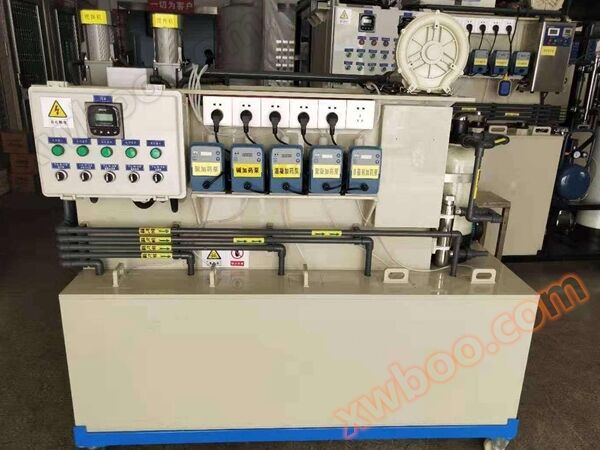
Laboratory wastewater treatment
NegotiableUpdate on 05/05
- Model
- Nature of the Manufacturer
- Producers
- Product Category
- Place of Origin
Overview
Basic Introduction:
Product Details
Basic Introduction:
The amount of wastewater in university laboratories is small, the intermittency is strong, the harm is high, and the composition of pollutants is different, resulting in different treatment principles and methods. Therefore, it is difficult to treat such wastewater. At present, there are several mature methods for treating such laboratory wastewater.
1. Flocculation sedimentation method
This method is suitable for inorganic experimental wastewater containing a high concentration of heavy metal ions. After determining the heavy metal ions in the wastewater, suitable flocculants such as lime, iron salts, aluminum salts, etc. can be selected. Under weakly alkaline conditions, flocculent precipitates such as Mn (OH) 2, Fe (OH) 3, Al (OH) 3 can be formed. At the same time, these flocculent precipitates also have adsorption properties, which can remove heavy metal ions and other pollutants in the water, reduce the chemical oxygen demand in the water, and improve the biodegradability of the wastewater.
2 Sulfide precipitation method
This method is mainly aimed at laboratory wastewater containing heavy metals such as cadmium, lead, and mercury. Generally, Na2S or NaHS is used to transform the heavy metals in the wastewater into insoluble metal sulfides, which are then co precipitated with Fe (OH) 3 for separation. Specific method: Adjust the pH value of the wastewater to 8.0-10.0, add excess Na2S to the wastewater to generate sulfide precipitation, and then add FeSO4 as a co precipitant. The generated FeS adsorbs metal sulfur ions suspended in the water to form a co precipitate, which is then left to stand, separated, and filtered.
3 Oxidation reduction neutralization precipitation method
The principle of this method is that inorganic metal ions in ionic state can be converted into metallic elements using some reducing agents, and then separated. Common reducing agents include Fe, Zn, NaBH4, etc.
Activated carbon adsorption method is commonly used to remove trace amounts of dissolved organic matter that cannot be removed by chemical or physical methods. Specific treatment method: Separate the wastewater into organic and inorganic phases, and then use activated carbon for secondary adsorption. The chemical oxygen demand removal rate of this method can reach 93%, and activated carbon can also adsorb some inorganic metal ions.
5 Incineration method
This method is applicable to waste liquids that can form emulsions and the like. But it is necessary to avoid secondary pollution caused by the use of this method. For example, organic waste containing only carbon, hydrogen, and oxygen elements generally does not cause secondary pollution during combustion, while organic waste containing halogens, nitrogen, sulfur, and other elements will produce various toxic gases such as NO, NO2, SO2 during incineration. In this case, other methods should be considered.
6 Other methods for treating experimental wastewater containing heavy metal ions
In addition to the sulfide and flocculation precipitation methods mentioned above, there are also electrolytic coagulation, adsorption, magnetic separation, reduction centrifugation, ion exchange, and other methods for treating wastewater containing heavy metal ions. For example, when using the reduction centrifugation method to remove heavy metal ions, the removal rate of mercury ions can reach 100% and lead ions can reach 98.3% after 30 minutes of reaction at 6000 r/min.
7 methods for treating high concentration organic wastewater
In addition to the incineration and activated carbon adsorption methods mentioned above, solvent extraction, oxidative decomposition, hydrolysis, and biochemical treatment methods can also be used to treat high concentration organic wastewater. For example, the high concentration organic wastewater hydrolysis aerobic cycle integrated biological treatment technology developed by Xiamen University can achieve efficient biological treatment of high concentration organic wastewater.
This product can be designed and produced according to the actual situation of the customer's site.