-
E-mail
2803218312@qq.com
-
Phone
18166600153
-
Address
Room 2804-2805, 28th Floor, T3 Building, Qidi Center, No. 67 Keji 2nd Road, High tech Zone, Xi'an City, Shaanxi Province
Product Categories
Xi'an Yingrun Environmental Protection Technology Group Co., Ltd
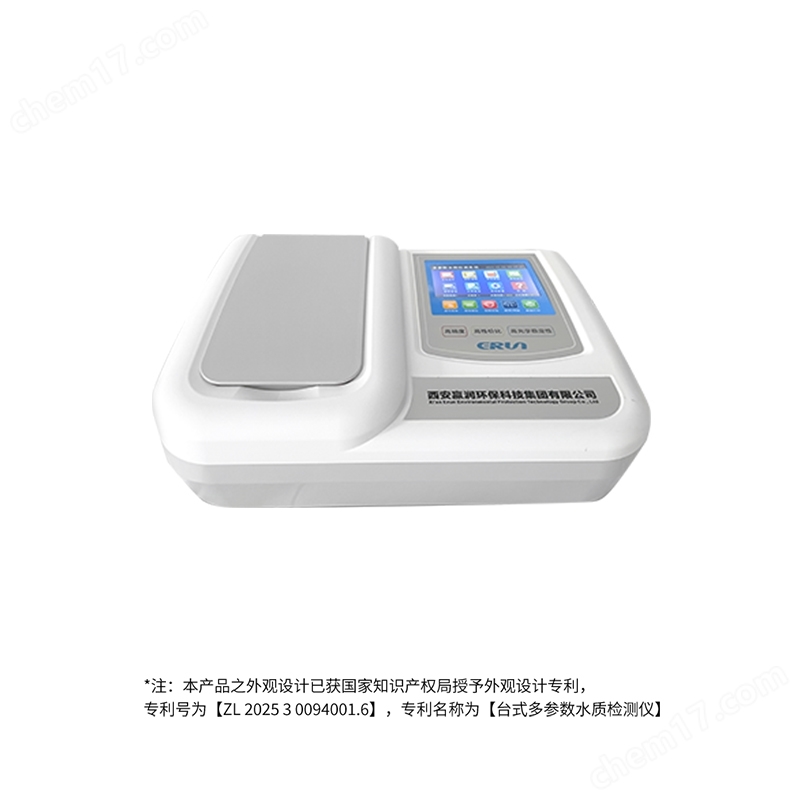

Laboratory desktop boiler water quality total alkalinity analyzer
NegotiableUpdate on 01/18
- Model
- Nature of the Manufacturer
- Producers
- Product Category
- Place of Origin
Overview
Accurately measuring the alkalinity of water is crucial in the field of water quality monitoring. Alkalinity, as a key parameter for measuring the proton absorption capacity of water bodies, not only reflects the buffering capacity of water bodies, but is also closely related to the solubility and toxicity of metals in water. Accurate control of alkalinity values is the foundation for ensuring water quality safety and stable equipment operation, whether it is surface water, industrial wastewater, or boiler water. The ERUN-ST7-B3 laboratory desktop boiler water quality total alkalinity analyzer is a professional instrument tailored for multi scenario water quality alkalinity detection.
Product Details
Accurately measuring the alkalinity of water is crucial in the field of water quality monitoring. Alkalinity, as a key parameter for measuring the proton absorption capacity of water bodies, not only reflects the buffering capacity of water bodies, but is also closely related to the solubility and toxicity of metals in water. Accurate control of alkalinity values is the foundation for ensuring water quality safety and stable equipment operation, whether it is surface water, industrial wastewater, or boiler water. ERUN-ST7-B3Laboratory desktop boiler water quality total alkalinity analyzerIt is precisely such a professional instrument tailored for multi scenario water quality alkalinity detection.
Alkalinity is a quantitative indicator of water's ability to absorb protons, which directly affects the acid-base balance and buffering performance of water bodies. In natural water bodies, alkalinity is mainly contributed by carbonates, bicarbonates, and hydroxides, and their values can reflect the self purification ability of the water body and the migration and transformation of metal ions. For the industrial sector, wastewater discharged from industries such as papermaking, printing and dyeing, chemical engineering, and electroplating often contains high alkalinity components. If not effectively treated, it can not only disrupt the ecological balance of the receiving water body, but also exacerbate the dissolution and toxic release of heavy metals. In the boiler system, excessive alkali can easily cause scaling problems, leading to a decrease in thermal conductivity efficiency and even triggering safety accidents. According to the "Industrial Boiler Water Quality" standard (GB/T 1576-2018), the alkalinity of boiler water needs to be strictly controlled within a specific range to ensure safe operation.
The ERUN-ST7-B3 desktop water alkalinity analyzer is designed specifically for total alkalinity detection, with its core advantages being "precision, intelligence, and convenience". The instrument adopts imported high-performance cold light source, with long service life and stable emission. Combined with automatic wavelength selection function, it can adapt to different detection needs without manual calibration, fundamentally avoiding human errors. Its basic measurement error is ≤ ± 5%, repeatability is ≤ 2%, and optical stability is good (absorbance drift within 20 minutes is less than 0.002A), ensuring the reliability of each detection result.
Desktop water alkalinity analyzer product features:
★measurement range0.00-1000.0 mg/L total alkalinity.
★basic error: ≤± 5%, repeatability ≤ 2%, good optical stability (absorbance drift<0.002A within 20 minutes).
★operating interfaceColor touch screen, bilingual menu in Chinese and English, intuitive operation, user-friendly.
★data processingThe measurement results can be stored, printed, or exported to a computer through a USB interface for easy experimental recording and data management.
★Flexible calibrationSupport user-defined calibration curves (up to 3500 custom curves can be added in addition to factory curves); Equipped with "linear method" or "line method" measurement methods to adapt to the alkalinity characteristics of different water samples.
★Large capacity recordingUp to 100000 records can be stored, including parameter names, concentrations, units, detection times, operator numbers, and other information for easy tracking and auditing.
Technical parameters of desktop water alkalinity analyzer:
|
|
|
|
|
|
|
|
|
|
|
|
| |
Typical applications of desktop water alkalinity analyzer:
▲Drinking water and surface water testingMonitor the total alkalinity of urban and rural water supply, lakes, rivers and other water sources to determine the buffering capacity and stability of water bodies.
▲Industrial wastewater analysisHigh or low alkalinity in wastewater discharge from industries such as papermaking, printing and dyeing, chemical engineering, and electroplating can affect wastewater treatment or pose environmental risks. This instrument can provide accurate data.
▲Boiler water and circulating water treatmentThe boiler/cooling system has strict requirements for water quality. Excessive alkalinity can lead to scaling and reduce thermal efficiency. This instrument can be used to regularly monitor changes in water quality.
▲Sewage treatment and environmental monitoring institutionsAs a standard method for water quality analysis, it is used for discharge water quality testing, compliance acceptance, enterprise self inspection, and environmental monitoring.
Alkalinity reflects the buffering capacity of water bodies, and excessive alkalinity can lead to boiler scaling (a 10-15% decrease in thermal efficiency) and intensified metal corrosion; If it is too low, it can easily cause severe pH fluctuations and affect the effectiveness of biochemical treatment. Based on national standardsAccording to the Water Quality Standards for Sewage Discharged into Urban Sewers (GB/T 31962-2015), the alkalinity of some industries' drainage needs to be controlled within a reasonable range. ERUN-ST7-B3Laboratory desktop boiler water quality total alkalinity analyzerTo provide solid technical support for water quality safety with high precision, high stability, and strong scalability.
Similar Product Recommend