-
E-mail
huanuodianzi@126.com
-
Phone
13839220101
-
Address
Chengbei Industrial Zone, Hebi City, Henan Province
Product Categories
Huanuo Electronic Technology Co., Ltd

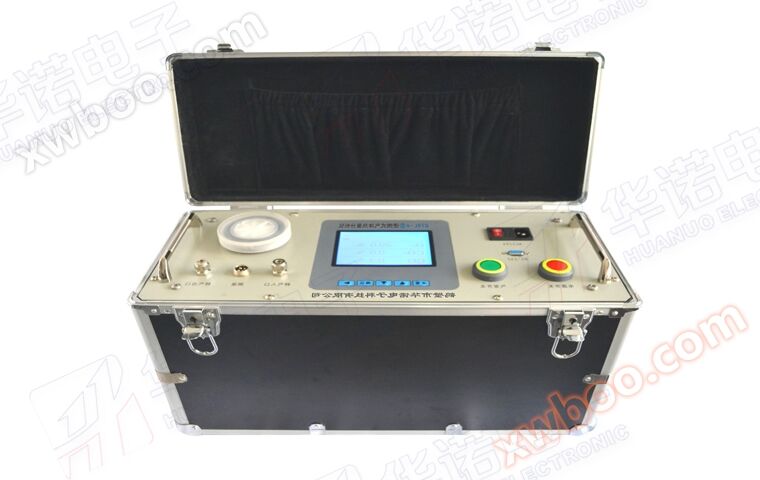
High negative pressure sampler
NegotiableUpdate on 10/30
- Model
- Nature of the Manufacturer
- Producers
- Product Category
- Place of Origin
Overview
This instrument is easy to carry, requires a small amount of samples, is easy to operate, fast, and has high sensitivity. Especially when it is necessary to immediately determine the composition, concentration, and danger of harmful gases, it is an essential and effective tool.
Product Details
This instrument is easy to carry, requires a small amount of samples, is easy to operate, fast, and has high sensitivity. Especially when it is necessary to immediately determine the composition, concentration, and danger of harmful gases, it is an essential and effective tool.
Structure and Working Principle
l、 sampler
The structure of the sampler is shown in the figure

1. Air nozzle 2. Rubber hose connector 3. Valve handle 4. Variable valve 5. Gasket 6, piston cylinder 7. Pull rod 8. Handle
Main purpose and scope of application
This sampler is manufactured according to the coal industry standard MT/T629-1996 "Cylindrical Positive Pressure Sampler for Gas Detection Tubes" of the People's Republic of China. The sampler can be used in conjunction with various gas detection tubes.
The CZY-50 gas detection tube is equipped with a cylindrical positive pressure sampler for various gas sampling purposes. It is mainly used by departments such as coal mines, metallurgy, chemical industry, coking, gas stations, tunnel engineering, environmental protection, and health and epidemic prevention to quickly measure the concentrations of various gases such as carbon monoxide, carbon dioxide, hydrogen sulfide, sulfur dioxide, nitrogen dioxide, ammonia, oxygen, and hydrogen in the ambient air on site. It is a reliable detection instrument that ensures safe production and prevents disasters from occurring.
Measurement range for multiple gases:
This instrument can be randomly equipped with the following types of detection tubes according to customer requirements:
1. Low concentration carbon monoxide detection tube, with a range of 0.001%~0.05% and 0.00025%~0.005%;
2. Carbon dioxide detection tube, with a range of 0.5% to 20% and 0.05% to 4%;
3. Hydrogen sulfide detection tube, range: 0.0001%~0.012%;
4. Sulfur dioxide detection tube, range: 0.000 1%~0.01%;
5. Nitrogen dioxide detection tube, range: 0.0001%~0.01%;
6. Ammonia detection tube, range: 0.0001%~0.016%;
7. Oxygen detection tube, range: 1% -21%;
8. Hydrogen detection tube, with a range of O% to 3%.
The sampler can also be used in conjunction with other types of gas detectors. The commonly used types of detection tubes and their measurement ranges can be found in the attached table for customers to choose from.
Instructions for using gas sampler
1. Clean the sampler 3-5 times with the desired gas sample before measurement;
2. Use a small grinding wheel or a small hole on the end face of the variable valve to disconnect the two ends of the detection tube, and insert the detection tube into the rubber hose joint according to its requirements;
3. According to the requirements of the detection tube, input the tested gas sample (compressed or extracted) to it;
4. Read the concentration value of the measured gas.
Precautions
1. To ensure that the air leakage of the sampler does not exceed the specified limit, the sealing lubricating grease should be replaced regularly (1-2 months). The oil grade is No. 3 composite calcium based grease or Vaseline;
l2、 If the concentration of the object being tested in the ambient air is very low and it is not easy to measure with a low concentration detection tube, the volume of the gas sample passing through the detection tube can be doubled. The measured concentration value divided by the amplification factor is the actual concentration of the object being tested;
3. If the concentration of the object being measured in the ambient air is high and exceeds the upper limit of the detection tube, fresh air can be used to dilute the gas sample multiple times. The measured concentration value multiplied by the dilution factor is the actual concentration of the object being measured in the gas sample. But in some places (such as underground coal mines), it is difficult to find fresh air. In this case, the method of reducing the gas sample volume and air supply time by multiple can also be used to determine the actual content of the tested object. The reading of the detection tube multiplied by the reduced multiple is the actual content of the tested object. But generally, the reduction factor should not be too large, otherwise it is easy to produce significant measurement errors. Therefore, when high requirements are placed on the measurement results, it is better to replace the detection tube with a high measurement upper limit.
Transportation and storage
1. The packaging of this instrument is suitable for transportation vehicles such as automobiles, trains, ships, and aviation. During transportation, it is necessary to prevent severe vibration and impact, and rain protection is required. It is strictly prohibited to mix with other harmful gases or corrosive substances.
2. The instrument is placed in a dry and clean warehouse that is free from rain, snow, air circulation, and harmful substances such as sulfides and silicides.
3. The storage temperature is 0-40 ℃.
Technical Specifications
1. The relative error of the sampler volume is less than ± 5% of its nominal value;
2. The leakage rate of the sampler per minute shall not exceed 3% of the measured volume;
3. The gas volume of the sampler once (under the condition of gas flow rate of 100ml/min and ventilation resistance not exceeding 20994Pa): 50 ± 2.5ml;
4. Quality:
(1) Including finished boxes and testing tubes, 1.5kg.
(2) Excluding finished boxes and testing tubes, 0.6kg.
5. External dimensions
(1) The external dimensions of the finished box (excluding straps) are 240mm x 145mm x 85mm.
(2) Sampler dimensions: 200mm x 30m.
Similar Product Recommend