-
E-mail
491835802@qq.com
-
Phone
15981872973
-
Address
No.2 Courtyard, Hanghai South Road, Erqi District, Zhengzhou City, Henan Province
Product Categories
- PL-UV spray photolysis combined purification equipment
- Laboratory gas generator
- Ultrasonic cleaning machine
- Design and processing of non-standard accessories
- Laboratory cleaning tank renovation
- spray tower
- Laboratory ultrasonic bottle washing machine
- Laboratory waste gas treatment equipment
- Custom development and design of non-standard products
- Laboratory wastewater treatment device
- Integrated sewage treatment equipment
- Design and processing of non-standard equipment
- Medical wastewater sterilization treatment equipment
Henan Hongzhiyi Instrument Equipment Co., Ltd
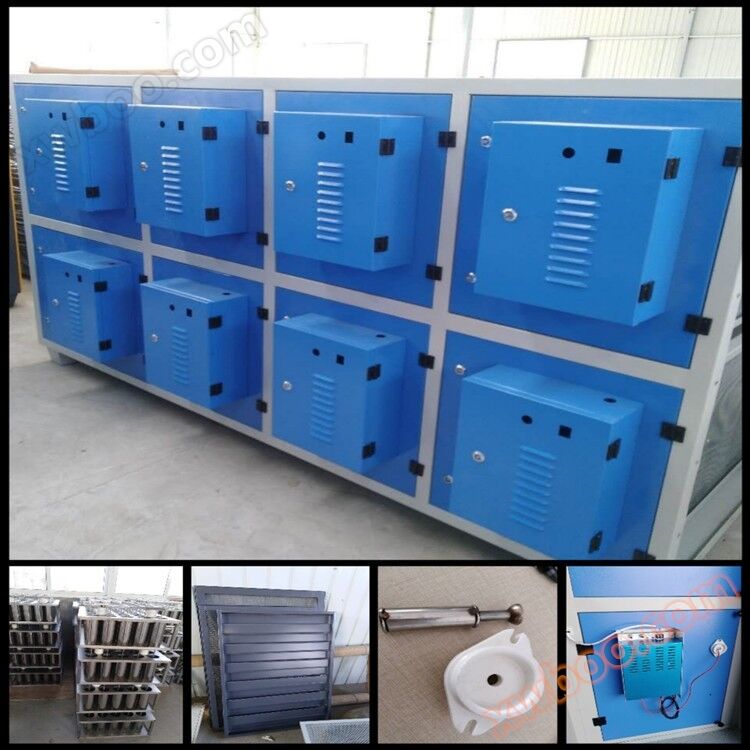
HZYDL series low-temperature plasma exhaust gas treatment equipment
NegotiableUpdate on 05/05
- Model
- Nature of the Manufacturer
- Producers
- Product Category
- Place of Origin
Overview
Basic Introduction:
Product Details
Basic Introduction:
HZYDL series low-temperature plasma exhaust gas treatment
Electrostatic smoke removal equipment
Simple process, easy maintenance, and wide range of applications
Characteristics of low-temperature plasma products
The plasma generates particles rich in extremely high chemical activity, such as electrons, ions, free radicals, and excited state molecules. The pollutants in the exhaust gas react with these high-energy active groups and are ultimately converted into substances such as CO2 and H2O, thereby achieving the goal of purifying the exhaust gas.
Wide range of applications
High purification efficiency, especially suitable for multi-component odorous gases that are difficult to treat by other methods, such as chemical, pharmaceutical and other industries. Small footprint; Electrons have high energy and can interact with almost all odorous gas molecules; Low operating costs; React quickly, stop very quickly, and start as needed.
High tech innovative products
Low temperature plasma technology is an electrochemical process under the comprehensive action of electronics, chemistry, catalysis, etc., and is a new field of technological innovation. It relies on the strong electric field energy generated by plasma in an instant, ionizing and breaking the chemical bond energy of harmful gases, thereby destroying the molecular structure of exhaust gas and achieving the purpose of purification.
Low temperature plasma purifier
No need to add any substances:
Low temperature plasma exhaust gas treatment is a new purification process that does not require the addition of any additives during operation, does not produce wastewater or waste residue, and does not cause secondary pollution.
installation effect
Strong equipment combination: Low temperature plasma equipment is lightweight, small in size, and can be placed vertically or horizontally according to site requirements. It can be designed in series or parallel according to exhaust gas concentration, flow rate, and composition to achieve complete exhaust gas purification.
Low energy consumption and energy saving
Low operating costs and power saving are one of the core technologies of low-temperature plasma patents, which can process 100M3/h of odor and consume only 0.25 kWh of electricity. This device has no mechanical action, high degree of automation, simple process, and can be used and started at any time. It is easy to operate and does not require dedicated management or daily maintenance. In the event of a malfunction, it will automatically shut down and sound an alarm, requiring only regular inspections.
Efficient oil fume removal and deodorization
It can efficiently remove major pollutants such as volatile organic compounds (VOCs), inorganic substances, sulfides, ammonia, thiols, as well as various odors, with a deodorization efficiency of over 99.9%, greatly exceeding the national odor pollutant emission standards.
When using low-temperature plasma to decompose pollutants such as oil mist and exhaust gas, high-energy ions in the plasma play a decisive role. High energy ions resembling meteor showers collide non elastically with molecules (atoms) in the medium, converting energy into the internal energy of ground state molecules (atoms), and undergoing a series of processes such as excitation, dissociation, and ionization to activate the polluted medium. Under the action of plasma, the pollutant medium generates active free radicals, and the activated pollutant molecules are removed through plasma directed chain chemical reactions. When the average energy of ions exceeds the chemical bond binding energy in the contaminated medium, the molecular chain breaks, the contaminated medium decomposes, and is collected under the action of the adsorption field of the plasma generator. In low-temperature plasma, various types of chemical reactions may occur, which mainly depend on the average energy of the plasma, ion density, gas temperature, molecular concentration in the pollutant medium, and coexisting medium components.
There is enough energy to generate free radicals, triggering a series of complex physical and chemical reactions. The gas organic chemical reactions caused by low-temperature plasma are ionization, dissociation, excitation, intermolecular binding, and addition reactions that occur in the gas phase. This energy is sufficient to break the chemical bonds in most gaseous organic compounds, leading to their degradation.