-
E-mail
szcx17@163.com
-
Phone
13631576199
-
Address
1F, Fenghe Park, Gongle Industrial Zone, Xixiang Avenue, Bao'an District, Shenzhen City, Guangdong Province
Product Categories
Shenzhen Chuangxin Instrument Co., Ltd
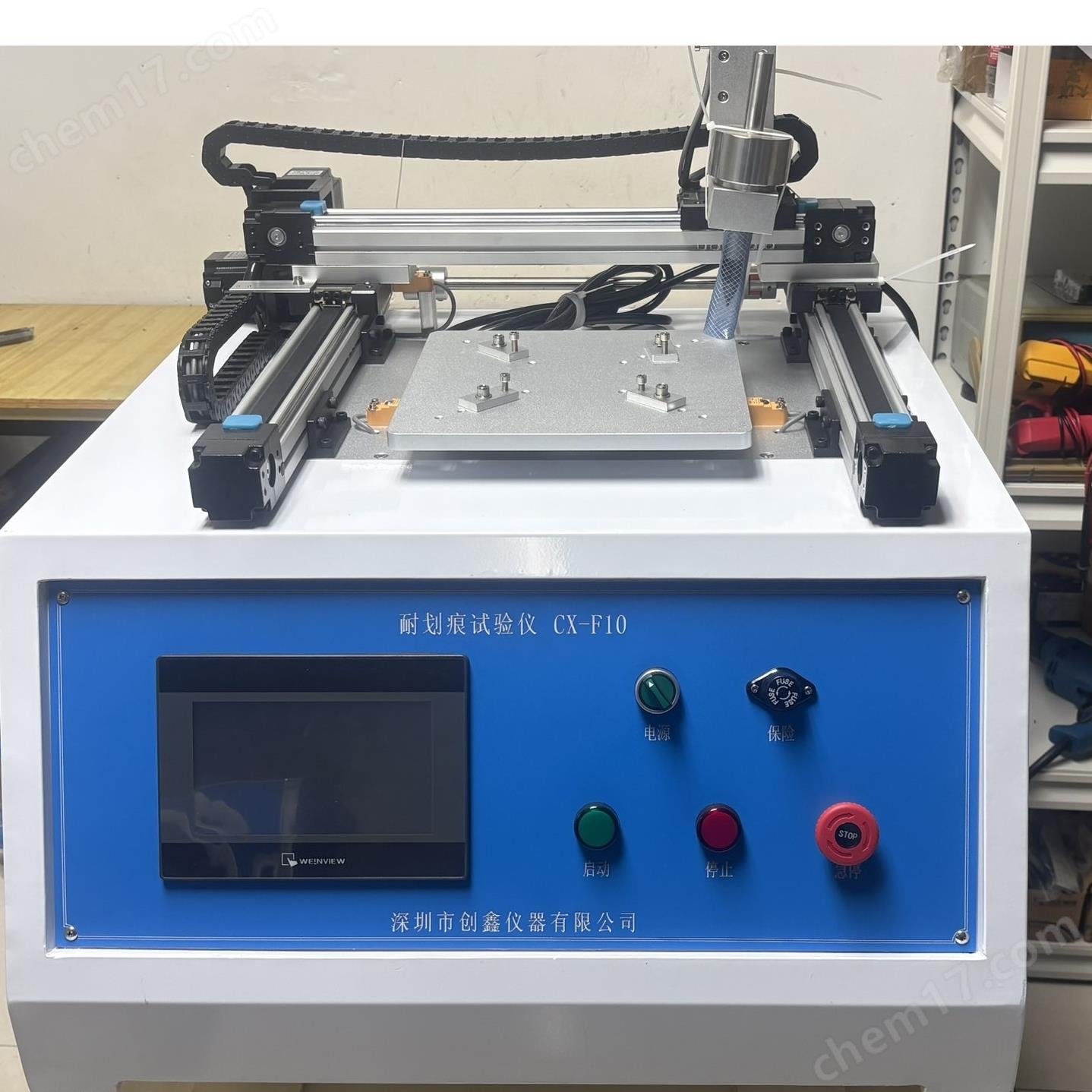
GB4943.1 Scratch resistance tester
NegotiableUpdate on 12/28
- Model
- Nature of the Manufacturer
- Producers
- Product Category
- Place of Origin
Overview
The GB4943.1 scratch resistance tester is designed and manufactured in accordance with the requirements of Article 2.10.8.4 of GB4943.1-2011, Article 2.10.8.4 of IEC60950, Article 21.2 of GB4706.1, and Article 21.2 of IEC60335-1. It is suitable for conducting scratch tests on easily accessible parts or printed boards with solid insulation of household appliances and similar products, ensuring that the material has sufficient strength and is not pierced by sharp tools.
Product Details
GB4943.1 Scratch resistance tester
Product Introduction
This device is based onGB4943.1-2011第2.10.8.4Terms and conditionsIEC60950第2.10.8.4Terms and conditionsGB4706.1第21.2Terms and conditionsIEC60335-1第21.2The requirements for the design and manufacturing of relevant clauses apply to the scratch test of easily accessible components or printed boards with solid insulation for household appliances and similar products, ensuring that the material has sufficient strength to prevent piercing by sharp tools.
This machine adoptsPLC+The touch screen control system, stepper motor drive, scratch distance, scratch frequency, and scratch speed can all be preset,90°Automatic angle rotation enables easy scratch testing in both vertical and horizontal directions. This device has stable performance and can be operated with just one click. It is a professional laboratory testing equipment.
Experimental principle and structure
Test principle: Coating scratch resistance test uses quenched steel needles to perform scratches,The end of the steel needle should be conical,The top angle is40°The top should be rounded and polished with a radius of0.25mm±0.02mmScratches pass through five pairs of conductive parts, including their intermediate intervals, which should be the part that bears the largest potential gradient Z during the test. When conducting scratch tests, keep the needle level with the horizontal plane80-85°At that time, with20mm/s±5mm/sScratch the speed. An appropriate load should be applied to the steel needle so that it can exert force along its axis direction10N±0.5NThe force acting on each scratch should be at least spaced apart by5mmAnd it should also be at least a distance away from the sample edge5mm.
GB 4943.1 Application and Technical Requirements for Scratch Testers GB 4943.1 "Information Technology Equipment Safety Part 1: General Requirements" is the core standard for information technology equipment safety in China. The scratch tester is used to evaluate the scratch resistance of non-metallic material surfaces such as equipment casings and operating components, verify whether they will be damaged or cracked under normal use or slight friction and scratching, and thus avoid the risk of electric shock caused by exposure of internal live parts. 1、 The purpose of the experiment is to confirm the surface hardness and scratch resistance of non-metallic shells, handles, knobs, and other components, in order to prevent material damage caused by scratches during daily use (such as cleaning, touching, and moving), and to expose internal hazardous components. Verify the adhesion and durability of the coating or non-metallic material itself to avoid safety hazards caused by coating detachment (such as short circuits caused by conductive coating detachment). 2、 Scope of application (according to the requirements of GB 4943.1) Non metallic casings of information technology equipment, such as casings of computer hosts, printers, servers, monitors, etc. Surface of operating components: non-metallic contact surfaces such as buttons, knobs, and switches. Non metallic parts that are accessible to users, such as handles, brackets, and other easily scratched parts of equipment. 3、 The core technical parameters (standard regulations) of GB 4943.1 for scratch testers vary slightly in different versions. The core parameters need to meet the following points: the material of the test needle is usually hard alloy or quenched steel needle, and the needle tip needs to be polished to the specified roughness (generally R ₐ 0.2~0.4 μ m). Shape: The needle tip angle is usually 90 ° or 60 °, and specific requirements must comply with the standard version. During the loading force test, a constant normal force should be applied, with a common load of 10N. The load should be selected according to the usage scenario of the tested component (such as selecting 5 N for frequently touched areas and 20 N for areas that may be scratched by external forces). Moving speed and stroke scratch speed: generally 10-50 mm/s. Scratch stroke: The length of a single scratch should not be less than 50 mm, or it should cover the critical contact surface of the tested component. The experimental method adopts linear reciprocating scratching or unidirectional scratching, which is determined according to the actual operating conditions of the components; For curved components, suitable fixtures must be equipped to ensure that the test needle is perpendicular to the surface. 4、 According to the requirements of GB 4943.1, after the test, the tested component must meet the following conditions to be judged as qualified: no visible damage, cracking, or perforation on the surface, and no delamination or detachment of non-metallic materials. If it is a protective shell for live parts, scratches must not expose the live conductors or dangerous parts inside. Coated components must not have large areas of detachment, only minor surface scratches are allowed (without substrate exposure). 5、 The difference between other tests and the spring impact hammer test is that the impact hammer focuses on impact resistance, while the scratch tester focuses on scratch resistance. Difference from ball pressure test: Ball pressure test evaluates the heat deformation resistance of non-metallic materials, while scratch test evaluates the mechanical scratch resistance. 6、 Equipment selection precautions: Select equipment that meets the current valid version requirements of GB 4943.1, and prioritize the purchase of instruments with CNAS calibration certificates. The instrument needs to have precise load adjustment and speed stability control functions, and be equipped with different angles of test needles and curved fixtures to meet diverse testing needs. The equipment needs to have the function of recording the test process (such as scratch force curve, travel data) for easy traceability of test reports.


