-
E-mail
szcx17@163.com
-
Phone
13631576199
-
Address
1F, Fenghe Park, Gongle Industrial Zone, Xixiang Avenue, Bao'an District, Shenzhen City, Guangdong Province
Product Categories
Shenzhen Chuangxin Instrument Co., Ltd

GB4706.1 Scratch resistance tester
NegotiableUpdate on 12/28
- Model
- Nature of the Manufacturer
- Producers
- Product Category
- Place of Origin
Overview
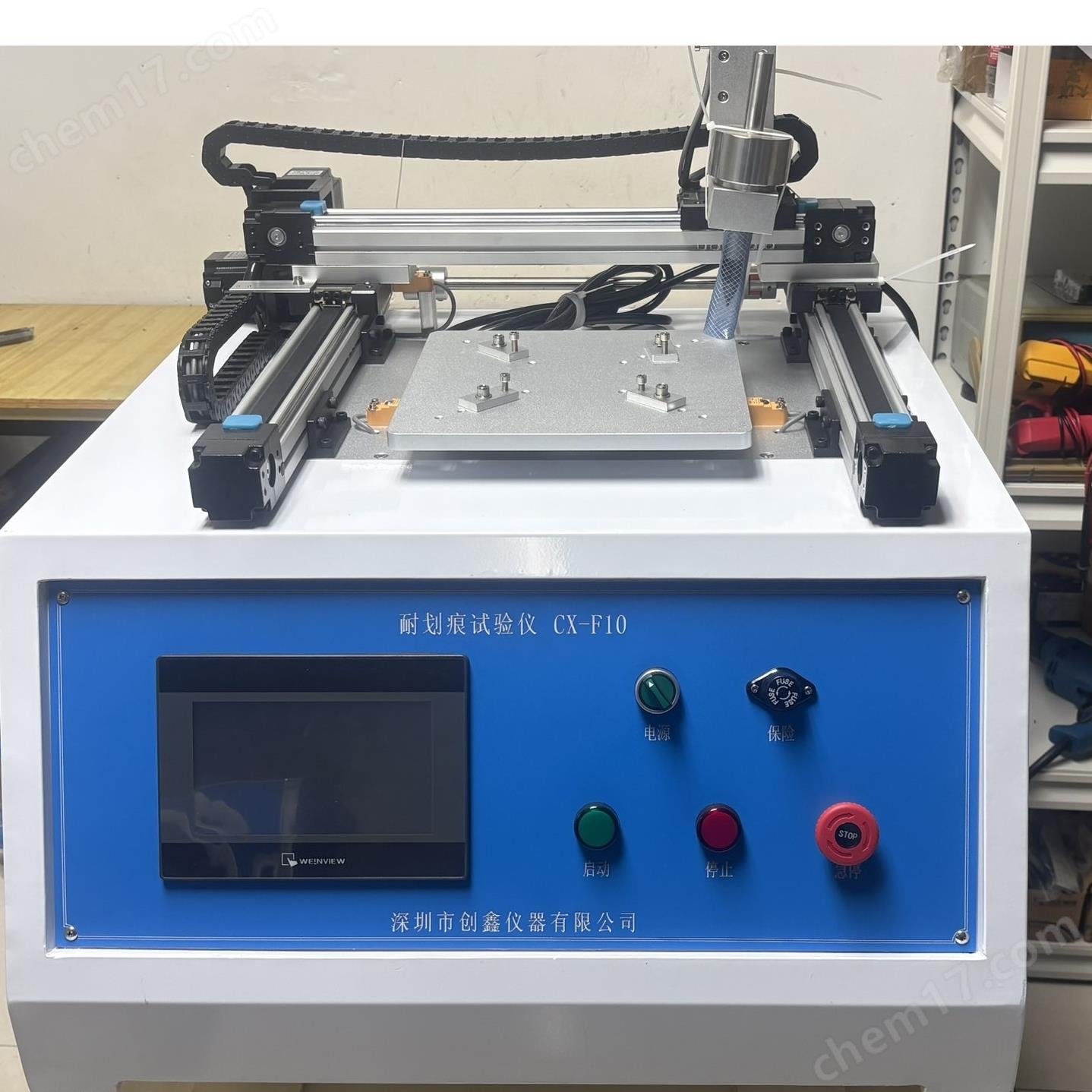
The scratch resistance tester is designed and manufactured in accordance with the requirements of GB4943.1-2011 clause 2.10.8.4, IEC60950 clause 2.10.8.4, GB4706.1 clause 21.2, and IEC60335-1 clause 21.2. It is suitable for conducting scratch tests on easily accessible components or printed boards of solid insulation in household appliances and similar products, ensuring that the material has sufficient strength and is not pierced by sharp tools.
Product Details
GB4706.1 Scratch resistance tester
Scratch resistance testerIt is designed and manufactured in accordance with the requirements of Article 2.10.8.4 of GB4943.1-2011, Article 2.10.8.4 of IEC60950, Article 21.2 of GB4706.1, and Article 21.2 of IEC60335-1. It is suitable for conducting scratch tests on easily accessible parts or printed boards of solid insulation for household appliances and similar products to ensure that the material has sufficient strength and is not pierced by sharp tools.
Scratch resistance testerMain parameters:
1. Input voltage: AC 220V/50Hz;
2. Control system: PLC+touch screen;
3. Drive mode: stepper motor drive;
4. Scratch speed: 0-25mm/s (adjustable);
5. Test times: 0-9999 times can be preset;
6. Scratch spacing: adjustable;
7. Workbench: capable of 360 ° rotation;
8. Scratch pressure: 10N ± 0.5N;
9. Scratch needle: Hardened steel needle, cone end, cone apex angle of 40 degrees, rounded radius 0.25mm ± 0.02mm (replaceable)
10. Marking angle: The marking needle moves perpendicular to the surface of the test sample, and the cutting angle in the forward direction is 80 degrees or 85 degrees (interchangeable)
11. Drawing length: MAX200mm (adjustable);
12. Translation distance: MAX200mm (adjustable);
13 scratch spacing: 1-19mm (adjustable);
14. Drawing speed: 20mm/s ± 5mm/s (adjustable)
GB4706.1 Scratch resistance testerEquipment features:
The coating scratch resistance test uses a hardened steel needle for scratching. The end of the steel needle should be conical with a top angle of 40 °, and it should be rounded and polished with a radius of 0.25mm ± 0.02mm. Scratches pass through five pairs of conductive parts, including the middle interval, which should be the part that bears the largest potential gradient during the test. When conducting scratch tests, scratch at a speed of 20mm/s ± 5mm/s in a plane perpendicular to the edge of the conductor. An appropriate load should be applied to the steel needle so that it can exert a force of 10N ± 0.5N along its axis. The distance between each scratch should be at least 5mm, and it should also be at least 5mm away from the sample edge. This machine adopts a PLC+touch screen control system with stable performance; Rotate the workbench to easily perform scratch tests in both vertical and horizontal directions.
The equipment meets the standards:
Scratch resistance testerAccording to the requirements of relevant clauses in GB4943:2.10.6.6, IEC60950:2.10.6.6, GB4706-1:21.2, and IEC60335-1:21.2.