-
E-mail
13510810649@a163.com
- Phone
-
Address
No. 99, Xianyi District, Xiancun, Dalang Town, Dongguan City
Product Categories
Dongguan Tiantian Automation Equipment Co., Ltd

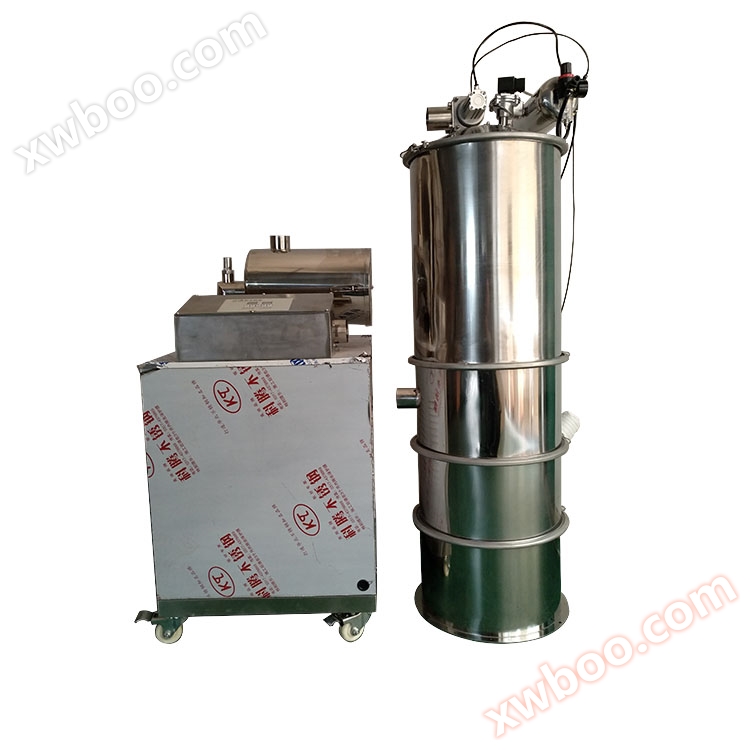
Fully automatic vacuum feeding system
NegotiableUpdate on 11/06
- Model
- Nature of the Manufacturer
- Producers
- Product Category
- Place of Origin
Overview
The fully automatic vacuum feeding system is an automated system that uses vacuum suction to extract materials from the feeding device and transport them to the processing device for processing
Product Details
The fully automatic vacuum feeding system is an automated system that uses vacuum suction to extract materials from the feeding device and transport them to the processing device. This system is mainly used in manufacturing, pharmaceutical, food and other fields to achieve automated material transportation and loading. This article will introduce the composition, classification, characteristics, applications, and other aspects of the fully automatic vacuum feeding system. At the same time, practical cases will be analyzed to help readers better understand and master the relevant knowledge and applications of the system.
1、 Composition of fully automatic vacuum feeding system
The fully automatic vacuum feeding system mainly consists of a feeding device, a suction device, a conveying device, and a control system.
Feeding device
The feeding device mainly transports materials to the suction device, usually using equipment such as hoppers, conveyor belts, and screw conveyors. According to the characteristics of different materials, it is necessary to choose a suitable feeding device to ensure that the materials can smoothly enter the suction device.
Suction device
The suction device mainly uses vacuum suction to extract materials from the feeding device, usually using suction cups, nozzles and other equipment. According to the characteristics of different materials, suitable suction devices need to be selected to ensure that the materials can be smoothly sucked and transported.
conveying device
The conveying device mainly transports materials from the feeding device to the processing device, usually using equipment such as pipelines, conveyor belts, and screw conveyors. According to the characteristics and processing requirements of different materials, suitable conveying devices need to be selected to ensure that the materials can reach the processing device smoothly.
control system
The control system mainly controls and monitors the fully automatic vacuum feeding system, including vacuum degree control, temperature control, pressure control, flow control, etc. The control system is the core part of the fully automatic vacuum feeding system, and its performance and stability directly affect the operational effectiveness and production efficiency of the entire system.
2、 Classification of fully automatic vacuum feeding systems
The fully automatic vacuum feeding system can be classified according to different classification standards, and the following are several common classification methods:
According to the different suction devices, it can be divided into single disc vacuum feeding machines and multi disc vacuum feeding machines. The single disc vacuum feeding machine adopts a single suction cup for suction, suitable for materials with high suction force; The multi disc vacuum feeder uses multiple suction cups for suction, suitable for materials with low suction force.
According to the different conveying pipelines, it can be divided into hose vacuum feeding machine and hard tube vacuum feeding machine. The hose vacuum feeding machine uses hose to transport materials, which is suitable for situations where the material shape is irregular or fragile; The hard tube vacuum feeder uses hard tubes to transport materials and is suitable for situations where the material shape is regular or not fragile.
According to different control systems, they can be divided into microcontroller control systems and PLC control systems. The microcontroller control system uses a microcontroller for control and is suitable for small fully automatic vacuum feeding machines; The PLC control system uses PLC for control and is suitable for large fully automatic vacuum feeding machines.
3、 Characteristics and Applications of Fully Automatic Vacuum Feeding System
The fully automatic vacuum feeding system has the following characteristics:
High degree of automation: It can achieve continuous automatic feeding, reducing labor costs and production accidents.
Energy saving and environmental protection: Vacuum suction is used for feeding, without the need for external power, reducing energy consumption and environmental pollution.
Wide application range: Suitable for materials of various shapes, sizes, and weights, including powders, particles, small pieces, etc.
Stable and reliable operation: Advanced control systems and high-quality components are used to ensure long-term stable operation of the system.
The fully automatic vacuum feeding system is widely used in the following fields:
Pharmaceutical industry: used to transport raw materials, intermediates, and other materials to the next process.
Food industry: used to transport food, seasonings and other materials to processing equipment.
Chemical industry: used to transport chemical raw materials to reaction vessels.
Construction industry: used to transport materials such as cement and sand to mixers.
Paper industry: used to transport pulp into paper machines.
Casting industry: used to transport sand to sand molding machines.
4、 Practical case analysis of fully automatic vacuum feeding system
A pharmaceutical company needs to build a fully automated vacuum feeding system production line to transport raw materials to the next process. The company has high requirements for the process, requiring the production line to have characteristics such as high precision, high efficiency, and high reliability. After multiple investigations and comparisons, we ultimately chose a brand of fully automatic vacuum feeding system equipment. This device has the following characteristics:
Adopting advanced single disc vacuum feeding machine, with high suction and uniform suction.
Adopting a PLC control system, it has powerful control functions and stability.
Parameter settings and status monitoring can be performed through touch screen or computer, with simple and convenient operation.
It has functions such as overload protection, temperature control, and pressure control to ensure stable operation of the system.
-
The components are made of stainless steel material, which meets food grade requirements and is suitable for pharmaceuticals.