- Phone
-
Address
No. 8 Tianmu Industrial Park, Beichen District, Tianjin
Product Categories
Jingqiang (Tianjin) Experimental Instrument Technology Co., Ltd


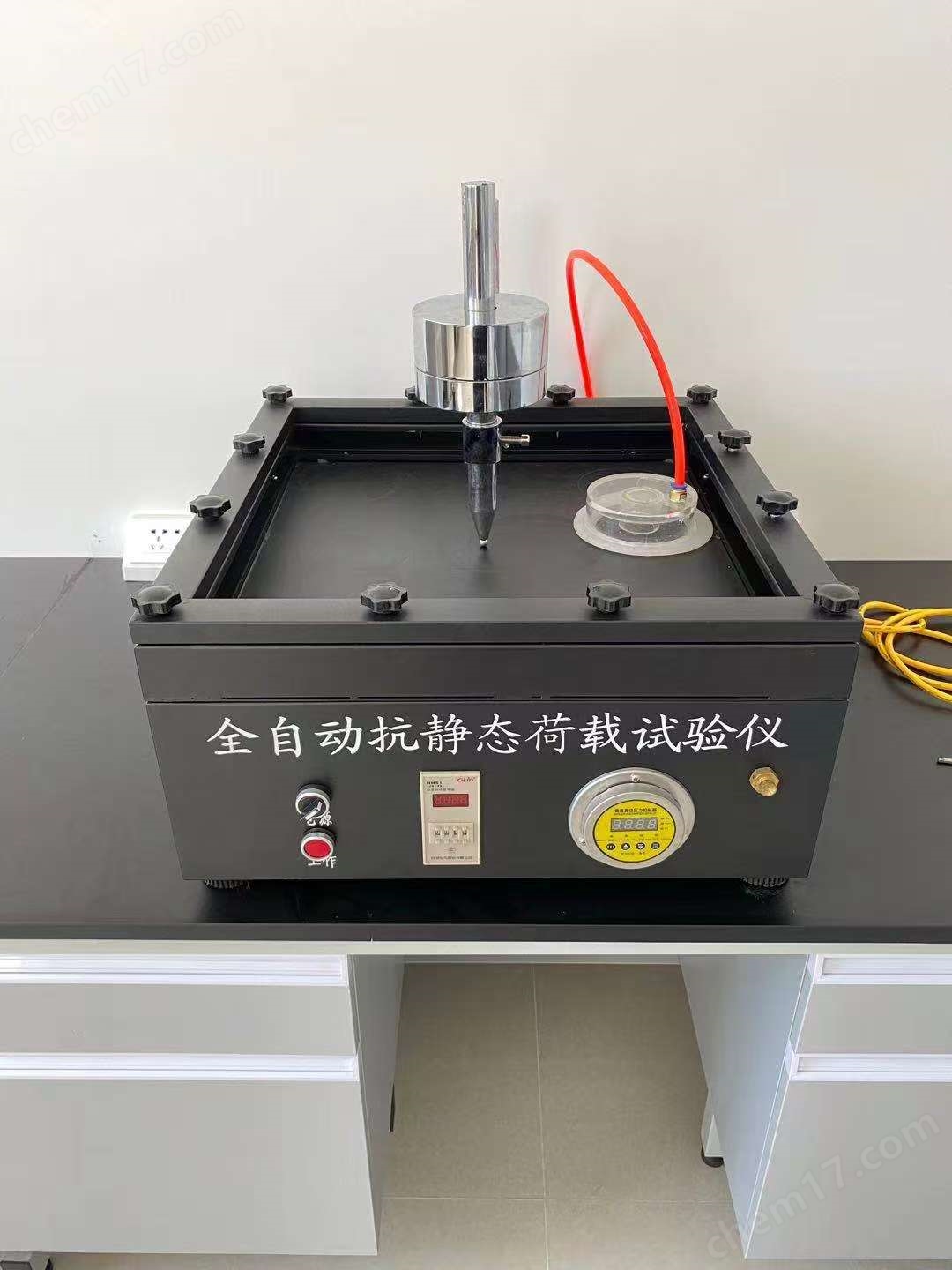
Fully automatic static load tester
NegotiableUpdate on 05/06
- Model
- Nature of the Manufacturer
- Producers
- Product Category
- Place of Origin
Overview
The QSX-27B fully automatic static load tester meets the national standards GB/T 23457-2017 "Pre laid Waterproof Membrane" and GB/T 328.25-2007 "Test Methods for Building Waterproof Membrane Part 25: Static Load Resistance of Asphalt and Polymer Waterproof Membrane"
Product Details
Product Introduction:
Qsx- 27 BtypeFully automatic static load testerMeet national standardsGB/T 23457-2017Pre laid waterproofing membraneGB/T 328.25-2007Test Methods for Building Waterproofing Membrane25Part: Static Load Resistance of Asphalt and Polymer Waterproofing Membrane. Suitable for testing the penetration performance of asphalt and polymer waterproofing membranes and other waterproofing membranes after static load puncture or impact. The instrument has a simple structure and integrates the anti static load testing device with the vacuum device, making it easy to operate.
Qsx- 27 BFully automatic static load tester, is an upgraded version of the QSX-27 anti static load tester. It integrates the anti static device with the vacuum device, making the structure simpler. After the equipment completes the anti static test, it can be directly testedconductCheck if the test piece has undergone penetration testingWithout any waiting, the operation is more convenient and efficient, greatly improving work efficiency.
Main technical parameters:
1.Stainless steel ball puncture tool: (Φ)10±0.05)mm;
2.Weight of load rod:2kg 1a
3.Load plate weight:3kg 1One;5kg 3a
4.Working stroke of spherical puncture tool:40mm±2mm
5.真空度:15kPa
6.power supply220V50Hz
Test method:
Fix the specimen with nails on the lower frame, place it directly on the expanded polystyrene with the upper surface facing upwards, press the specimen tightly with the upper frame, place the puncture tool in the center of the specimen, and conduct the test fromThree specimens are tested in parallel for each load interval starting from 5kg, with the load increasing by 5kg each time until puncture occurs, or directly to the maximum load of 20kg, with a 24-hour interval between each load. The loading should be carried out carefully and without vibration. After testing, place the specimen on a vacuum or pressure device to generate a pressure difference of 15kpa. If there are no bubbles, it is considered that the specimen has no perforation. After the experiment is completed, wipe it clean, remove the weights and place them on the platform.
Similar Product Recommend


