-
E-mail
yuanyuan.liu@insaoptics.com
-
Phone
15000590832
-
Address
Building 6, Huaxin Zhongjiao Digital Intelligent Manufacturing Port, No. 1388 Huazhi Road, Qingpu District, Shanghai
Product Categories
Yingsa Optical Instrument (Shanghai) Co., Ltd
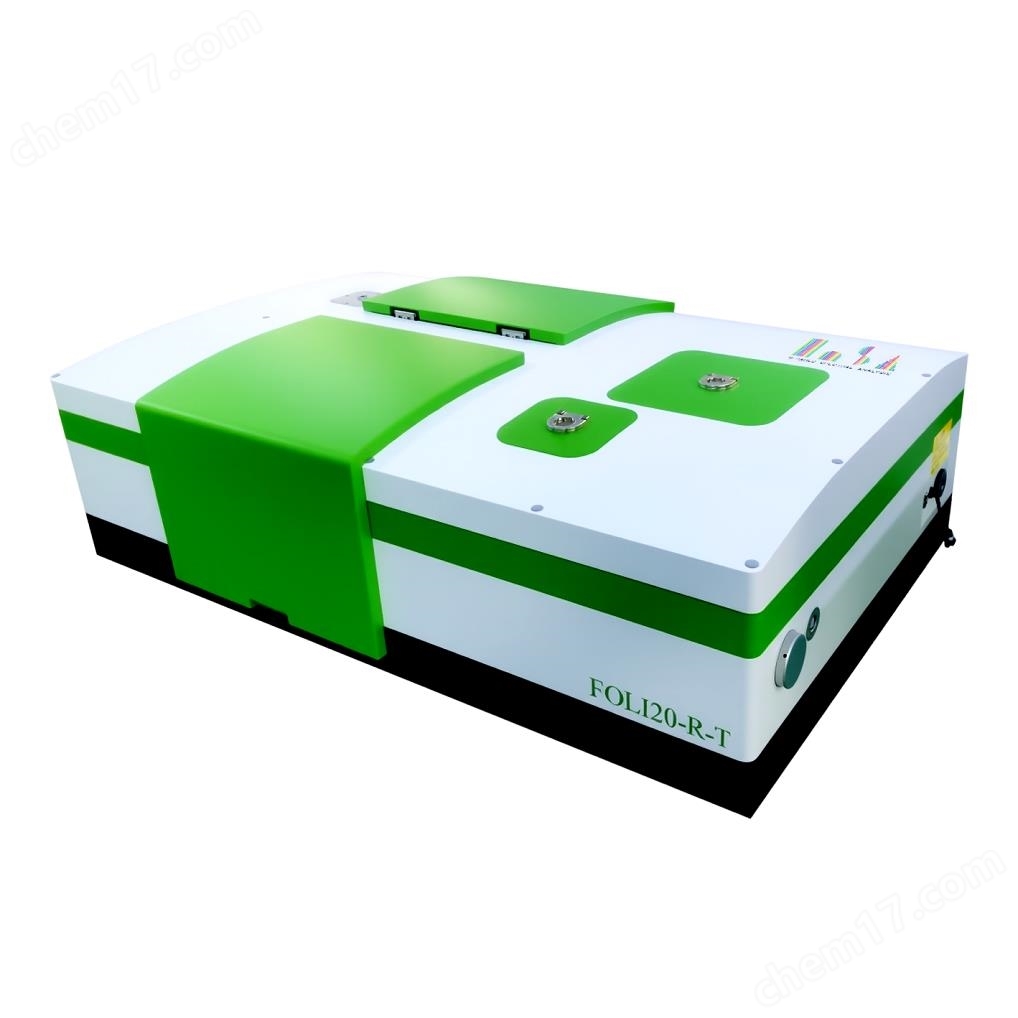
Fourier transform infrared spectrometer
NegotiableUpdate on 02/07
- Model
- Nature of the Manufacturer
- Producers
- Product Category
- Place of Origin
Overview
FOLI20-R-T is a domestically produced research-oriented Fourier transform infrared spectrometer launched by Yingsa Optics. It has innovative structures such as high resolution, multi-channel, and dual sample cavity, and supports multiple measurement modes such as in-situ transmission, diffuse reflection, electrochemistry, ATR, etc. for free combination without frequent replacement of accessories. Equipped with DLaTGS and MCT detectors as standard, compatible with various infrared accessories, suitable for multiple scientific research fields such as catalysis, electrochemistry, and material analysis, meeting the efficient testing needs of complex samples in third-party laboratories.
Product Details
FOLI20-R-T is a domestically produced research-oriented product designed innovatively by Yingsa Optics in response to the trend of the timesFourier transform infrared spectrometerThe analysis system has a high-resolution, multi-channel, dual sample cavity structure, wide spectral range, flexible and efficient, and can meet any combination of multiple measurement modes such as in-situ transmission, in-situ diffuse reflection, in-situ electrochemistry, online fiber probe, integrating sphere measurement, ATR measurement, variable angle mirror reflection, etc. It does not require frequent replacement of accessories, reducing the maintenance intensity of operators and providing powerful scientific research tools for customers in the field of in-situ catalysis and online analysis market. It can also meet the various needs of third-party laboratories and research institute analysis and testing centers for complex sample testing.
FOLI20-R-T innovatively integrates two independent and equivalent wide sample chambers without adding additional instrument volume. With multi-channel automatic switching technology, it can greatly improve user measurement efficiency; The system comes standard with a room temperature DLaTGS detector and a high-sensitivity liquid nitrogen cooled MCT detector, making it convenient for users to optimize measurements for different application scenarios.

FOLI20-R-TFourier transform infrared spectrometerProduct Features
Wide spectral range, can be upgraded and extended to the near-infrared spectral region, 12800-350cm-1; Upgradeable configuration of near-infrared tungsten lamp light source, achieving automatic switching between dual light sources
Multi channel design, standard room temperature DLaTGS detector and high-sensitivity liquid nitrogen cooled MCT detector, software automatically switches channels, can upgrade Stirling cooled MCT detector
Dual cavity structure, independent and equivalent to each other, avoiding frequent replacement of accessories by users, reducing maintenance, testing good optical path collimation, and long-term stability
The sample chamber is spacious and transparent, compatible with various large infrared accessories at home and abroad, suitable for users to build optical paths
Fast scanning speed, optional 10K~60K scanning speed, upgradable up to 80K scanning speed
Adjustable energy, built-in 20 different aperture apertures, software automatically switches according to requirements
Flexible software configuration, single acquisition, fully automatic acquisition, and continuous acquisition modes, meeting the needs of online analysis and in-situ measurement
Rich application scenarios, suitable for various characterization applications of photocatalysis, thermocatalysis, and electrocatalysis. The peripheral connection devices such as gas, water, and circuit of in-situ reaction tanks and electrochemical tanks can be installed for a long time with good reproducibility
In situ diffuse reflection/in-situ transmission application scenarios
In the field of catalytic research, in-situ diffuse reflectance infrared technology (In situ DRIFTS) is receiving increasing attention from researchers. On the one hand, the infrared characterization method for catalysts is simple, fast, and has almost no consumables (except for normal liquid nitrogen consumption); On the other hand, the method of infrared characterization of catalysts is very mature and has been recognized by many researchers.
At present, the main ways to study catalysts using infrared methods in the market are in-situ infrared diffuse reflection and in-situ infrared transmission. These two methods can provide users with the following information:
Study the chemical reaction kinetics of catalysts
Used for online research on the catalytic performance of catalysts in high temperature, high pressure, or high vacuum environments
Obtain the reaction mechanism and process of catalytic reaction
By conducting adsorption and desorption experiments on probe gas molecules and catalysts at different temperatures, the adsorption active sites and adsorption performance on the catalyst surface can be understood
Effective characterization of the acid-base properties of catalysts
Provide experimental data for the preparation of novel catalysts
Realize component identification and structural analysis of catalyst samples
The following figure shows the characterization site of in-situ diffuse reflection and in-situ transmission of different catalysts by an institute of the Chinese Academy of Sciences

In situ electrochemical application scenarios
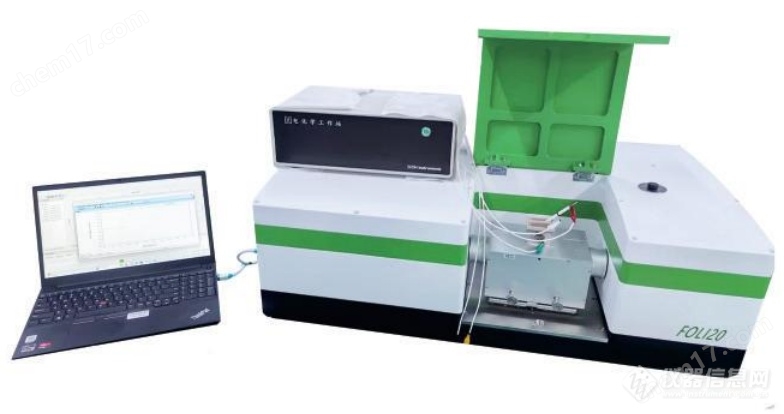
In situ Electrochemical FTIR technology combines the advantages of infrared spectroscopy technology and electrochemical workstations, and can monitor material changes in the electrochemical reaction process in real time, as well as catalytic reactions at the gas liquid solid three-phase interface. It is widely used in environmental, biological, catalytic reaction, and battery research fields. During electrochemical reactions, the structure, valence state, and functional groups of substances undergo changes, which can be detected by infrared spectroscopy signals to reveal reaction mechanisms and kinetic information.
Electrocatalysis and Electrosynthesis
Anodic oxidation reactions (anodic oxidation reactions of methanol, formic acid, ethanol, ethylene glycol, propylene glycol, etc., oxygen evolution reactions, etc.)
Cathodic electroreduction reactions (carbon dioxide electroreduction, nitrogen electroreduction, oxygen electroreduction, nitrate/nitrite electroreduction reactions, hydrogen evolution reactions, etc.)
Photocatalysis and Photosynthesis
Dynamic changes in the interface between the positive/negative electrode of the battery and the electrolyte
Obtain information on the reaction mechanism and kinetics of catalytic reactions
The following figure shows the on-site characterization of in-situ electrochemical infrared users
Application scenarios of the analysis and testing center
The testing personnel in the laboratory analysis center often receive various sample testing requirements, such as measuring solid, liquid, and gas samples, or conducting different analyses on samples, transmission or ATR reflection measurements. In this case, replacing different infrared sample accessories is time-consuming and prone to errors. FOLI20-R-T can configure fixed accessories according to customers' actual needs, automatically switch optical paths, and achieve accuracy and efficiency.
Heated in-situ transmission cell
Low temperature/vacuum in-situ diffuse reflectance infrared cell
High temperature/vacuum in-situ diffuse reflectance infrared cell
High temperature/high pressure in-situ diffuse reflectance infrared cell
Absolute transmittance of materials (parallel light incidence)
Material diffuse transmission measurement (integrating sphere attachment)
Measurement of material reflectivity (reflection angles of 10 °, 30 °, 45 °, 80 °, and variable angle attachments, etc.)
ATR measurement (crystal options: diamond, zinc selenide, germanium crystal, etc.)
Transmission characterization of conventional solid, liquid, and gas samples
Product Parameters

Similar Product Recommend


