-
E-mail
yuanyuan.liu@insaoptics.com
-
Phone
15000590832
-
Address
Building 6, Huaxin Zhongjiao Digital Intelligent Manufacturing Port, No. 1388 Huazhi Road, Qingpu District, Shanghai
Product Categories
Yingsa Optical Instrument (Shanghai) Co., Ltd
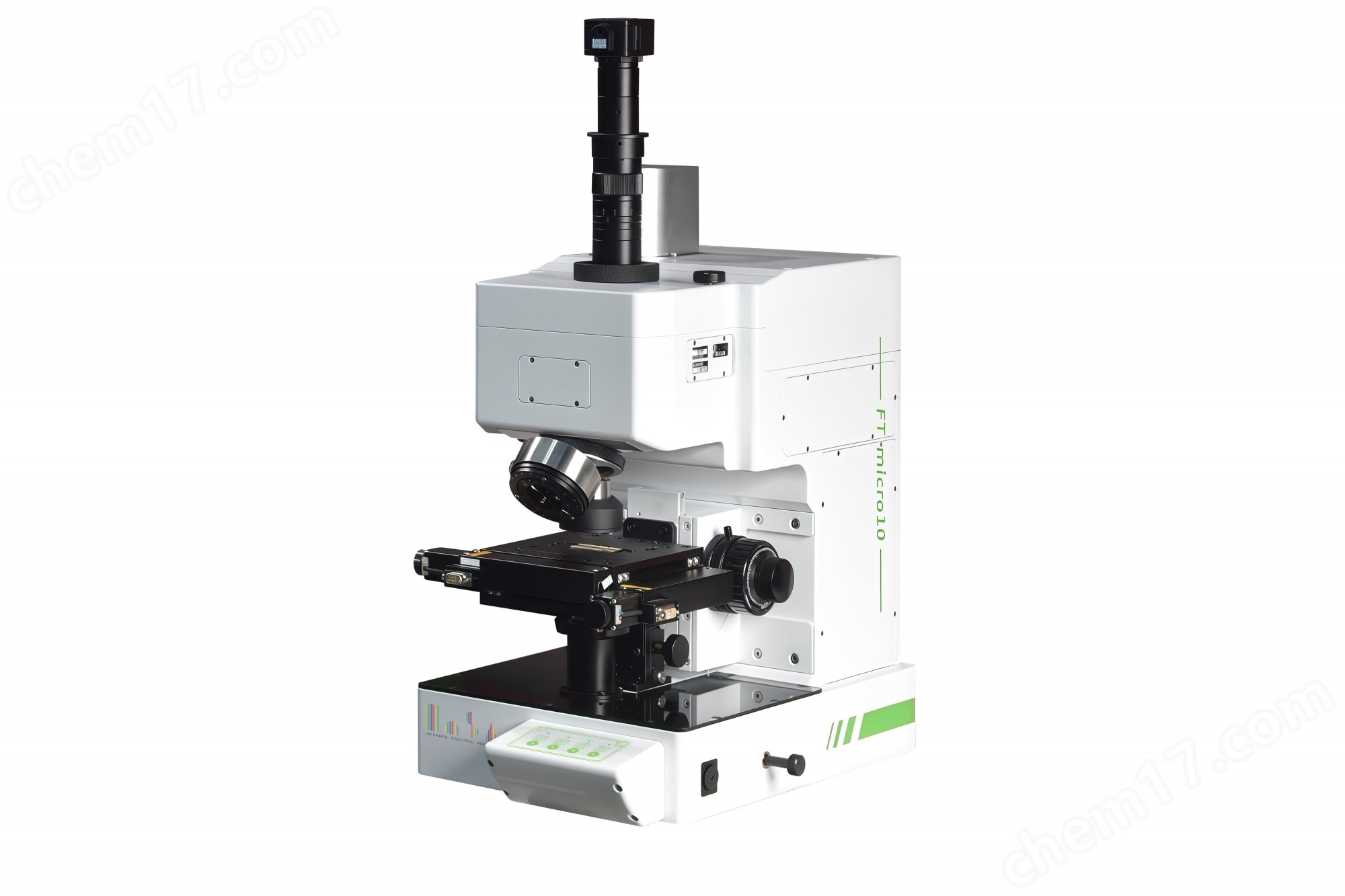

Fourier transform infrared microscope
NegotiableUpdate on 02/07
- Model
- Nature of the Manufacturer
- Producers
- Product Category
- Place of Origin
Overview
FTmicro10 is a research grade Fourier transform infrared microscope independently developed and innovatively designed by Yingsa Optics. The infrared microscope integrates high-definition visible light observation and high-performance infrared spectroscopy measurement, and measures micro area samples with the highest infrared spatial resolution.
Product Details
FTmicro10 is a research grade product independently developed and innovatively designed by Yingsa OpticsFourier transform infrared microscopeThis infrared microscope integrates high-definition visible light observation and high-performance infrared spectroscopy measurement, and measures micro area samples with the highest infrared spatial resolution.

The FTmicro10 infrared microscope has high resolution in visible and infrared light, as well as multifunctionality in mid infrared and near-infrared testing. It has a wide spectral range and high sensitivity, and can perform various measurement modes such as microscopic transmission, reflection, ATR measurement, temperature change measurement, microscopic emission measurement, etc. It can be easily switched with just a touch of a button, reducing the operational intensity of experimenters and solving the measurement difficulties of various micro materials in scientific research and production quality control.
The observation system of FTmicro10 infrared microscope combines the characteristics of "high resolution" and "multifunctionality". It can be switched directly through panel buttons, which is intuitive and easy to operate, providing innovative design for infrared measurement of microscopic samples. The "Observation" system is equipped with two LED light sources and a 12 megapixel high-resolution camera, which can freely switch between visible light transmission and reflection, and display visible images clearly on the computer screen; The "measurement" system can switch between infrared transmission, reflection, and ATR measurement modes directly on the panel. The following is a schematic diagram of a high-precision ATR objective lens and its optical path. What you see is what you get!
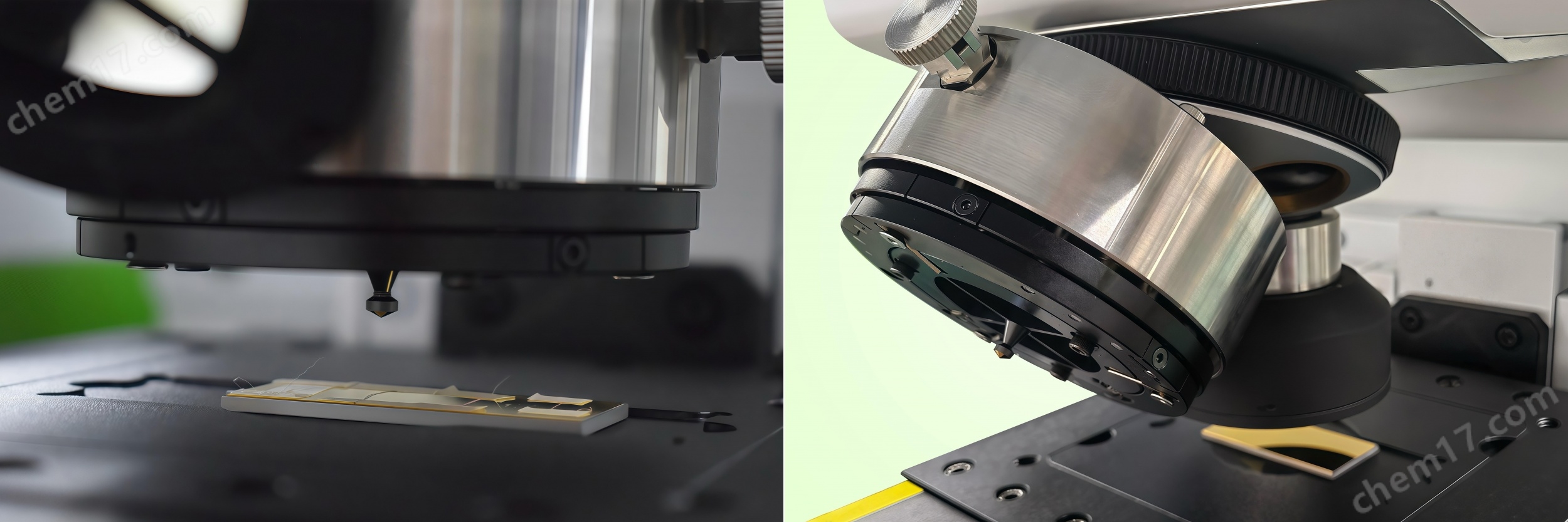
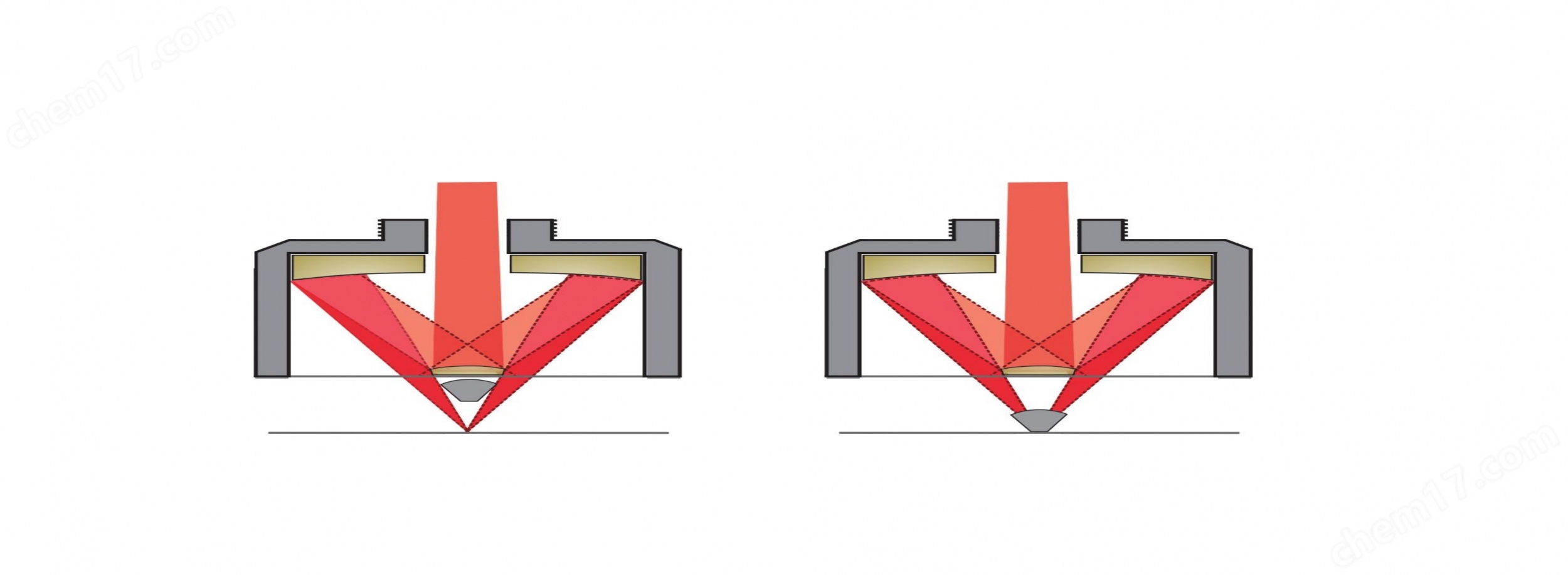
FTmicro10 standard configuration includes XYZ manual sample stage, 20x focusing lens, 20x reflective objective lens, high-precision blade aperture, liquid nitrogen cooled MCT detector, covering application fields such as materials science, biological products, chemical environmental protection, forensic science, and art protection. The system can be upgraded to a fully automatic high-precision sample stage, equipped with a micro ATR lens, optional room temperature DTGS detector, electrically cooled indium gallium arsenide detector extended to the near-infrared spectral range, etc., to meet the research needs of users for different application scenarios.
Product Principle
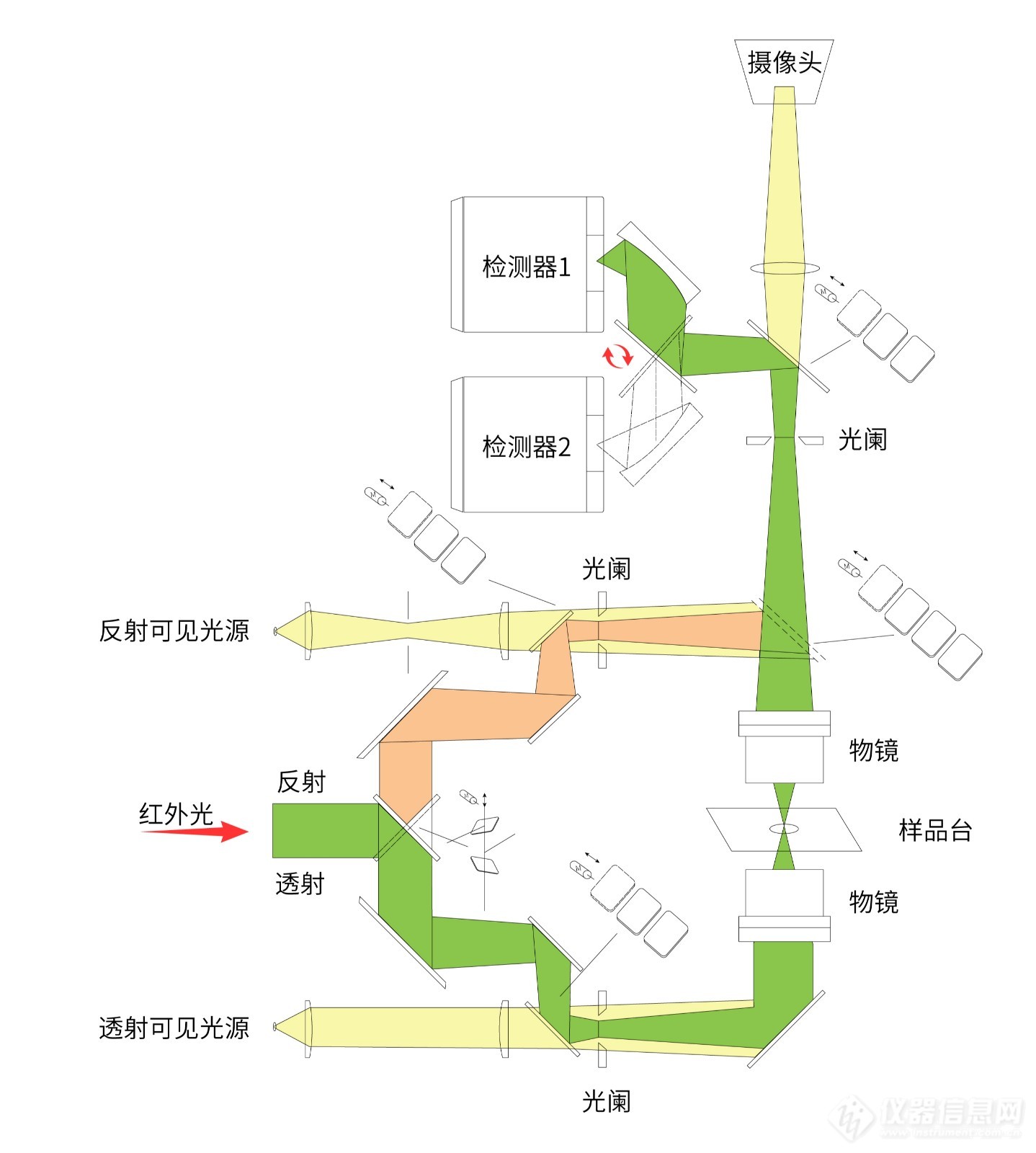
The interference light of the infrared spectrometer is output to the infrared microscope through a switching mirror, and the interference light is focused on the sample through the infrared objective lens. Users can measure micro areas with a spatial resolution of less than 10 microns by adjusting the aperture size. The transmitted or reflected light of the sample enters the infrared detector to obtain the infrared interference pattern of the sample, thereby obtaining the chemical composition and physical information of the sample. An infrared microscope consists of two parts: a visible light path and an infrared light path. The visible light path includes a visible light source and a visible light camera; The infrared light route consists of an infrared objective lens, a focusing lens, and an infrared detector. Two part coaxial optical path design, "what you see is what you get", observes and measures micro area samples through a high-precision sample stage.
Product Features
High signal-to-noise ratio: better than 7000:1 (peak/peak, MCT detector)
Coaxial optical path: a "what you see is what you get" optical system that eliminates optical errors
Visible light path: 2 LED light sources and 12 megapixel camera to obtain high-definition multimedia images, optional visible/infrared polarizers, etc
Objective lens: independently designed 20x infrared objective lens and focusing lens, optional 20x ATR lens, and other magnification objectives
Infrared ATR lens: a complete organism composed of a 20x objective lens and an ATR crystal system, where the ATR crystal diameter is smaller than 100 microns
Multi detector channel design: Standard liquid nitrogen cooled MCT detector, software automatic switching, optional DTGS detector, electrically cooled indium gallium arsenide detector, etc
Aperture: Built in blade aperture, adjustable aperture size and direction
Control panel: There is a control panel designed in front of the infrared microscope, which controls the transmission and reflection modes of infrared/visible light respectively, achieving simultaneous observation/measurement
Multimedia display system: video adapter, color camera, measuring ruler, image capture card, and data acquisition software
Microscopic sample stage: repeatability accuracy of 1 micron, compatible with infrared cold and hot stage accessories, electrochemical accessories, suitable for users to build microscopic emission light paths
Microscope structure: length x width x height: 56cmx30cmx72cm (including LED light source and CCD lens), which can be further extended through the microscope to external light paths, such as external TGA, etc
Application field
Infrared microscope has high accuracy and good reproducibility, mainly used for measuring micro scale samples or small areas, obtaining chemical composition and physical information of samples
Materials Science Field: Composition Analysis of Multilayer Plastics
Semiconductor field: Analysis of foreign objects on PCB boards
Environmental and food fields: identification of microplastics; Detection of illegal food additives
Judicial Appraisal and Forensic Science: Analysis of Ink, Paint Fragments, Fibers, Hair Metabolites, etc
Museums and Archaeology: Testing of Hair, Paint, Silk Fabrics, etc
In the field of biomedicine: analysis of drug metabolism, drug foreign body residue, lipid and protein distribution in tissues, etc
Industrial quality control: LCD screen, lens foreign object analysis, coating change analysis
Geology and Mineral Resources: Inclusion Analysis
Similar Product Recommend


