-
E-mail
qeservice@enli.com.tw
-
Phone
18512186724
-
Address
Room 409, Building A, No. 169 Shengxia Road, Pudong New Area, Shanghai
Product Categories
Guangyan Technology Co., Ltd

Enlitech Photovoltaic Cell Efficiency Loss Analyzer
NegotiableUpdate on 01/27
- Model
- Nature of the Manufacturer
- Producers
- Product Category
- Place of Origin
Overview
Guangyan Technology QE-RX Photovoltaic Cell Efficiency Loss Analyzer can be used for the research and development of high-efficiency solar cells. QE-RX can not only measure PV-EQE, reflectance, and PV-IQE data, but also analyze Jsc, Voc, and FF losses by combining analysis software SQ-JVFLA. Guangyan integrated three different testing functions within QE-RX and developed SQ-JVFLA software to assist users in analyzing three different losses using Shockley Queisser thermal limit theory.
Product Details
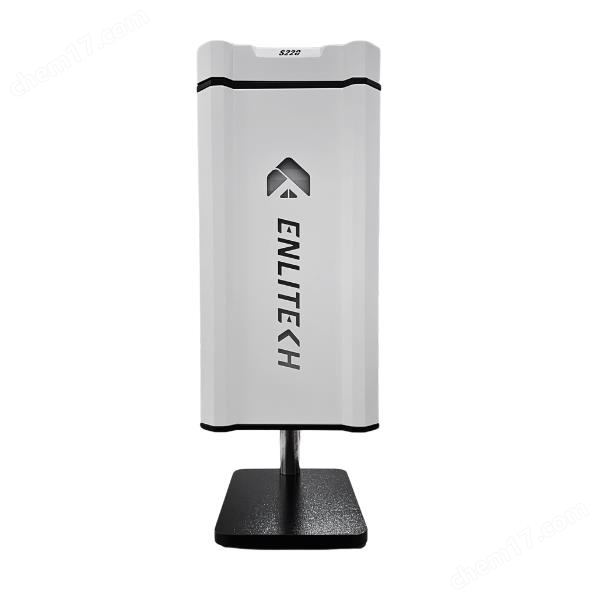
A laboratory tool for improving accuracy - AM1.5G solar simulator with photovoltaic solar cell efficiency loss analysis solution equipped with SPOT-V spot observer

Why can the spot observer help you improve your scientific research?
·Clear observation: In a dark room or experimental environment with limited light, the light spot can also be clearly observed to ensure that the sample is in an excellent light receiving area.
·Easy to use: plug and play, no need for complicated settings, suitable for various spectral systems, allowing you to easily grasp the position of the light spot.
·Multi functional applications: Whether it's small samples or complex spectral experiments, reliable observation support can be provided to help you with precise experimental design and data analysis.
·Improving efficiency: The spot observer can effectively avoid spot deviation or sample deviation problems, ensuring the accuracy of each measurement, improving experimental efficiency, and reducing errors.
feature
The features of QE-RX photovoltaic cell efficiency loss analyzer are as follows:

*Highly accurate and low uncertainty
The calibration of QE-RX is traceable to NIST, which makes the uncertainty of QE-RX test data lower than any other EQE testing system. Meanwhile, QE-RX was developed by Enlitech, which has a 10-year ISO/IEC 17025 certified calibration laboratory. This makes the testing results of QE-RX for Si solar cells highly accurate. Relying on QE-RX, it will provide you with reliable results.

*Compact structure but diverse functions
QE-RX integrates all optical and mechanical components into an 80cm x 80cm x 60cm body, including an electrical signal acquisition lock-in amplifier. Not limited to its compact size, QE-RX still provides various test data, including EQE, spectral response, reflectivity, and IQE of solar cells. Compact and multifunctional are the advantages of QE-RX.

*Power loss analysis
QE-RX combined with SQ-JVFL software can provide the most complete analysis functions, including Jsc loss, Voc loss, FF loss, and bandgap calculation. These parameters are key factors for production yield control and efficiency recommendations, making QE-RX an excellent partner for the photovoltaic industry.
Used for PESC, PERC, PERL, HJT, back contact, double-sided, and TOP Con silicon solar cells
Provide data on QE (quantum efficiency), PV-EQE (external quantum efficiency), IPCE (incident photon electron conversion efficiency), SR (spectral response), IQE (internal quantum efficiency), and reflectivity.
Compact structure with high repeatability exceeding 99.5%.
Wavelength range: 300~1200 nm
Jsc loss analysis and reporting (using SQ-JVFLA software).
Occupational loss analysis and reporting (using SQ-JVFLA software).
F loss analysis and reporting (using SQ-JVFLA software).
The provided EQE uncertainty assessment report and quality control certified by ISO/IEC 17025 can be used for journal paper submissions.
Diversified and customized sample testing equipment.
System Design

Specifications
QE-RX host functionality |
Measurement wavelength range: 300-1200nm (expandable) Measurement repeatability of each wavelength: average non repeatability of 300-390nm is ≤ 0.3%, and average non repeatability of 400-1000nm is ≤ 0.15%. 1000-1200nm wavelength average non repeatability ≤ 0.25% Ø Non repeatability of short-circuit current density ≤ 0.1% Ø Accuracy<0.1% Ø Average non repeatability of 10 measurements=relative standard deviation/mean * 100% Measurement time: 300-1200nm, scanning interval 10nm, measurement not exceeding 3 minutes Ø Measurement darkroom: 80cm measurement mask darkroom Applicable environment: temperature 15~35 degrees, humidity 20%~65% Capable of analyzing three major losses: short-circuit current, open circuit voltage, and filling factor |
Software features |
Ø Absolute intensity correction Ø Spectral response measurement External Quantum Efficiency Measurement (EQE) Bandgap analysis Ø Automatic and real-time calculation of short-circuit current density Jsc Ø Automatic calculation of single wavelength short-circuit current Ø Independently control the overall hardware system and data reading operation Spectral Mismatch Factor Calculation (MMF) Ø Signal monitoring function Ø Calculation function for short-circuit current density of any AM spectrum Ø Data saving format txt| |
Scope of application
The QE-RX photovoltaic cell efficiency loss analyzer can be used for:
*Efficiency loss analysis of PERC/HJT/TOP Con photovoltaic solar cells
*IEC-60904-8 Spectral Response Measurement
*Calculation of Mismatch Coefficient for IEC-60904-7
*IEC-60904-1 MMF Calibration
*Quality Control of Silicon Solar Cell Processing
*Measurement of bandgap of silicon solar cells
Similar Product Recommend