- Phone
-
Address
No. 20 Bosong Road, Jinshui District, Zhengzhou City
Product Categories
Zhengzhou Ansheng Scientific Instrument Co., Ltd
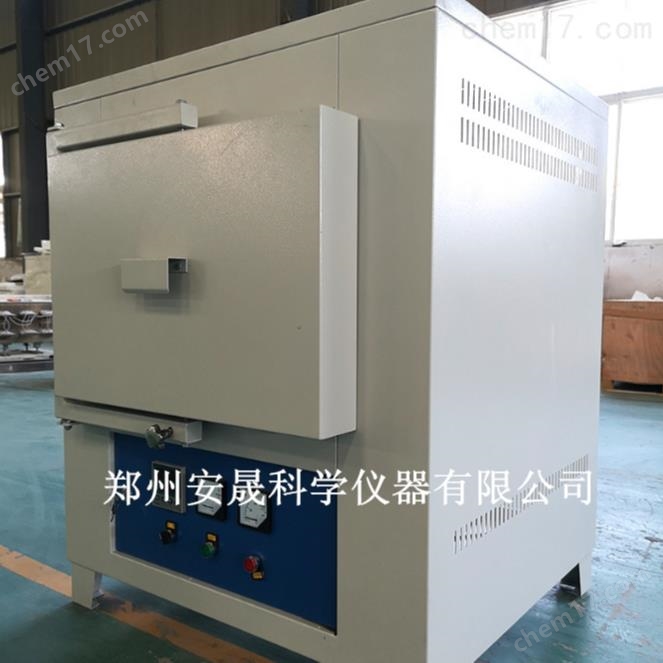


Determination of ash content using muffle furnace - Zhengzhou Ansheng Scientific Instrument
NegotiableUpdate on 05/06
- Model
- Nature of the Manufacturer
- Producers
- Product Category
- Place of Origin
Overview
The ash content determination muffle furnace - Zhengzhou Ansheng Scientific Instrument is a specialized heating device used for detecting the ash content of samples such as food, feed, coal, plastics, rubber, biomass, etc. Its design and function revolve around the core requirements of "ash content determination" (such as temperature control, stable burning atmosphere, and ease of sample processing). Compared with the general muffle furnace, it has significant specificity in structure, performance, and operation. The following provides a detailed explanation from five aspects: core features, applicable scenarios, key technical parameters, operational points, and common problems:
Product Details
Determination of ash content using muffle furnace - Zhengzhou Ansheng Scientific InstrumentIt is a specialized heating equipment used for ash content detection of samples such as food, feed, coal, plastics, rubber, biomass, etc. Its design and function revolve around the core requirements of "ash content determination" (such as temperature control, stable burning atmosphere, and ease of sample processing). Compared with the universal muffle furnace, it has significant specificity in structure, performance, and operation. The following provides a detailed explanation from five aspects: core characteristics, applicable scenarios, key technical parameters, operating points, and common problems. Firstly, the core characteristics of the ash content determination muffle furnace (different from the general muffle furnace). The essence of ash content determination is to oxidize and decompose the organic components in the sample through high temperature burning (usually 500-850 ℃), and the residual inorganic minerals (i.e. "ash content") are calculated by weight difference. Therefore, the design of such muffle furnaces needs to meet the three core requirements of "burning, no sample contamination, and temperature control", with the following specific characteristics:
**And stable temperature control capability * * - temperature control range suitable for ash content determination requirements: usually * * room temperature -1000 ℃ * * (covering the ignition temperature of the vast majority of samples, such as the food national standard GB 5009.4 requiring 500-550 ℃, and the coal national standard GB/T 212 requiring 815 ± 10 ℃); -High temperature control accuracy: ± 1 ℃ (much higher than the ± 5 ℃ of a general muffle furnace), and supports * * step heating program * * (such as low-temperature carbonization (200-300 ℃) to avoid sample explosion, and then high-temperature burning to prevent rapid volatilization of organic components and ash splashing loss).
2. * * Optimized furnace chamber structure and atmosphere control * * - Furnace chamber material: The inner wall is mostly made of * * high-purity alumina ceramic plate/fiber * *, which is resistant to high temperatures and has no impurities falling off (to avoid the oxidation pollution of the metal inner wall of the universal muffle furnace on the sample, resulting in high ash content determination results); -Ventilation design: Some models are equipped with a top exhaust outlet (which can be connected to an external flue) to promptly discharge the smoke generated by burning (such as harmful gases from plastic burning and water vapor from food burning), which not only protects the heating element but also avoids the secondary pollution of the sample caused by smoke circulation in the furnace; -Sealing of furnace door: High temperature resistant silicone sealing ring and buckle type furnace door are used to ensure sufficient air entry (to meet the oxygen required for organic component oxidation), while preventing heat loss and excessive temperature difference inside the furnace.
3. * * Detailed design for sample processing * * - Furnace chamber volume: mostly 10-30L * * (suitable for placing multiple crucibles, processing batch samples at once, such as burning 6-12 50mL ceramic crucibles at the same time); -Built in crucible holder: comes standard with multi-layer alumina crucible holder (strong load-bearing capacity, high temperature resistance and no deformation), which can be placed in layers to avoid cross contamination between samples; -Convenience of operation: Some models come with side opening furnace doors (which are easier to access and store crucibles than top opening doors to prevent burns), or are equipped with observation windows (made of high-temperature resistant quartz glass) that allow real-time observation of the burning status of the sample (such as whether there is black smoke or splashing).
4. * * Intelligence and Security Protection * * - Program Control: Supports preset ash content determination process (such as "200 ℃ carbonization for 30 minutes, heating to 550 ℃, burning for 2 hours, cooling to 100 ℃"), automatically completes heating insulation cooling, reducing human operation errors; -Security protection: Equipped with * * over temperature alarm (automatically power off if the set temperature exceeds 10 ℃), leakage protection, and power off when the furnace door is opened * * (some models), to avoid high temperature burns or equipment damage.

2、 The application scenarios of the muffle furnace for ash determination of applicable sample types (classified by industry) are highly focused on the field of "determining sample purity, inorganic component content or quality through ash content", as follows: | Industry field | Typical sample | Determination purpose | Reference burning temperature | | --------------------------------------------------------------------------------------------------------------------------------------------Food Feed raw materials | Evaluate the inorganic mineral content (such as calcium and phosphorus) in feed, determine the quality of raw materials | 550-600 ℃ | * * Coal/Energy * * | Bituminous coal, smokeless coal, biomass fuel (straw) | Determine the "ash yield" (measuring coal quality, the higher the ash content, the lower the combustion efficiency) | 815 ± 10 ℃ (coal), 600 ℃ (biomass) | * * Plastic/rubber * * | Polyethylene, polypropylene, rubber products | Detect the filler content (such as calcium carbonate filling in plastics, ash=filler+inorganic impurities) | 700-800 ℃ | * * Pharmaceutical/chemical * * | Chinese medicine decoction pieces, chemical raw materials (such as pigments) | Control product purity (if the ash content of Chinese medicine is too high, it may contain sediment, and the ash content of chemical raw materials affects product performance) | 500-650 ℃ | # # # III Key technical parameters (core indicators for selection and use) When selecting an ash content determination muffle furnace, the following parameters should be focused on, which directly affect the accuracy and efficiency of the measurement results: | Parameter category | Key indicators | Reference standards (taking food/coal testing as an example) ||| Temperature control accuracy | ± 1 ℃ | Low accuracy can cause ash volatilization during burning (if the temperature is too high, some inorganic components may melt) | | | Heating rate | 0-20 ℃/min (adjustable) | Slow heating is required during the carbonization stage (5-10 ℃/min) to avoid sample explosion; The burning stage can be quickly increased (15-20 ℃/min) | | * Furnace chamber parameters * * | Furnace chamber material | High purity alumina ceramic fiber/ceramic plate | Avoid metal material oxidation pollution of the sample (such as the formation of iron oxide on the stainless steel inner wall above 800 ℃, mixed with ash) | | | Furnace chamber size | 200 × 200 × 300mm (can hold 6 50mL crucibles) | | Choose according to the amount of sample processed per time, and larger sizes can be selected for batch testing (such as 300 × 300 × 400mm) | |** Safety and Operation * * | Alarm Function | Overtemperature Alarm, Leakage Protection, Furnace Door Protection | Furnace door opening and power-off can prevent high temperature burns, and overtemperature alarm can avoid equipment damage | | | Display and Control | Touch Screen+PLC Program Control, supporting data storage | Easy to record burning time and temperature, meeting experimental traceability (such as retaining raw data for food testing) | # # # IV. Standard Operating Procedure (Taking food ash content determination as an example, refer to GB 5009.4) Correct operation is the key to ensuring accurate ash content determination results, and it is necessary to strictly follow the steps of "carbonization burning cooling weighing", as follows:

**Sample Preparation * * - Take a uniform sample (such as crushed grains) of 2-5g, place it in a porcelain crucible that has been weighed constant (burned at 550 ℃ until the weight difference is ≤ 0.0005g), and record the total weight of the crucible+sample (m ₁); -If the sample has a high moisture content (such as fresh fruit), it needs to be dried in a 105 ℃ oven to a constant weight first to avoid direct burning and causing sample explosion.
2. Carbonization (key step, prevent sample splashing) - Place the crucible into the ash determination muffle furnace, close the furnace door, and set the program: * * Heat up from room temperature to 200-300 ℃, and hold for 30-60 minutes * * (adjust the specific time according to the degree of carbonization of the sample until no black smoke is emitted and the carbonization turns black); -If directly burned at high temperature, the organic components in the sample will quickly burn and produce flames, causing ash particles to splash, resulting in lower results.
3. * * High temperature burning * * - After carbonization is completed, continue to heat up to * * 550 ℃ * * and hold for 2-4 hours (until the residue turns gray white and there are no carbon particles left); -During the burning process, keep the furnace door slightly closed (leaving a 1-2mm gap to ensure that air enters and oxidation is complete). If equipped with an exhaust port, the external flue can be opened to exhaust smoke.
4. Cooling and Weighing - After the burning is completed, turn off the muffle furnace and wait for the furnace temperature to drop below 200 ℃. Use crucible tongs to move the crucible into a dryer (to avoid moisture adsorption in the air) and cool it to room temperature (about 30-60 minutes); -Weigh the total weight (m ₂) of the crucible and ash content, repeat the steps of burning (550 ℃, 30min) - cooling - weighing until the weight difference between the two times is ≤ 0.0005g (constant weight, ensure burning).
5. * * Result Calculation * * Ash Content (%)=(m ₂ - m ₀)/(m ₁ - m ₀) × 100, where m ₀ is the constant weight of the crucible, m ₁ is the weight of the crucible+sample, and m ₂ is the constant weight of the crucible+ash. ###5、 Common problems and solutions (key factors affecting the accuracy of results) When using a muffle furnace for ash content determination, problems such as "high/low ash content results" and "crucible cracking" are prone to occur. Targeted investigation is needed: | Common problems | Possible causes | Solutions | | ----------------------------------------------------------------------------------------|
Material detachment of furnace cavity (such as powdering of inferior ceramic fibers);
2. Sample carbonization, residual carbon particles (impurities adsorbed by carbon particles during weighing);
3. During cooling, the crucible was not placed in the dryer and absorbed moisture from the air.
| 1. Replace the high-purity alumina furnace chamber or regularly clean the dust inside the furnace; <br>2. Extend the carbonization time to ensure no black smoke; <br>3. Strictly cool to room temperature in a dryer. ||Ash content result is low | 1 Excessive burning temperature (such as exceeding 600 ℃, causing some inorganic components (such as NaCl) to evaporate); <br>During carbonization, the sample explodes and ash splashes;
3. The crucible is not of constant weight (the initial weight is inaccurate). | 1. Strictly control the temperature according to standards (such as 550 ℃ for food and 815 ℃ for coal); <br>2. Reduce the carbonization heating rate (5 ℃/min), or cover the sample surface with a layer of quartz sand; <br>3. The crucible needs to be burned in advance to a constant weight. ||The crucible cracked during burning | 1 Uneven heating and cooling of crucibles (such as placing room temperature crucibles directly into high-temperature furnaces); <br>2. Poor quality of the crucible (such as hidden cracks in the porcelain crucible); <br>3. The sample melts (if containing low melting point salts) and adheres to the crucible. | 1. Preheat the crucible at the furnace mouth for 10-15 minutes before moving it into the furnace; <br>2. Choose high-quality high-temperature resistant ceramic crucibles (such as 99 alumina crucibles); <br>3. Avoid burning easily melted samples or using platinum crucibles (high cost, suitable for special samples). ||The temperature difference inside the furnace is too large | 1 Heating element aging (such as local resistance wire melting); <br>2. The furnace door is not tightly sealed, resulting in heat loss; <br>3. The samples are placed too densely, which hinders thermal cycling. | 1. Regularly inspect heating elements and replace aging components; <br>2. Replace the furnace door sealing ring to ensure sealing; <br>3. The crucibles are evenly distributed on the crucible frame to avoid stacking. |Determination of ash content using muffle furnace - Zhengzhou Ansheng Scientific InstrumentSummary: The muffle furnace for ash content determination is a "utility type high-temperature equipment", and its core value lies in the design of temperature control, pollution-free furnace chamber, and adapted ash content determination process to ensure sample burning and accurate results. When selecting, the temperature control range and accuracy should be determined based on the industry standards of the target sample (such as GB 5009.4 for food and GB/T 212 for coal); When using, strictly follow the "carbonization burning constant weight" process to avoid result deviation caused by improper operation. In addition, regular maintenance (such as cleaning dust inside the furnace, calibrating thermocouples, and checking heating elements) can extend the lifespan of the equipment and ensure long-term testing stability.
Similar Product Recommend


