-
E-mail
3892196252@qq.com
-
Phone
13329186925
-
Address
Building 2, Shengfeng Software Park, Huashan District, Ma'anshan City, Anhui Province
Product Categories
- Reactor Oxygen Content Control System
- Paramagnetic series
- Fixed four in one gas detector
- Toxic and harmful gas detector
- Smoke online monitoring system
- Furnace gas analysis online system
- VOC online detection system
- Chemical Industry Analysis Cabin
- Air Separation Online Analysis System
- Complete analysis system for cement kiln process
- Complete analysis system for calcium carbide furnace
- Natural gas analysis system
Ma'anshan Maisite Intelligent Technology Co., Ltd
Combustible and toxic gas alarm
NegotiableUpdate on 01/21
- Model
- Nature of the Manufacturer
- Producers
- Product Category
- Place of Origin
Overview
In industrial production, commercial operations, and household life, the leakage of flammable gases (such as methane, propane, natural gas) and toxic gases (such as hydrogen sulfide, carbon monoxide, chlorine gas) is always a hidden safety hazard. Once the concentration exceeds the standard, it is extremely easy to cause explosions, fires, or poisoning accidents among personnel. As the core equipment for monitoring gas concentration and warning of safety risks, combustible and toxic gas alarms serve as the first line of defense for life and property safety, like "safety sentinels". This article will provide you with a comprehensive understanding of this safety equipment from the aspects of core functions, key performance, application scenarios, and selection logic.
Product Details
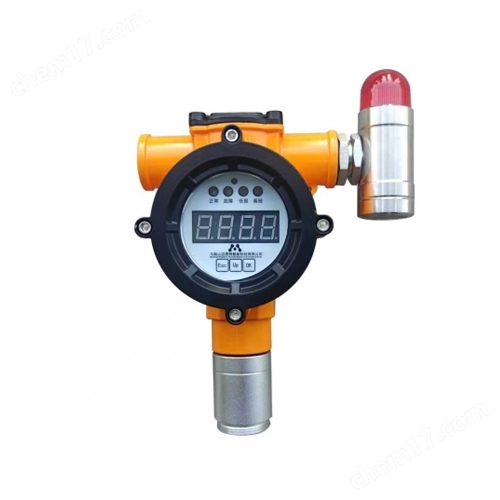
The MST-1000A series industrial and commercial point type toxic and harmful gas detector is a gas detector developed by our company according to the latest national standards. It adopts a 32-bit high-performance main chip and a reliable and stable sensor combination design, and is manufactured using SMT surface mount technology. When the instrument is working, the sensor samples the gas and transmits the data in real-time to the high-speed processing chip for real-time analysis and processing. Then it is transmitted in real-time to the main chip, which processes it into switch signals, analog signals, or digital signals for users to choose from. This instrument can still continuously detect gases in unmanned hazardous environments and can be widely used in all places where there may be dangerous explosive gases, such as petroleum, chemical, smelting, pharmaceutical, oil fields, oil depots, storage, environmental protection, fire protection, municipal, etc. It is an ideal monitoring instrument to ensure personal safety and equipment safety.
In industrial production, commercial operations, and household life, the leakage of flammable gases (such as methane, propane, natural gas) and toxic gases (such as hydrogen sulfide, carbon monoxide, chlorine gas) is always a hidden safety hazard. Once the concentration exceeds the standard, it is extremely easy to cause explosions, fires, or poisoning accidents among personnel. As the core equipment for monitoring gas concentration and warning of safety risks, combustible and toxic gas alarms serve as the first line of defense for life and property safety, like "safety sentinels". This article will provide you with a comprehensive understanding of this safety equipment from the aspects of core functions, key performance, application scenarios, and selection logic.
1、 Core positioning: the safety center from "warning" to "prevention and control"
The core value of combustible and toxic gas alarms lies in achieving a safe closed-loop of "early detection, early warning, and early disposal" through precise monitoring of gas concentration. Its working principle is based on the specific response of dedicated gas sensors to target gases - when the concentration of target gases in the environment reaches the preset alarm threshold, the device will immediately activate multiple alarm mechanisms such as sound, light, and electricity. At the same time, it can be linked with exhaust systems, shut-off valves, and other equipment for automatic disposal. Some models can also transmit alarm data in real time to the monitoring platform, providing data support for remote control.
Compared with traditional manual inspection, the alarm has the advantages of 24-hour uninterrupted monitoring, fast response speed, and high monitoring accuracy. It can effectively compensate for the shortcomings of manual inspection such as missed detection, misjudgment, and poor timeliness, especially suitable for scenarios with strong concealment of gas leaks and serious harmful consequences.
2、 Key Performance Indicator: The Core Dimension for Measuring the Quality of Alarm Devices
A high-quality combustible and toxic gas alarm needs to meet industry standards in core indicators such as detection accuracy, response speed, and environmental adaptability. There are clear differences in the requirements for indicators in different scenarios. The following is an analysis of key indicators:
1. Detection performance: Accuracy and range determine the reliability of early warning
Detection performance is the core competitiveness of alarm devices, directly related to the accuracy of early warning. For combustible gases, the detection range usually covers 0-100% LEL (lower explosive limit), and the accuracy of high-quality products in the industry can reach ± 2% FS (full-scale error). Some models can achieve high-precision monitoring of ± 1% FS; For toxic gases, the detection accuracy needs to be adapted according to the toxicity level of the gas. Common toxic gases such as hydrogen sulfide and carbon monoxide can achieve an accuracy of 0.1ppm-1ppm, ensuring accurate capture even in low concentration leaks.
Response time is also one of the key indicators. The national standard requires that the response time of combustible gas alarms should not exceed 30 seconds, and that of toxic gases should not exceed 60 seconds. However, mainstream high-quality products can compress the response time to 10-20 seconds, which provides more sufficient time for emergency response.
2. Environmental adaptability: the ability to resist manufacturing in complex scenarios
The environmental differences in different application scenarios are significant, and the environmental adaptability of the alarm directly determines its service life and stability performance. In terms of protection level, industrial scenes need to reach at least IP66 level (dustproof and waterproof), which can resist harsh environments such as dust and spray; The high and low temperature tolerance range should cover -30 ℃ -60 ℃, meeting the usage needs of cold northern regions and high-temperature production workshops.
Explosion proof level is a mandatory requirement for industrial scenarios and needs to be matched according to the gas explosion risk level. For example, ExdIICT4 level is suitable for most combustible gas scenarios such as methane and propane, while ExiaICT6 level is suitable for high-risk explosive environments such as coal mines and chemical industries. In addition, the corrosion resistance of salt spray is also an important consideration indicator for coastal areas and chemical enterprises.
3. Alarm and Intelligence: Diversified Early Warning to Improve Disposal Efficiency
To ensure that alarm information is not ignored, high-quality alarms generally adopt a triple alarm mode of "sound+light+electricity" - high decibel sound and light alarms above 85 decibels can quickly attract the attention of on-site personnel, and some models are equipped with vibration alarms that can adapt to noisy workshop environments; At the same time, the equipment can output switch signals, which can be linked to exhaust and cut off gas sources to achieve automatic disposal, reducing the lag of human intervention.
Intelligent upgrading has become an industry trend, and mainstream products have functions such as sensor self checking, fault alarm, and lifespan warning, which can monitor the operation status of equipment in real time; Some networked models support data storage, curve query, and remote monitoring, making it convenient for management personnel to trace gas concentration changes and provide data support for safety management.
MST-1000A toxic and harmful gas detector parameters:
Range: 0-100ppm \ \ 0-1000ppm (determined by gas properties)
Explosion proof mark: Exdb Ⅱ CT6 Gb
Indication error: ≤± 5% F.S
Working temperature: -10~55 ℃
Minimum reading: 1ppm
Working humidity: ≤ 90% RH
Response time: ≤ 60 seconds
Size: 180x140x80
Sensor lifespan: 24 months. The intelligent sensor module can be calibrated remotely
Weight: Basic model 1000g
Detection principle: electrochemistry PID
Transmission distance: ≤ 1000m
Detection methods: diffusion type, flow type, pump suction type optional
Installation methods: wall mounted, pipe mounted, circulating
Connecting cable: Three core shielded wire ≥ RVVP 3 × 1.0mm ² (national standard wire) or four core shielded wire
Working mode: Long term continuous work
Installation methods: fixed bracket, pipe installation, wall mounting
Working voltage: 24V DC
Output signal: 4~20mA current signal/RS485 digital signal+2 sets of switch values
Explosion proof electrical: interface M20 × 1.5 internal thread (optional adapter)
Fault alarm: Automatically detect instrument malfunction status and display corresponding fault codes
Structural material: die cast aluminum
The main features of MST-1000A toxic and harmful gas detector are:
◆ Small plug and play field replaceable sensor
◆ Non interfering, intelligent detector interface
Output: 4~20mA/RS485 data bus and 2 alarm relay outputs
◆ Very few maintenance requirements
Reminder: Frequent gas leakage during gas detector installation or prolonged exposure of gas sensors to the gas being tested can accelerate sensor failure. Therefore, premature failure of gas sensors during the warranty period is not considered a quality issue.