- Phone
-
Address
Room 209, Building 1, Kadeer Industrial Park, No. 3 Shugang Avenue, Hongmei Town, Dongguan City, Guangdong Province
Product Categories
Dongguan Zhongyi Precision Instrument Co., Ltd


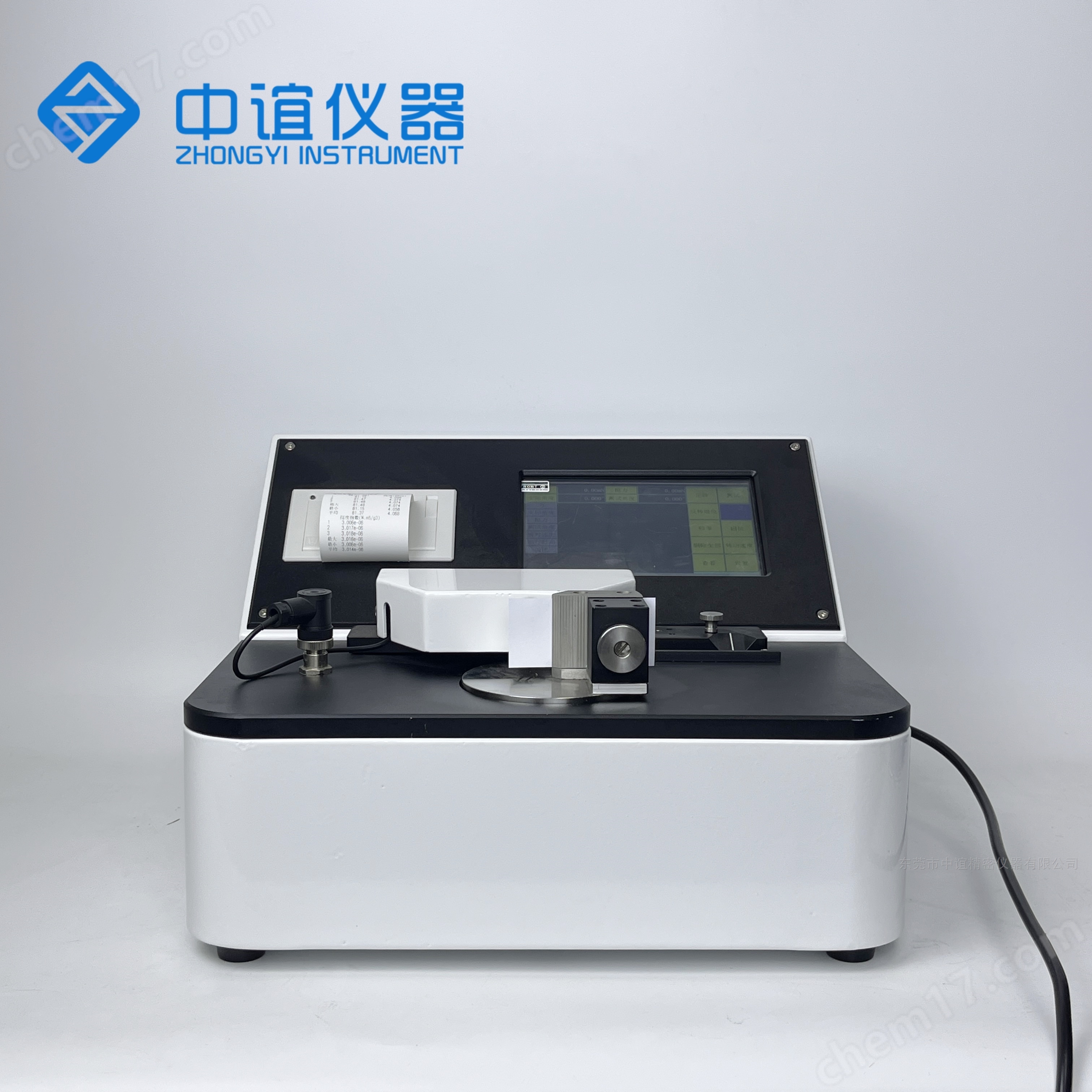
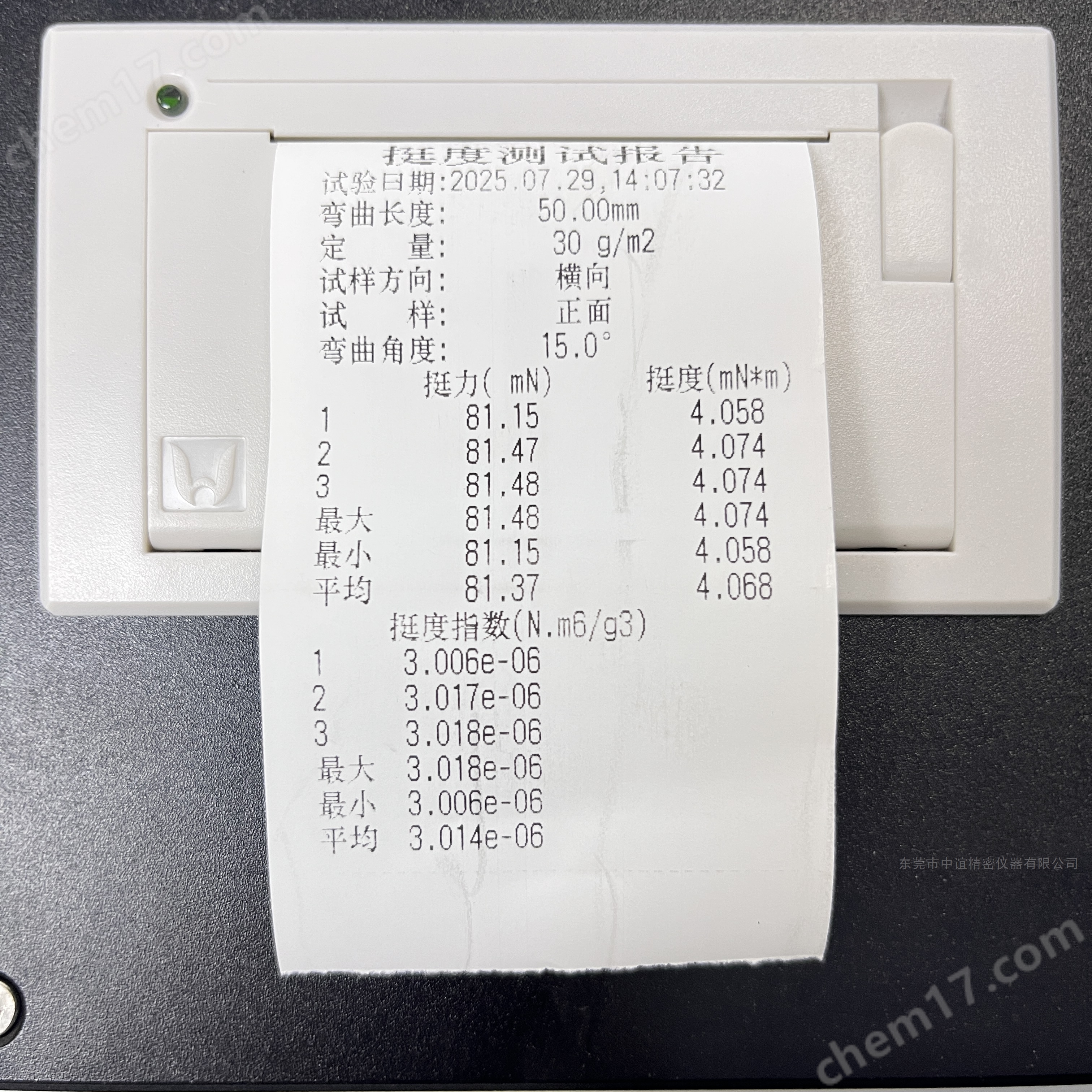

Color box crease stiffness tester
NegotiableUpdate on 05/07
- Model
- Nature of the Manufacturer
- Producers
- Product Category
- Place of Origin
Overview
The color box crease stiffness tester, as a specialized testing instrument for quantifying the bending resistance and rebound strength of cardboard and paper box creases, is the core equipment for controlling the quality of paper packaging products.
Product Details
Introduction to the use of crease stiffness tester:
Color box crease stiffness testerAs a specialized testing instrument for quantifying the bending resistance and rebound strength of cardboard and paper box creases, it is the core equipment for controlling the quality of paper packaging products. Widely applicable for crease performance testing of various folding paper boxes, cardboard, paperboard, cigarette packs, medicine boxes, and daily chemical packaging boxes.
Main technical parameters of crease stiffness tester:
Technical parameters:
1. Sample size 38 * 36mm/38 * 70mm (stiffness)
2. Actual measured dimensions 38 * 10mm, 38 * 50mm
3. Test spacing 10mm, adjustable 50mm
4. Span accuracy ± 0.1mm
5. Measurement range (0~10000) mN
6. Sensor sensing accuracy ± 0.1%
7. Resolution of 0.01mN
8. Bending angle 1~92 º infinitely adjustable
9. Can test 50mm stiffness and crease stiffness
10. Adjustable angular velocity control of 0.5~5 °/sec
11. Angle accuracy ± 0.1 °
12. Measure thickness (0.01~5.0) mm
13. Bending time (2-50s)
14. 7-inch touch screen or button test for operation interface
15. Signal output standard computer signal output, linked to computer (optional)
16. Print output modular integrated thermal printer
17. Dimensions 320mm * 310mm * 300mm
18. Net weight 25kg
Color box crease stiffness testerThe main application areas are as follows:
Used for detecting high-end folding paper boxes such as cigarette boxes, cosmetics boxes, medicine boxes, food boxes (such as toothpaste boxes, cake trays), etc. By measuring the stiffness of creases, it is possible to predict whether the box is easy to form on the automatic packaging line, whether the bonding is firm, and whether it will bounce open due to excessive rebound force after forming.
Special material testing: Its application has been expanded to stiffness testing of various sheet materials, such as:
Plastics and films: PP/PE sheets, optical films, composite films, etc.
Fiber materials: non-woven fabric, filter paper, air filter paper, etc.
Metal foil: ultra-thin aluminum foil, copper foil, etc.
Other sheet materials: graphite sheet, mica sheet, light guide plate, etc.
The crease stiffness tester is designed based on the principle of static bending mechanics testing. Its core is to simulate the bending force scene of creases during the actual forming of paper boxes, accurately capturing the bending resistance and rebound force of the crease area. The mainstream instrument is compatible with two core testing modes and adapts to different standards and testing requirements:
The OneA 15 ° conventional stiffness testing mode is used to detect the stiffness of cardboard bodies. One end of a non creased sample of a specified size is fixed, and a high-precision force measuring mechanism is used to uniformly apply bending force to the free end of the sample to a standard angle of 15 °. The force value at this time is recorded in real time to determine the bending stiffness of the cardboard itself and provide basic data for raw material selection;
The second type is the 90 ° crease rebound force testing mode, which is the core testing function of the instrument. For samples with indentation lines, they are bent at a constant speed of 90 ° along the crease line, and after a specified static time (usually 15 ± 0.2 seconds), the rebound force at the crease part of the sample is accurately measured. This value is the core index of crease stiffness, expressed in millinewtons (mN), which directly reflects the rebound characteristics after the crease is formed and is the key basis for evaluating the quality of the crease process.


