-
E-mail
13510810649@a163.com
- Phone
-
Address
No. 99, Xianyi District, Xiancun, Dalang Town, Dongguan City
Product Categories
Dongguan Tiantian Automation Equipment Co., Ltd

Central supply
NegotiableUpdate on 11/06
- Model
- Nature of the Manufacturer
- Producers
- Product Category
- Place of Origin
Overview
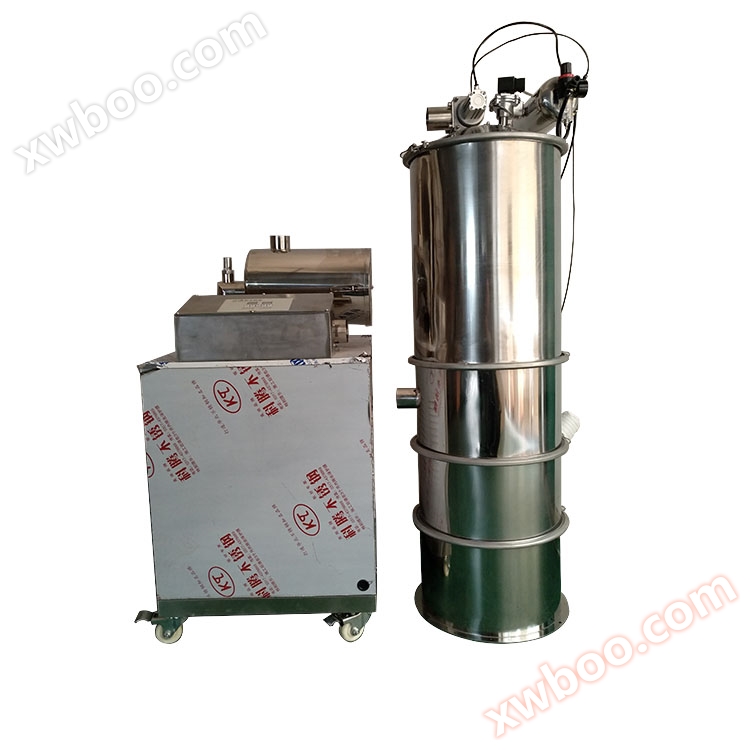
Tiantian Automation Central Feeding is designed for the production of plastic products in injection molding workshops, achieving uninterrupted unmanned continuous molding operations
Product Details
Tiantian Automation Central Feeding is designed for the production of plastic products in injection molding workshops, achieving uninterrupted unmanned continuous molding operations. The variety of raw materials and the combination of multi-color materials can be changed as needed to achieve automation of the coloring process. The system is capable of regenerating and using injection cold materials in a fully automated manner, controlling all feeding equipment and preventing blockages in the storage bin. It achieves full automation by setting up a central monitoring console.
The central centralized feeding adopts microcomputer centralized automatic control, realizing 24-hour continuous feeding operation of granular materials. Multiple small microcomputers control the coloring process of each molding machine, ensuring accurate measurement, uniform mixing, and flexible color change to meet the requirements of multiple colors and varieties of products. Flexibly adjust the feeding amount according to the production capacity of different molding machines. Multiple supply pipeline designs can ensure diverse requirements for main materials. The system has multiple monitoring and protection functions, ensuring safe and reliable operation.
Principle of Tiantian Automation Central Feeding System
The central feeding system adopts vacuum conveying method, which transports plastic raw materials from storage tanks to the central dehumidification and drying system through a centralized pipeline system, and then transports the dried raw materials to each injection molding machine. The central feeding system adopts a design of "one machine, one pipe" to ensure that the air in the entire system transports the raw materials and prevents moisture regain after dehumidification and drying.
At the same time, each transmission runs stably without any material blockage. It is used in conjunction with the central dehumidification and drying system, and after the dehumidification and drying cycle, the conveying pipeline will be cleaned to ensure that there are no residual particles in the pipeline. This not only avoids moisture regain of the raw materials, but also ensures consistent performance of the raw materials added to the injection molding machine. Under the action of vacuum negative pressure, the original dust in the raw materials will be filtered out through the dust filtration system, which helps to improve the quality of the formed products.
Application scope of central feeding products
Central feeding solves the high cost of repeated manual handling of raw materials and the problem of incomplete drying due to negligence, without mixing other materials that are not allowed. The most important thing is to reduce procurement, power consumption, and maintenance costs, improve product quality, and enhance work efficiency. It is a dust-free closed pipeline conveying equipment that uses vacuum suction or blowing force to transport particles and powdery materials. It utilizes the pressure difference between vacuum and environmental space to form gas flow inside the pipeline, driving particle movement and completing the transportation of raw materials.
Tiantian Automation Central Feeding is mainly used for conveying powders and granular materials, such as plastic pellets, raw materials for Western medicine powders, chemical powders, metal oxide powders, tablets, pills, small food pellets, pesticides, pharmaceuticals, food, additives, batteries, dyes, cosmetics, fine chemicals and other industries.
Everyday automated central feeding can transport materials:
1. Food industry: additives, flour, starch, Rice noodles, cocoa powder, monosodium glutamate, sugar, condiments, etc.
2. Pharmaceutical industry: Amoxicillin powder, bezoar powder, vitamin raw material powder, traditional Chinese medicine powder, granular pills, tablets, capsules.
3. Chemical industry: alumina, aluminum hydroxide, activated carbon powder, activated carbon, silica, calcium carbonate, etc.
4. Metal industry: iron powder, aluminum powder, magnesium powder, tungsten powder, cobalt powder, copper powder, alloy powder, etc.
5. Plastic industry: polyethylene particles, polystyrene particles, polyurethane particles, rubber particles, etc.
6. Other: welding powder, quartz particles, sand particles, negative electrode materials, graphite powder, etc.