- Phone
-
Address
Beijing
Product Categories
Shilian Boyan (Beijing) Technology Co., Ltd


Cell flexible substrate culture dish - in stock
NegotiableUpdate on 05/06
- Model
- Nature of the Manufacturer
- Producers
- Product Category
- Place of Origin
Overview
Cell Soft Base Culture Dish - In Stock, Stretchable Cell Base Hardness Control Dish (CellSoft 100mm Round Dish) Cell Soft Stretch System, Stretchable Cell Base Hardness Control Dish, Cell Soft Base Culture Dish, Flexible Base Culture Dish, Soft Base Culture Dish,
Product Details
Cell Soft Substrate Culture Dish - In Stock Stretchable Cell Substrate Hardness Control Culture Dish (CellSoft) ™ 100mm Round Dishes)
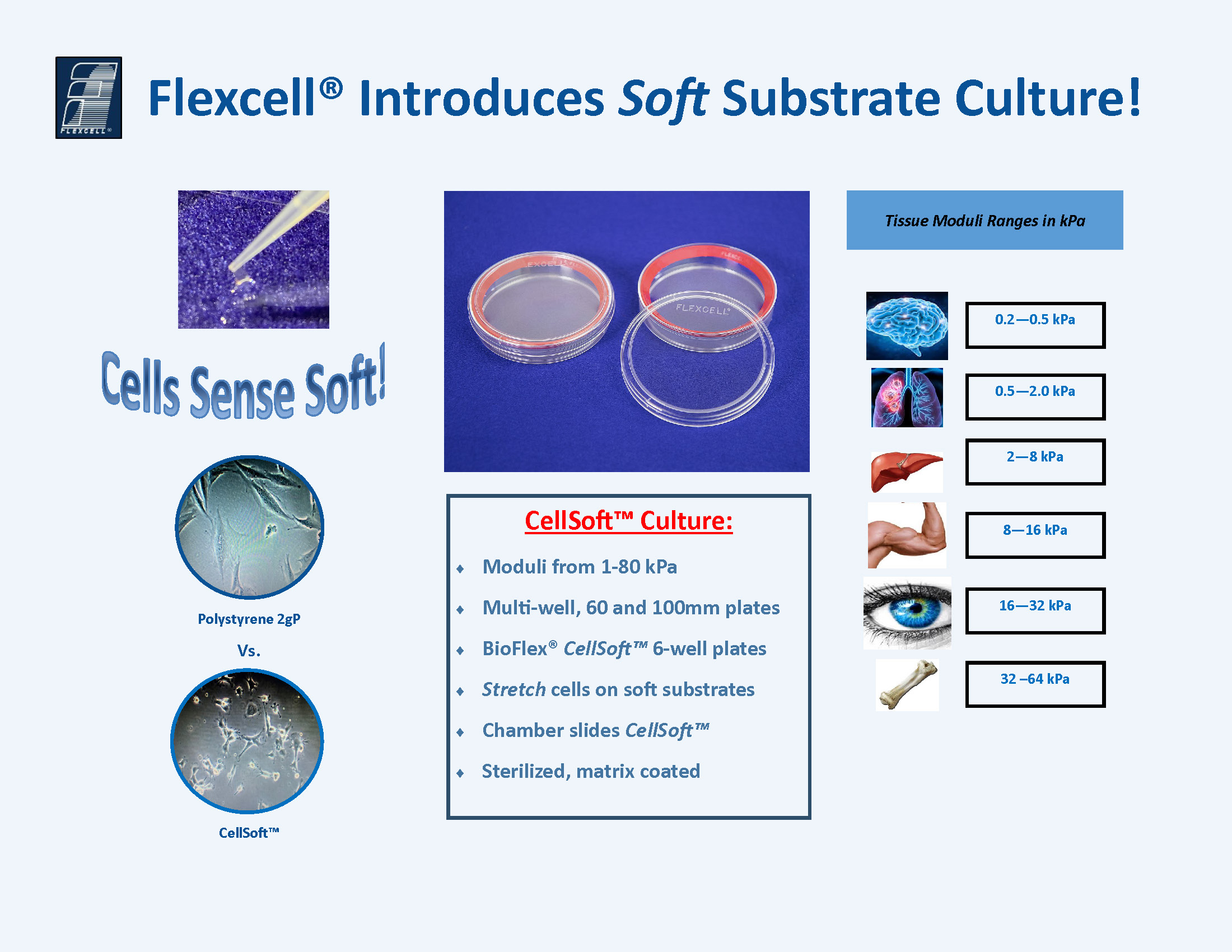
Cells sense soft! CellSoft™ offers softer substrates to match the material properties of tissue niches to better meet the needs of biological laboratories wanting to grow their cells on native stiffness。
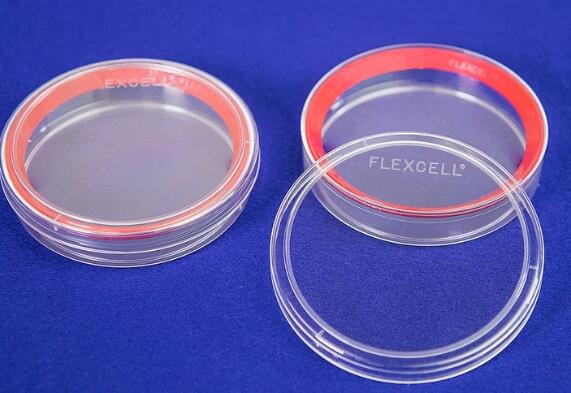
●Range of elastic modulus1-80kPa
A 100mm diameter culture dish with a total growth surface area of 57cm2
●Optional porous culture plates60mmand100mm culture dish
●BioFlex®CellSoftstandard6orifice plate
●Pulling cells on a flexible substrate
●Chamber glass slideCellSoft
●Surface protein coating, sterile individual packaging
CellSoftThere are many different types of culture plates, such as different hardness, different well plates, chamber slides (circular porous plates) used for microscopic observation, covalent coatingCollagenIOr other proteins that can provide static or dynamic tensile stress stimulation to cells. More importantly, the new typeCellSoftThe culture plate can be repeatedly digested with trypsin and inoculated with cells, and the protein coated surface can be reused up to three times.
Soft silicone elastomer coated culture dish.
Modulus range: 1-80 kPa
Ideal choice for the expansion of passaged cell lines
● Optically transparent, allowing direct observation of cells through inverted or upright microscopes (membrane thickness: 1000um)
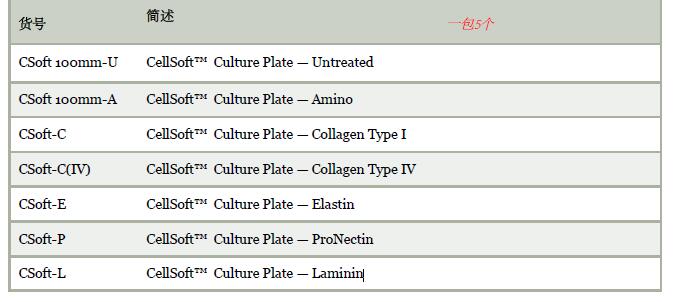
Covalent bonding surfaces: Coated with amino groups, collagen (type I or IV), elastin, ProNectin (RGD), and laminin (YIGSR), as well as untreated.
Low self fluorescence, can be used for immunohistochemical analysis or fluorescent probes.
Store at room temperature in the dark or without direct sunlight for up to 1 year.
Background:
Cells like softnessFlexcell ® Founder and PresidentDr. Albert Banes said, 'Over the years, cell culture has undergone changes.',However, popularThe two innovations are the ability to grow and stretch cells on flexible growth surfaces and control substrate rigidity. Flexcell's new CellSoft ™ Cultivating the product further drives these innovations, and we know that researchers will love this product
“Cells like soft!” says Flexcell® Founder and President, Dr. Albert Banes, Ph.D. “Cell culture has met with change over the years, but two of the hottest innovations have been the ability to grow and stretch cells on flexible growth surfaces and to control the rigidity of the substrate. Our new CellSoft™ culture ware advances those innovations even further, and we know researchers will appreciate this product.”
Flexcell, a company based in the United States, commercialized the growth surface of elastomers in 1988 and provided a method device for controllably stretching cells based on the mechanics of heart, blood vessels, lungs, or other mechanically active tissues. Compared to glass or polystyrene culture plates, these elastomers have a "soft" and stretchable surface. With CellSoft ™, Flexcell ® Can create a softer matrix to matchOrganize niche (stem cell microenvironment)To better meet the needs of biological laboratories that wish to grow cells on natural rigid substrates based on their material properties.
Notes:The cradle like environment surrounding stem cells protects them, and this environment is calledniche.nicheNot only does it provide nutrients for stem cells, but it also guides their actions and determines the direction of their differentiation.
Flexcell® was first to commercialize elastomer growth surfaces in 1988 and to provide the means to controllably stretch cells according to the mechanics of the heart, blood vessels, lungs, or other mechanically active tissues. These elastomer surfaces are “soft” and stretchable compared to glass or polystyrene culture plates. With CellSoft™, Flexcell® has created even softer substrates to match the material properties of tissue niches and better meet the needs of biological laboratories wanting to grow their cells on native stiffness substrates.
Flexcell ® It is recommended that users cultivate their reserve cells on a given rigid substrate matrix coating and conduct experiments on the same type of surface. In this way, cells will not experience the "matrix shock" of transferring from one hardness and matrix coating to another hardness.
CellSoft ™ Has various stiffness and plate formats (disc and porous plate). It can covalently bond with collagen I or other matrices, and has been pre sterilized and ready for use. CellSoft ™ A 100mm circular culture dish is ideal for passaging cells and other flat forms, including a flexible bottom Bioflex ® Flat plate for conducting static or dynamic tensile experiments.
CellSoft ™ There are many different types of culture plates, such as different hardness(Elastic modulus range 1-80kPa)A chamber slide (circular porous plate) that can be used for microscopic observation, covalently coated with Collagen I or other proteins, can perform static or dynamic tensile stress stimulation on cells. More importantly, the new CellSoft ™ The culture plate can be repeatedly digested with trypsin and inoculated with cells, and the protein coated surface can be reused up to three times
●Range of elastic modulus1-80kPa
●Optional porous plate60mmand100mmculture plate
●BioFlex®CellSoftstandard6orifice plate
●Pulling cells on a flexible substrate
●Chamber glass slideCellSoft
●Surface protein coating, sterile individual packaging
Amino,
Collagen (Type I or IV),
Elastin,
ProNectin (RGD),
and Laminin (YIGSR)
And unprocessed
CellSoftThere are many different types of culture plates, such as different hardness, different well plates, chamber slides (circular porous plates) used for microscopic observation, covalent coatingCollagenIOr other proteins that can provide static or dynamic tensile stress stimulation to cells. More importantly, the new typeCellSoftThe culture plate can be repeatedly digested with trypsin and inoculated with cells, and the protein coated surface can be reused up to three times.
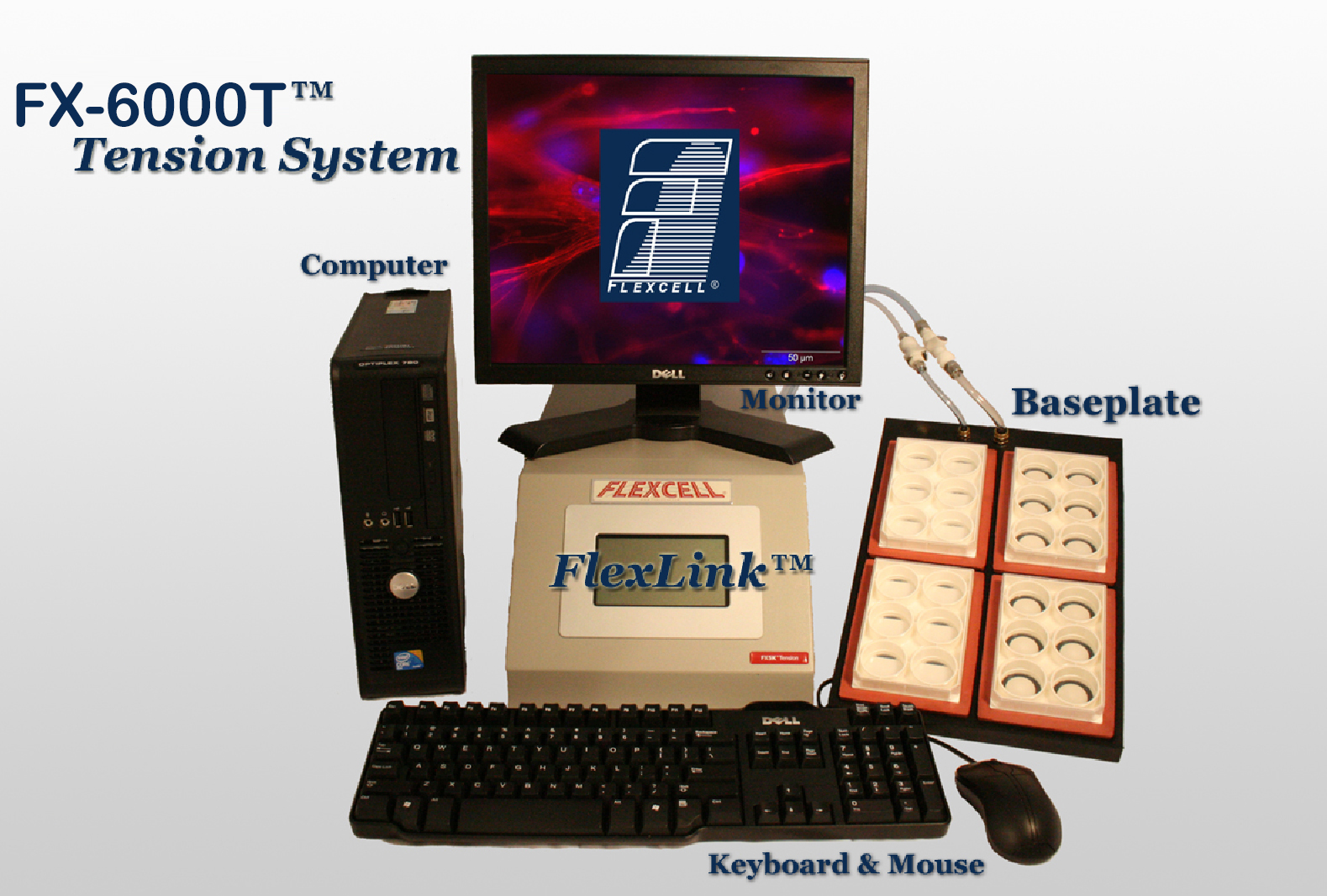
Combined with Flexcell FX-5000 or 6000T cell tension and stretching systems, substrate hardness control tension and stretching can be achieved.
Highlights:
1) The system provides axial and circumferential stress loading for various cultures of two-dimensional, three-dimensional cells and tissues; Not only does it have biaxial tensile force loading, but it also has uniaxial force application function
2) A computer-controlled stress loading system that provides controllable, reproducible, static, or periodic stress changes for cells cultured in vitro.
3) Using a vacuum pump, stretch the elastic silicone mold at the bottom of the culture plate, and the bottom of the cell culture plate can stretch up to 33%. The stress can be automatically adjusted and controlled through a gas device.
4) Based on flexible membrane substrate deformation and uniform stress distribution;
5) Real time observation of the response of cells and tissues under stress;
6) The flexstop isolation valve of * can make a portion of the cells in the same culture plate subjected to force, while a portion of the cells in the same culture well are not subjected to force, facilitating comparative experiments;
7) Integrated with pressure transmission instrument, it also has multi-channel cell pressure loading function;
8) Paired with Flex Flow parallel plate flow chamber, it can apply fluid shear stress while pulling cells;
9) Up to 4 channels, capable of running 4 different programs simultaneously, for conducting multiple comparative experiments on different tensile deformation rates;
10) Multiple frequencies, amplitudes, and waveforms can be run in the same program;
11) There are various types of simulated waveforms available for loading: static waveform, positive rotation waveform, cardiac waveform, triangular waveform, rectangular waveform, and various specially designed waveforms;
12) Better control of waveforms under ultra-low or ultra-high stress;
13) The computer system intelligently regulates the loading cycle, magnitude, frequency, and duration of tensile and tension forces
14) Loading and analyzing the biochemical reactions of various cells under tensile stress stimulation
15) Wide range of extension: 0-33%
16) Wide pulling frequency range: 0.01-5Hz
17) More than 4000 successful literature have been published and used by 150 domestic institutions.
Similar Product Recommend


