-
E-mail
13510810649@a163.com
- Phone
-
Address
No. 99, Xianyi District, Xiancun, Dalang Town, Dongguan City
Product Categories
Dongguan Tiantian Automation Equipment Co., Ltd

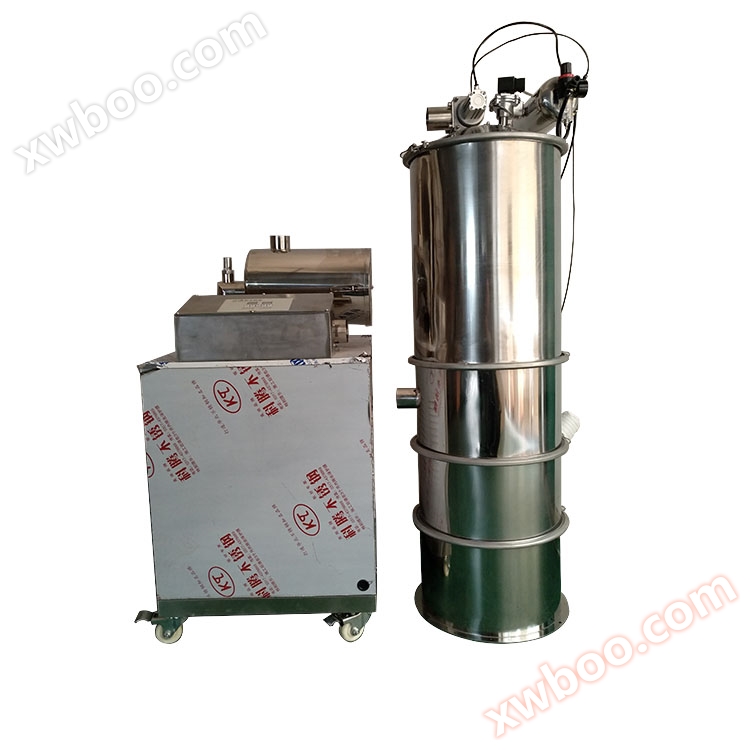
Automatic vacuum feeding system equipment
NegotiableUpdate on 07/30
- Model
- Nature of the Manufacturer
- Producers
- Product Category
- Place of Origin
Overview
Automatic vacuum feeding system equipment is an automated production equipment used in industries such as plastics, pharmaceuticals, food, batteries, etc. It can be used for material transportation, measurement, distribution, and mixing
Product Details
Automatic vacuum feeding system equipment is an automated production equipment used in industries such as plastics, pharmaceuticals, food, batteries, etc. It can be used for material transportation, measurement, distribution, and mixing. This article will introduce the automatic vacuum feeding system equipment from the aspects of equipment structure, working principle, characteristics, application fields, and usage precautions.
1、 Equipment structure
Automatic vacuum feeding system equipment usually consists of vacuum suction machine, hopper, feeding system, distribution system, control system, etc. Among them, the vacuum suction machine is the core component of the equipment, used to generate vacuum negative pressure, suck up materials and transport them to the hopper; A hopper is a sealed container used for storing and buffering materials, ensuring a uniform supply of materials; The feeding system includes feeding pumps, valves, pipelines, etc., used to transport materials from the storage bin to the hopper; The distribution system includes distribution pumps, valves, pipelines, etc., used to distribute materials from the hopper to various workstations; The control system adopts controllers such as PLC or microcontroller to achieve automatic control, ensuring the normal operation and troubleshooting of the equipment.
2、 Working principle
The working principle of the automatic vacuum feeding system equipment is to use a vacuum suction machine to generate vacuum negative pressure, suck up and transport the materials to the hopper, and evenly supply and distribute the materials to various workstations through the feeding system and distribution system. In the process of material transportation, measurement, distribution, and mixing, the control system monitors the flow rate, volume, weight, and other information of the material in real time through sensors and detectors, achieving automatic control and adjustment.
3、 Characteristics
Efficient and energy-saving: The automatic vacuum feeding system equipment uses vacuum negative pressure to transport materials, which can greatly save energy consumption compared to traditional mechanical conveying methods.
Uniform supply: The automatic vacuum feeding system equipment can evenly distribute materials from the hopper to each workstation, ensuring a stable supply of materials.
High degree of automation: The automatic vacuum feeding system equipment adopts PLC or microcontroller controllers to achieve automatic control, which can greatly improve the automation level of the production process.
Environmentally friendly and clean: The automatic vacuum feeding system equipment will not produce dust and noise pollution during operation, which helps improve the working environment and protect the health of operators.
4、 Application Fields
Automatic vacuum feeding system equipment is widely used in industries such as plastics, pharmaceuticals, food, batteries, etc., mainly applied in the following production processes:
Plastic industry: Automatic vacuum feeding system equipment can be used in the process of conveying, measuring, and mixing plastic raw materials, such as injection molding, blow molding, etc.
Pharmaceutical industry: Automatic vacuum feeding system equipment can be used for the transportation, measurement, and mixing of pharmaceutical raw materials, such as oral preparations, injections, etc.
Food industry: Automatic vacuum feeding system equipment can be used in the process of conveying, measuring, and mixing food raw materials, such as chocolate production, flour processing, etc.
Battery industry: Automatic vacuum feeding system equipment can be used for the transportation, metering, and mixing of battery raw materials, such as positive electrode materials, negative electrode materials, etc.
5、 Precautions for use
Equipment installation: The automatic vacuum feeding system equipment should be installed on a level ground and kept at a certain distance to prevent moisture. At the same time, it should be ensured that the positions of the inlet and outlet are convenient for feeding and discharging, as well as smooth pipeline connections.
Pre use inspection: Before use, the power supply, electrical system, vacuum system, feeding system, etc. of the equipment should be inspected to ensure normal operation.
Reasonable adjustment: Select the appropriate drying temperature for the material based on its characteristics, and avoid situations where the temperature is too high or too low during use. At the same time, attention should be paid to the uniform supply and distribution of materials to ensure the stability of the production process.
Maintenance: Regularly maintain the equipment, including cleaning, inspecting, and replacing components such as vacuum suction machines, hoppers, feeding systems, and distribution systems, to ensure the normal operation and extended service life of the equipment.
6、 Conclusion
The automatic vacuum feeding system equipment is an important automated production equipment, which has the characteristics of high efficiency, energy saving, uniform supply, high degree of automation, environmental protection and cleanliness. Widely used in the production process of industries such as plastics, pharmaceuticals, food, and batteries, it helps to improve production efficiency, reduce production costs, and improve the working environment. During use, attention should be paid to the installation and maintenance of the equipment to ensure its normal operation and extend its service life.