-
E-mail
sale@linkoptik.com
-
Phone
13104709993
-
Address
3rd Floor, Building 5, Science and Technology Innovation Park Bay, No.1 Jintang Road, High tech Zone, Zhuhai City
Product Categories
Zhuhai Truth Optical Instrument Co., Ltd
Airborne particle counter
NegotiableUpdate on 01/08
- Model
- Nature of the Manufacturer
- Producers
- Product Category
- Place of Origin
Overview
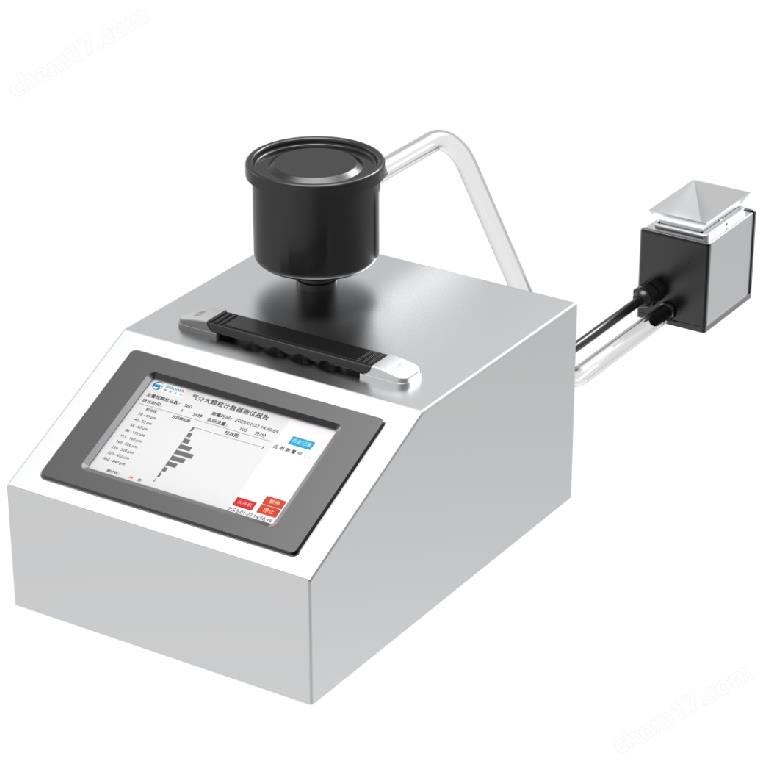
The airborne particle counter is based on the principle of particle extinction, using a unique optical spatial low-pass filtering hardware technology, combined with diffraction correction algorithm patents, which can accurately measure the particle size distribution and number of micrometer sized airborne particles, covering the pain points of not being able to monitor large particles in the current instrument market.
Product Details
The existing photoresist particle counters have been widely used for monitoring airborne particles in clean rooms. However, due to limitations in optical path principles and sampling algorithms, the existing photoresist instruments cannot accurately sample and measure large particles in the air.
This instrument is based on the principle of particle extinction and uses optical spatial low-pass filtering hardware technology, combined with diffraction correction algorithm, to accurately measure the particle size distribution and number of micrometer sized airborne particles, covering the pain points of the current instrument market that cannot monitor large particles.
Main performance indicators
Measurement range: 28 μ m~640 μ m
Single machine report shows 9 particle size channels and built-in 36 particle size channels
The standard error of particle size repeatability is less than 2%
The standard error of particle size accuracy is less than 5%
◆ Full range particle count error<10%
Fan flow deviation ± 2L/min
APC 610Airborne particle counterVs traditional photoresist particle counter
|
Truth Optics APC 610Airborne particle counter |
Traditional photoresist particle testing method |
Capable of measuring the true geometric particle size of particles |
Can only measure the equivalent extinction particle size of particles |
The measurement accuracy is not affected by the refractive index and absorption coefficient of the particles, and accurate measurement results can be obtained regardless of the material composition of the particles |
Due to the influence of the refractive index and absorption coefficient of particulate materials, such as particles with lower absorption coefficients, the measurement results may be smaller; On the contrary, the measurement results will be biased towards larger values |
High measurement accuracy, with a theoretical error of no more than 1% in particle size measurement |
Accuracy not guaranteed |
Can provide detailed granularity distribution data |
Can only provide rough granularity segmented data |
The measurement unit is designed to be separated from the drive unit and directly connected to the sampling bucket. The measurement unit can be placed in a small space for measurement, avoiding the impact of pipeline pollution on measurement accuracy |
The sampling bucket can only be placed in the measurement space, and the sedimentation and contamination of particles in the pipeline directly affect the accuracy of the measurement results |
The measuring chamber and sampling bucket inside the measuring unit are detachable for easy cleaning and replacement; And pipeline pollution has no impact on measurement |
Difficulty in cleaning the measurement room and thoroughly cleaning the pipelines |