-
E-mail
shygdzi@163.com
-
Phone
13817011982
-
Address
No. 1800-888 Xiangjiang Road, Jiangqiao Town, Jiading District, Shanghai
Product Categories
Shanghai Yangon Electronic Technology Co., Ltd
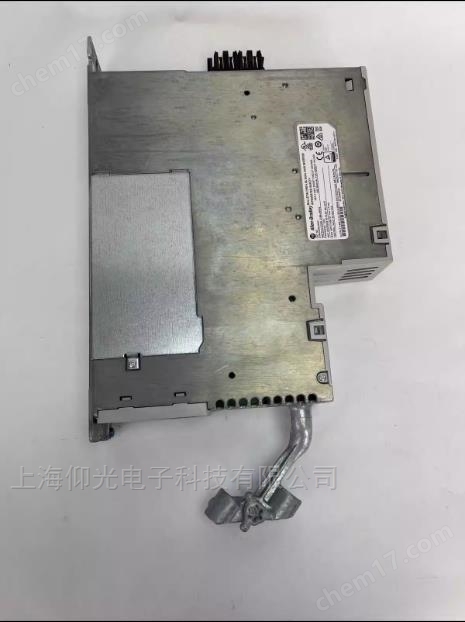

AB servo drive maintenance
NegotiableUpdate on 12/14
- Model
- Nature of the Manufacturer
- Producers
- Product Category
- Place of Origin
Overview
Shanghai Yangon Electronic Technology Co., Ltd. is a technology-based enterprise specializing in the maintenance of various brands of servo drives, AB servo drives, servo motors, industrial touch screens, frequency converters, servo controllers, robots, servers, servo controllers, as well as various board and chip level maintenance. The company has the ability to design, develop, and repair electronic circuits, as well as program and design control cabinet software for CNC system maintenance, upkeep, and transformation. It also performs chip level repair work on various complex circuit boards. $r $n Siemens servo drive maintenance, Siemens servo motor maintenance, etc
Product Details
AB servo drive maintenanceComplete Guide: Common Fault Diagnosis and Practical Operation Guide
1、 Analysis of Common Fault Types and Causes
Overcurrent/Overload Alarm
Causes: Sudden change in motor load, mechanical jamming, low setting of driver current parameters, short circuit of motor winding or insulation aging.
Troubleshooting direction: Check the mechanical status of the load, measure whether the resistance of the three-phase winding of the motor is balanced, and verify whether the current limit of the driver matches the rated value of the motor.
Overvoltage fault
Causes: Fluctuations in power supply voltage, failure of braking resistor, and short deceleration time leading to energy feedback.
Troubleshooting direction: Use a multimeter to check the stability of the input voltage, check the resistance and connection status of the braking resistor, and adjust the deceleration time parameter.
Communication anomaly
Causes: Poor contact of communication cables, incorrect configuration of protocol parameters, electromagnetic interference.
Troubleshooting direction: Check if the communication interface is oxidized, verify the settings of parameters such as baud rate and data bits, and use shielded twisted pair cables to reduce interference.
Encoder signal loss
Causes: encoder cable damage, loose interface, encoder itself malfunction.
Troubleshooting direction: Use an oscilloscope to detect the waveform of the encoder signal, check if the cable connection is secure, replace the test encoder to confirm the source of the fault.
2、 Practical steps for maintenance
Preliminary safety inspection
Power off operation: Cut off the power before maintenance, wait for the capacitor to discharge completely, and wear an anti-static wristband.
Appearance inspection: Observe whether there are burn marks on the drive housing, whether the cooling fan is running normally, and whether the interface is loose or oxidized.
Hardware module detection
Power module: Use a multimeter to check the input/output voltage and confirm that there is no bulging or leakage of the capacitor.
Power module: Check for breakdown marks on IGBT or MOSFET, and test conductivity with a multimeter diode.
Control board: Check key components such as resistors, capacitors, and chips for virtual soldering or damage, and locate faulty components through replacement methods.
Software parameter debugging
Factory reset: Restore default parameters through the driver control panel or upper computer software to eliminate configuration errors.
Parameter optimization: Adjust the current limit, acceleration/deceleration time, PID parameters, etc. according to the actual load of the motor to ensure compatibility with the motor characteristics.
Firmware upgrade: If there are known software bugs, you can try upgrading to the latest firmware version.
Load and motor testing
No load test: Disconnect the motor and test the output waveform of the driver separately to confirm that there are no abnormalities.
Load testing: Gradually increase the load, observe whether the current and voltage waveforms are stable, and troubleshoot mechanical blockages or motor faults.
3、 Maintenance precautions
Safety firstStrictly follow the power-off operation specifications during the maintenance process to avoid electric shock or component damage.
Gradually investigateFollowing the principle of "easy before difficult, soft before hard", gradually deepening from simple parameter settings to complex hardware detection.
Spare Parts ManagementPrepare commonly used spare parts such as capacitors, resistors, fans, etc. for quick replacement and testing.
Record and feedbackDetailed recording of fault symptoms, repair steps, and test data to provide a basis for subsequent optimization.
AB servo drive maintenanceIt is necessary to combine theoretical analysis and practical experience to locate the root cause of the fault through a systematic troubleshooting process. Whether it's a power issue, abnormal load, or software configuration error, mastering scientific maintenance methods can significantly improve repair efficiency and ensure stable equipment operation.
Similar Product Recommend


