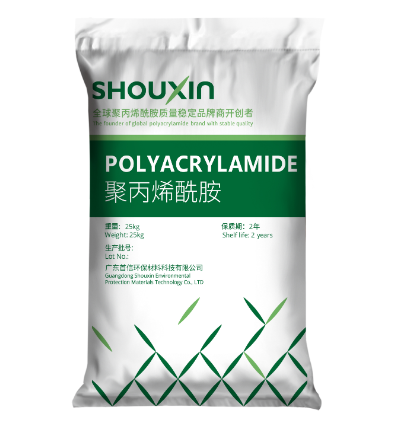
Polyacrylamide Manufacturer in China | Shouxin Advanced Polymer Sciences Co., Ltd.
Shouxin Advanced Polymer Sciences Co., Ltd. is a leading polyacrylamide (PAM) brand and global supplier based in China.09,18,2026 6 views

05,19,20140From:
The testing industry has a market worth billions and is yet to be integrated. There are still hidden concerns in the market
The monopoly of state-owned institutions in the testing industry is expected to change, and the third-party testing market may usher in significant opportunities.
The testing system will move towards the market. Currently, 70% of testing institutions are state-owned, and they need to undergo shareholding reform, establish groups, introduce capital, and third-party testing institutions. "Yesterday, an official from the General Administration of Quality Supervision, Inspection and Quarantine told a reporter from the * Finance Daily that" in the future, we need to create a fully competitive testing mechanism, but the country will keep some testing institutions for final decision-making. ”
The above-mentioned quality inspection officials also stated that the restructuring of testing institutions will change the rules of the game in the past. As long as it is a nationally certified testing institution, the testing report will be recognized; Private testing institutions can also conduct certification as long as they comply with national regulations.
In the inspection and testing market with a scale of billions, non-state-owned testing institutions account for only 10%. The reform of these testing institutions and the opening up of the market undoubtedly bring opportunities. But for the capital that is observing, how to divide this cake and whether there will be new types of monopolies in the future still requires detailed reform measures to dispel concerns.
Billion dollar market to be integrated
In fact, as early as March 11th, the reform of the above-mentioned testing institutions had officially begun. On that day, the Central Compilation Office and the General Administration of Quality Supervision, Inspection and Quarantine jointly issued the "Implementation Opinions on Integrating Inspection, Testing and Certification Institutions" (hereinafter referred to as the "Opinions") approved by the State Council.
The Opinion states that while clarifying the functional positioning of inspection, testing and certification institutions and promoting internal integration within departments or industries, it will also promote the decoupling of qualified inspection, testing and certification institutions from administrative departments and their transformation into enterprises; In addition, cross departmental, cross industry, and cross level integration will also be promoted, and support and encourage mergers and acquisitions of inspection and testing institutions to strengthen and expand.
The Decision of the Central Committee of the Communist Party of China on Several Major Issues Concerning Comprehensively Deepening Reform, released last year, explicitly proposed the integration of inspection, testing, and certification institutions with similar or identical business operations. The Opinion released this time is a refinement and implementation of the central spirit, while also in line with the institutional reform and functional transformation of the State Council.
The Opinion also states that by 2015, the integration of institutions with the nature of public institutions should be basically completed, the work should be basically in place, and the market competition pattern should be initially formed.
A staff member of the testing agency under the General Administration of Quality Supervision, Inspection and Quarantine stated that this reform means that the career development model of inspection, testing and certification agencies will also be transformed into an industrial development model. This includes two types of institutions: public welfare government inspection and testing institutions, and profit-making social inspection and testing institutions.
Public welfare government inspection and testing institutions will provide support for government regulation and policy and regulatory construction, provide inspection and testing for major national economy and people's livelihood, supervise social inspection and testing institutions, and solve the problem of market failure; Profitable social inspection and testing institutions will research advanced measurement science and technology, conduct market-oriented inspection and testing of product performance based on technical standards, regulations, etc., and make scientific and fair qualification assessments of product quality compliance based on data.
Currently, 70% to 80% of inspection, testing, and certification agencies have government backgrounds, and their resource allocation is dominated by the government. Although there have also been some private enterprises and foreign-funded testing institutions, the large cake of the testing industry is basically controlled by government led testing institutions, with non-state-owned testing institutions accounting for about 10% of the market share
However, at the same time, China's inspection and testing industry is developing rapidly. According to statistics and estimates from the State Administration for Market Regulation, the size of the inspection and testing market was 167.8 billion yuan in 2013, 210.5 billion yuan in 2014, and 257.4 billion yuan in 2015.
After the reform, some testing projects that were forced by the government can be procured and third-party testing agencies can enter, no longer being monopolized, "a staff member surnamed Zhou from the Shanghai Quality Inspection Association told our reporter.
The relevant person in charge of the State Food and Drug Administration stated that the upcoming reform of inspection institutions needs to prepare for pilot projects, first integrating inspection institutions and involving third-party inspection institutions.
After the reform, there are three major benefits for non-state-owned testing institutions in the future testing market: firstly, enterprises no longer rely on government testing institutions and can find third-party testing institutions, which will expand this market; The second is that government departments can purchase the services of third-party testing institutions, which will increase the demand; After Zui, individuals can submit for testing.
The integration of inspection and testing institutions was mentioned a year ago. A few days ago, the Quality Inspection and Central Compilation Office held a meeting where government departments could purchase testing services, and the testing system would be opened up - there would be more university testing institutions, private and foreign-funded institutions, which is an open state; but regulation needs to keep up and refine the system, "said Hu Yinglian, a professor at the National School of Administration.
Another staff member of the testing agency under the General Administration of Quality Supervision, Inspection and Quarantine told our reporter: "Previously, testing agencies were not open, but after joining the WTO, they were partially open, allowing foreign investment to enter as joint ventures. They will be opened in 2015 to fulfill WTO commitments. We have submitted a plan for the shareholding system reform, but it has not been approved yet. ”
Market concerns
At present, many testing institutions belong to public institutions, eat from the same pot, have low work efficiency, and operate at a loss every year. The entire quality inspection system has over 110000 testing personnel. In order to solve this problem, the country must reform public institutions, and the testing institutions are the first to take action, "said the staff of the aforementioned testing institutions.
The staff member stated that in the future, there will not be too many testing institutions with the nature of public institutions, but they can participate in equity and be in a mixed ownership state. However, the country still hopes that testing institutions can unite and create a "carrier" for testing institutions to compete with them. There can also be a joint-stock structure in the branch offices.
The other side of the reform of inspection and testing institutions comes from the concerns of foreign-funded testing institutions.
The head of a foreign background testing agency stated that based on past historical experience, if administrative power is stripped away and the stripped testing agency is absorbed into another group controlled by government departments, this market will still be monopolized, even more so than the current monopoly.
If such a situation occurs, it will have a great destructive power on the marketization process of this industry, and the result may be that administrative reform itself becomes a sacrificial lamb. In a monopoly market controlled by monopolistic state-owned enterprises and supported by administrative means, the survival of the fittest mechanism in the market cannot work. This is a trend that the industry is more concerned about, "said the person in charge of the foreign investment testing agency mentioned above.
According to relevant sources from the European Union Chamber of Commerce in China, the regulatory agency of the testing laboratory has obtained China Metrology Certification, which provides administrative approval for each testing method and product of the same company in different laboratories across the country. Therefore, all foreign competitors must apply to the quality inspection departments of various provinces and regions to obtain certification from the China Metrology Certification System. The opaque process, unclear implementation policies of local quality and technical supervision bureaus, and lengthy application processes have increased the operational burden on foreign-funded quality and safety testing institutions.
At the same time, the industry is also concerned that regulatory agencies often take the opportunity to conduct mandatory testing and certification for new products, and draft a list of "recommended" testing laboratories that are allowed to conduct relevant testing; The process of selecting laboratories and the selection criteria lack transparency, and independent providers are often excluded from the recommended laboratory list.
Previous111

Polyacrylamide Manufacturer in China | Shouxin Advanced Polymer Sciences Co., Ltd.
Shouxin Advanced Polymer Sciences Co., Ltd. is a leading polyacrylamide (PAM) brand and global supplier based in China.