Polyacrylamide Manufacturer in China | Shouxin Advanced Polymer Sciences Co., Ltd.
Shouxin Advanced Polymer Sciences Co., Ltd. is a leading polyacrylamide (PAM) brand and global supplier based in China.09,18,2026 7 views

12,08,20250From:
Recently, a technical exchange meeting for the agricultural four situation monitoring system developed by Shandong Tianhe Environmental Technology Co., Ltd. was held in Weifang. At the meeting, many industry professionals and customer friends arrived at the scene. After understanding, everyone highly affirmed and fully recognized the product. The Agricultural Four Situation Monitoring System is a smart agriculture core system that integrates technologies such as the Internet of Things, big data, and artificial intelligence. It provides precise and intelligent management support for agricultural production by real-time monitoring of soil moisture (soil moisture status), insect infestation (occurrence of pests and diseases), seedling growth (crop growth status), and disaster situation (natural disaster warning). Like a tubular soil moisture monitoring device, it can collect real-time parameters such as soil moisture, temperature, conductivity, pH value, etc., providing scientific basis for irrigation and fertilization. Including insect detection and reporting lights, IoT insect detection and reporting systems, etc., using light, electricity, and CNC technology to capture and identify pest species and quantities, achieving automated and intelligent monitoring of pests. Multi factor meteorological stations monitor meteorological factors such as air temperature, humidity, wind speed, wind direction, rainfall, light intensity, and carbon dioxide concentration, providing comprehensive climate data support for agricultural production. High definition cameras and drone inspection technology remotely monitor crop growth status, including key indicators such as plant height, leaf area index, chlorophyll content, etc., to promptly detect growth abnormalities. Stable transmission of data collected by terminal devices to cloud servers or local data platforms through wireless or wired communication methods such as GPRS/4G, LoRa, and Ethernet ports. As the core hub of the system, responsible for receiving, storing, and analyzing data uploaded by terminal devices. Support functions such as large screen visualization and map display, presenting data in the form of reports, curves, etc., making it convenient for management personnel to view remotely. Integrated expert system that can connect with agricultural experts to solve planting problems, provide personalized planting suggestions and management strategies.
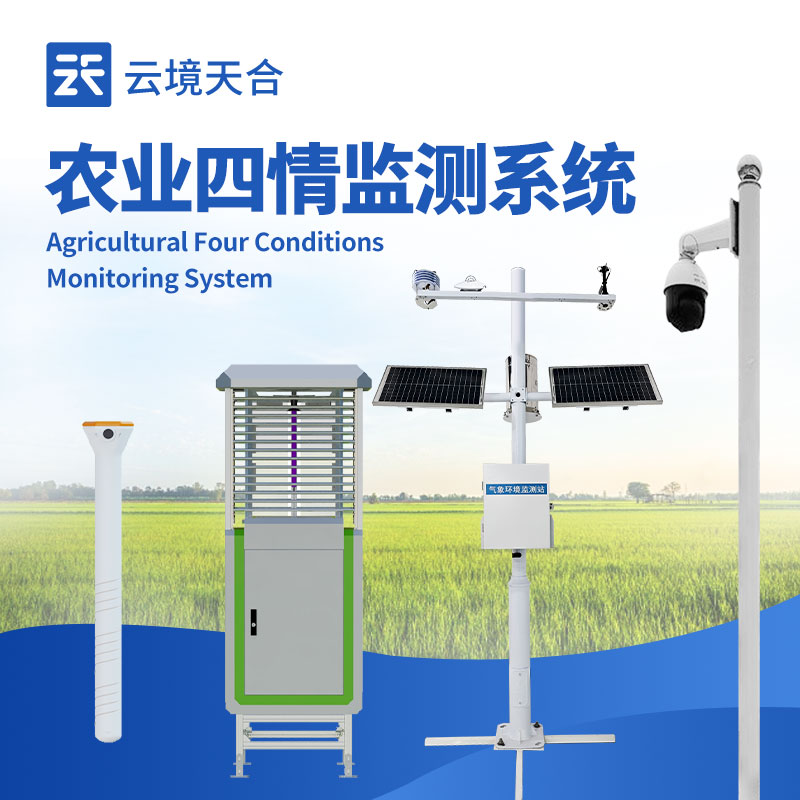
At the meeting, Manager Yu from Tianhe Environmental Technology Co., Ltd. introduced the core functions of soil moisture monitoring and precise irrigation, real-time monitoring of soil moisture, temperature and other parameters, guiding irrigation operations, avoiding water resource waste, and achieving water conservation and efficiency improvement. By combining meteorological data to predict irrigation demand, it helps farmers accurately grasp irrigation timing and ensure that crop roots are in a growing environment. Insect monitoring and early warning prevention automatically capture and identify pest types and quantities, and predict pest outbreak trends based on historical data and meteorological conditions. Timely release of warning information to guide farmers to take targeted prevention and control measures, such as fixed-point pesticide application, biological control, etc., reduce the use of chemical pesticides, and reduce environmental pollution. Seedling monitoring and growth optimization remotely monitor crop growth status, timely detect growth abnormalities, and provide guidance for fertilization, pruning and other management measures. Predicting crop yield through big data analysis, guiding planting structure adjustment, optimizing planting layout, and improving overall yield and quality. Disaster monitoring and emergency response integrate meteorological data, satellite remote sensing images, and other resources to monitor weather events (such as droughts, floods, cold waves, etc.) and natural disasters in real time. Quickly assess the scope and severity of disasters, provide farmers with sufficient time to take preventive measures, and reduce disaster losses. Provide rapid assessment and recovery guidance after disasters to help agriculture quickly resume production.
Application scenarios
The construction of high standard farmland provides accurate data support through real-time monitoring of soil moisture, pest and disease conditions, crop growth status, and the impact of natural disasters. Adjust planting planning and pest warning, reduce the use of pesticides and fertilizers, and improve resource utilization efficiency. Real time monitoring of environmental parameters within agricultural planting parks helps park managers adjust planting strategies in a timely manner and improve crop yield and quality. Provide warning information to help the park effectively respond to risks such as pests, diseases, and natural disasters. The construction of ecological green agriculture supports the implementation of green prevention and control strategies, by accurately monitoring the situation of pests and diseases, reducing the use of chemical pesticides, and protecting the ecological environment. Monitor soil nutrient status, guide rational fertilization, and promote sustainable agricultural development. Real time monitoring of environmental parameters inside greenhouses (such as temperature, humidity, light intensity, etc.) to provide suitable environmental conditions for crop growth. Monitor crop growth status, guide growers to take targeted management measures, and improve the efficiency and output quality of greenhouse planting. Agricultural research and education provide long-term and continuous data support for agricultural research, which helps researchers to deeply study crop growth patterns, pest and disease occurrence mechanisms, and so on. As a teaching tool, it helps agricultural students understand modern agricultural technology and management methods.
advantage value
By monitoring and analyzing the crop growth environment in real-time, farmers can improve agricultural production efficiency through more precise field management, reducing blind operations and resource waste. The real-time data provided by the system to ensure crop yield and quality helps farmers identify and solve problems in crop growth in a timely manner, ensuring healthy crop growth and improving yield and quality. Promoting sustainable agricultural development through measures such as precision irrigation and reducing pesticide use, reducing the negative impact of agricultural production on the environment, and achieving green and sustainable development. Enhancing disaster resilience through timely and accurate disaster warning and emergency response mechanisms, effectively reducing the impact of natural disasters on agricultural production. Farmers can remotely check the condition of their farmland through their mobile phones or computers, reducing labor and time costs and improving management efficiency. '
The exchange meeting was a complete success. We also welcome customers with such needs to come.

Polyacrylamide Manufacturer in China | Shouxin Advanced Polymer Sciences Co., Ltd.
Shouxin Advanced Polymer Sciences Co., Ltd. is a leading polyacrylamide (PAM) brand and global supplier based in China.