

Polyacrylamide Manufacturer in China | Shouxin Advanced Polymer Sciences Co., Ltd.
Shouxin Advanced Polymer Sciences Co., Ltd. is a leading polyacrylamide (PAM) brand and global supplier based in China.09,18,2026 4 views


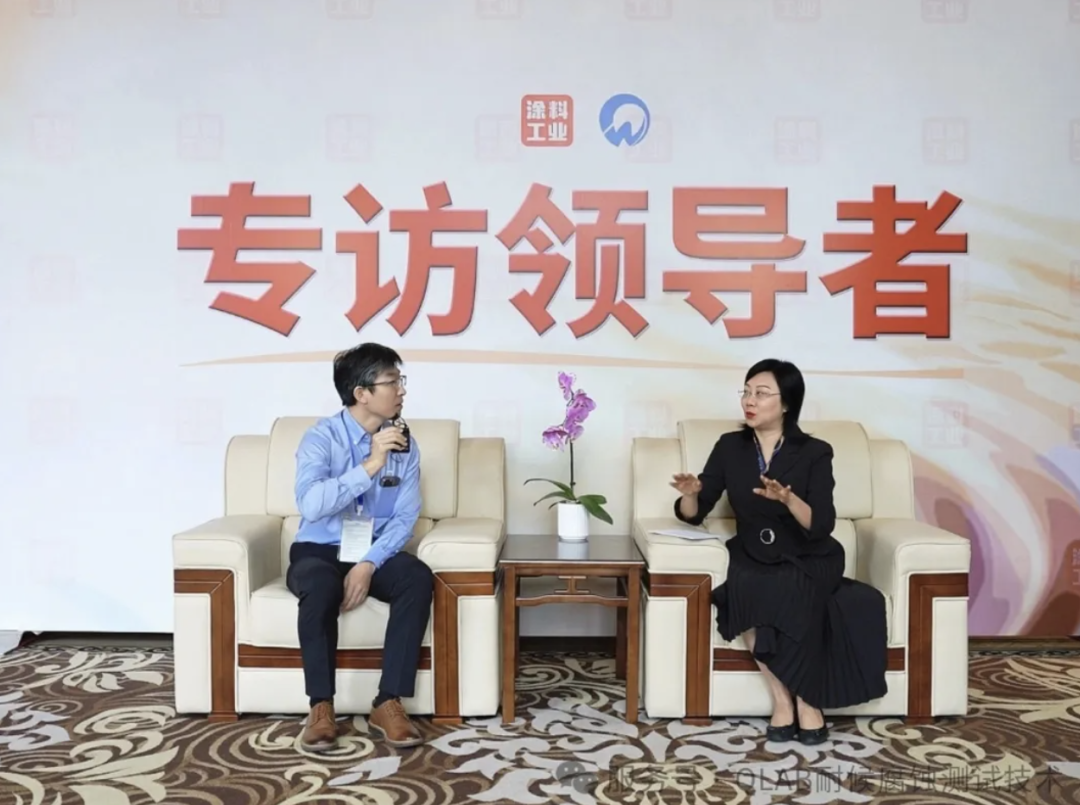
Recently, "Coatings Industry" conducted in-depth interviews with several industry representatives on the development trend of green coatings and corporate innovation strategies. Mr. Zhu Dong, Deputy Chief Engineer of CNOOC Changzhou Coatings and Chemical Research Institute Co., Ltd. and Editor in Chief of "Coatings Industry", and Ms. Yu Yingying, Secretary General of the Water based Professional Committee of the Chinese Chemical Society, participated in this planning.
As a long-term practitioner in the global field of weather resistance and aging/corrosion testing, Mr. Kobe Qu, Senior Technical Manager of Q-Lab, shared clear views on the company's mission, technical roadmap, and standardization practices.
We make testing simple.
Good testing equipment should be easy to operate, stable to run, and cost controllable - this is not only Q-Lab's product philosophy, but also our way of serving the sustainable development of the industry.
Interview Summary
Q: Please briefly introduce Q-Lab's business and philosophy
A: Q-Lab was founded in 1956 and is headquartered in Cleveland, USA. The company was the first to provide consistent, clean, and reproducible substrates for the industry using Q-PANEL standard testing substrates; Subsequently, QUV ultraviolet accelerated aging test chambers were successively launched Q-SUNXenon lamp aging test chamber、 Core equipment such as Q-FOG salt spray/cyclic corrosion test chamber, aimed at R&D verification and quality control scenarios.
The philosophy of Q-Lab is“We make testing simple.”——On the premise of ensuring scientificity and traceability, make the equipment easy to use, efficient to test, and cost-effective. Since the 1970s, Q-Lab has been committed to providing long-term and sustainable service support for the equipment it sells, and building a reliable reputation centered on customers.
Q:QUV、Q-SUN、 Why is Q-FOG widely used in industries such as coatings and renewable energy? Where are the technological advantages reflected?
A: It can be summarized into three types of advantages:
1. Accurate simulation of environmental factors
QUVUVA/UVB multi type lamps can simulate the solar ultraviolet spectrum; Condensation program simulates nighttime dew; Optional water spray to reproduce rain erosion.
Q-SUN: Up to ten types of optical filters cover the full spectrum of outdoor solar/in car operating conditions; It can synchronously control temperature and humidity with water spraying, and adapt to scenarios such as acid rain.
Q-FOG: Based on traditional salt spray, combined with drying/condensation/RH controlled cyclic corrosion, it is closer to the real service environment.
2. Consumables lifespan and operating costs
UV lampThe lifespan is about 8000 hours, and the xenon lamp is about 3000 hours (Xe-8 new platform supports longer lifespan solutions), significantly reducing unit testing costs.
The new generation Q-SUN Xe-8 has further optimized its light source and cavity design, laying the foundation for higher irradiance and more uniform field distribution.
3. Calibration and Traceability
Q-Lab has a calibration laboratory in Shanghai that meets ISO/IEC 17025 qualifications, providing users with radiation meter equivalent value traceability services to ensure long-term data consistency and cross laboratory comparability. Recommend customers to conduct regular annual calibration.
Q: What are the differences between the TUV-421 new ultraviolet lamp tube and traditional UVA/UVB? How can Xe-8 "big drum" improve uniformity?
A:
· TUV-421:
Traditional UVA-340/UVB-313 mainly covers the UV band<400 nm, without visible light; TUV-421 contains UV+visible light, which can quickly reproduce outdoor fading/discoloration in certain organic pigment and ink applications, and shows higher correlation with xenon lamp results. This provides a new tool for the comprehensive optimization of "speed/relevance/cost".
· Q-SUN Xe-8:
Long lamp tube+end reflection structure: compensates for the irradiance at the head and tail of the sample holder, improving in-plane uniformity;
Double Blackboard/Double Black Label "Thermal Field Control: Blackboards are arranged above and below the drum, and the system compares and dynamically adjusts the airflow in real time to make the temperature in the upper and lower areas more consistent;
The overall goal is to make the light/temperature/humidity field more stable and controllable, and reduce system errors introduced by positional differences.
Q: How to balance testing cycle and cost in high value-added fields such as aviation and automobiles?
A: These industries have more stringent requirements for weather resistance and longer cycles. If limited by the cost/duration of xenon lamps in the early stage of formula screening, the combination of QUV+TUV-421 can be considered for accelerated screening, shortening iterations while ensuring mechanism relevance, and then using Q-SUN for final testing and standardization comparison. In the future, the Xe-8 platform will also support higher irradiance scenarios (such as the "3x Sun" level) to further compress testing time.

Q: How can Q-Lab help companies reduce energy and resource consumption in the testing process under the "dual carbon" goal?
A: Mainly make three efforts:
Consumables upgrade:The UV lamp has been upgraded from about 5000 hours to 8000 hours, and the xenon lamp has been upgraded from about 1500 hours to 3000 hours. While doubling its lifespan, the cost increase is controllable;
Energy efficiency optimization:Such as QUV condensate tray and Q-FOG box insulation design, reducing heating power and total power consumption;
Water resource cycle:The pure water purification system can be used in parallel with multiple devices, significantly reducing the amount of water used for spraying/condensation (for example, the water consumption during outdoor wood circulation testing can be greatly reduced), and reducing the burden on laboratory water treatment.

Polyacrylamide Manufacturer in China | Shouxin Advanced Polymer Sciences Co., Ltd.
Shouxin Advanced Polymer Sciences Co., Ltd. is a leading polyacrylamide (PAM) brand and global supplier based in China.