At Virginia Commonwealth University Massey Cancer Center, scientists are conducting basic research that may change the way cellular immunotherapy is used, and the project has received pilot funding from Virginia Commonwealth University Massey Cancer Center (VCU Massey). This study quantitatively analyzed how the immune system responds to cell therapy, in order to seek a new approach to cellular immunotherapy, the synergistic effect of stem cell transplantation and CAR-T cell therapy. This study established a data model to simulate the immune response in cellular immunotherapy.

We have established models of the immune responses observed in stem cell transplantation and other forms of cancer treatment that rely on the immune system, "said Dr. Amiroor, a Massey hematologist, oncologist, and researcher." This allows us to understand that the reactions that occur after immune transplantation and tumor immunotherapy are deterministic rather than random processes. In the future, we hope these models can be used for treatment decision-making, which will improve treatment outcomes for patients with hematological and lymphatic system cancers“
Model establishment
Dr. Toor has been dedicated to modeling immune responses.
Human leukocyte antigen (HLA) refers to genes that encode cell surface proteins responsible for regulating the immune system. Currently, doctors use HLA testing to match stem cell donors and recipients with similar HLA compositions. The proteins produced by HLA genes help the body's immune system distinguish which cells are "self" and which cells are foreign.
Researchers studied variations in the secondary histocompatibility antigen (mHA) of donor recipient stem cell transplantation. MHA is a protein fragment presented on HLA molecules that interacts with receptors on immune system T cells. Researchers used advanced computer-based analysis to investigate potential interactions between mHA and HLA, and discovered high-level variations in mHA in stem cell transplant donors recipients. This mutation may lead to graft-versus-host disease (GVHD), a potentially life-threatening complication in which the donor's immune cells attack healthy tissue in the recipient after transplantation.

model formula
The principle of this model is based on the mHA interaction and the protein coding differences between the donor and recipient. Scientists have confirmed that the degree of T cell response is correlated with the cumulative incidence of GVHD in patients.
We believe that this type of model can be used to identify donors for transplant recipients, reduce the risk of complications such as graft-versus-host disease, and may also provide information on post transplant immunosuppressive doses, "Toor said.
The Application of Models in CAR-T
In the second study recently published in the journal Bone Marrow Transplantation, Toor applied this research to CAR-T cell therapy. In this study, researchers derived a mathematical formula that can be used to develop variable dose parameters. Calculating the dose of CAR-T cell therapy can monitor the severity of cytokine release syndrome, a potentially lethal immune response caused by the interaction between CAR-T cells and tumor cells.
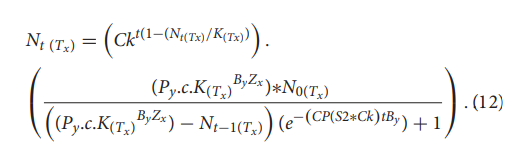
model formula
We demonstrate that it is possible to mathematically derive the relationship between CAR-T cell expansion and the growth of target leukemia cells, "Toor said. This will help doctors establish dosage parameters for specific patient tumor burden to limit drug toxicity
The latter study, recently published in the journal Frontiers in Immunology, further applied the previous model. Toor and his team considered other variables present in stem cell transplantation, which may help to more accurately simulate T cell responses between donors and recipients.
Conclusion
Through this study, we have developed a comprehensive mathematical framework for immune responses, providing new perspectives on various factors crucial to T cell immunology. These models firmly demonstrate that immune responses are not random, but can be calculated and predicted, "Toor said. We have achieved a breakthrough in the concept of medical applications in stem cell transplantation and tumor immunotherapy
The researchers are continuing to improve their model while working to ensure funding to enable them to evaluate and treat patients receiving cell therapy at the Massey Cancer Center through the use of whole exome sequencing. Their future work will investigate how these differences in DNA sequence libraries can alter the donor immune cell profile after transplantation, shaping it into the recipient's tissue antigen profile. The research findings will provide doctors with real-time measurement of immune responses and appropriate adjustments to treatment. (Biological Valley)
Reference source:
Ali Salman,Vishal Koparde,Charles E. Hall,Max Jameson-Lee,Catherine Roberts,Myrna Serrano,BadarAbdulRazzaq,Jeremy Meier,Caleb Kennedy,Masoud H.Manjili,Stephen R.Spellman,DayanjanWijesinghe,Shahrukh Hashmi,Greg Buck, Rehan Qayyum,Michael Neale,Jason Reed,Amir A. Toor。 Determiningthe Quantitative Principles of T Cell Response to Antigenic Disparity in StemCell Transplantation. Frontiersin Immunology, 2018; 9 DOI: 10.3389/fimmu.2018.02284
The formulas in the pictures in the article are all from the above-mentioned literature