-
E-mail
xinhanyq@126.com
-
Phone
18939263387
-
Address
Building 5, Left Bank International, 21st Century Plaza, Jinshui District, Zhengzhou City
Zhengzhou Xinhan Instrument Equipment Co., Ltd
Industrial High Temperature Resistance Furnace - Core Equipment for Material Sintering and Synthesis
Date: 2025-11-16Read: 0
In the fields of materials science, metallurgy, ceramics, and chemical engineering, high-temperature heat treatment of materials is a key process to change their microstructure and enhance their physical and chemical properties. As a universal heating equipment that generates high temperatures using electrical energy, industrial high-temperature resistance furnaces have become the core equipment for laboratory research and development and small and medium-sized industrial production due to their stable temperature control, wide temperature range, and flexible application adaptability.
Industrial high-temperature resistance furnaceThe core heating principle of the furnace is to convert electrical energy into thermal energy through built-in resistance heating elements (such as silicon molybdenum rods, silicon carbon rods, alloy wires, etc.), thereby forming a uniform and controllable high-temperature environment inside the furnace. This heating method is clean, efficient, and has much higher temperature control accuracy than coal-fired or gas-fired heating methods. Its value lies in providing an extremely stable and pure thermal processing platform for processes such as sintering, melting, ashing, heat treatment, and chemical synthesis of materials.
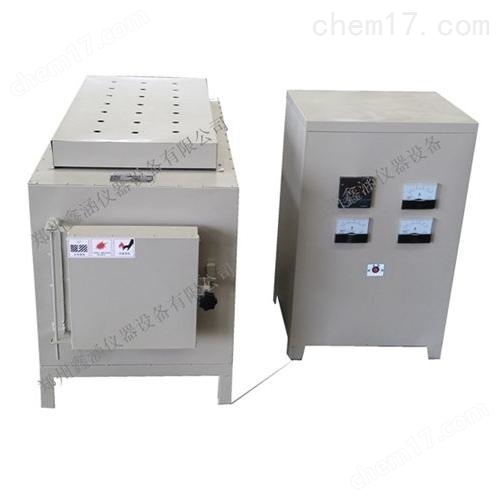
1. Wide temperature range and precise control: Designed according to different heating elements and furnace materials, the working temperature range of industrial high-temperature resistance furnaces can range from hundreds of degrees Celsius to 1800 ℃. The advanced temperature control system adopts intelligent PID regulation algorithm, combined with multi-point thermocouple temperature measurement, which can achieve precise control and high uniformity of furnace temperature (such as ± 1 ℃ to ± 5 ℃), ensuring the repeatability of heat treatment process and product consistency.
2. The furnace environment is clean and highly applicable: Resistance furnaces rely on electric heating and do not introduce combustion products like fuel furnaces, resulting in a clean furnace environment. By introducing inert gases (such as nitrogen or argon) or specific atmospheres, heat treatment under atmosphere protection can be easily achieved, meeting the processing needs of oxidation sensitive materials (such as metal powders and magnetic materials) and providing flexible application scenarios.
3. Safe, reliable, and highly automated: Modern resistance furnaces integrate multiple safety protection devices, such as over temperature protection, leakage protection, overcurrent protection, etc. The furnace body adopts a double-layer air-cooled structure, and the temperature rise of the outer shell is low. The use of programmable temperature controllers enables the automatic execution of complex temperature rise and fall curves, greatly reducing the difficulty and risk of manual operation, and achieving automation and intelligence in production.
4. Durable and sturdy structure: The furnace is usually made of high-temperature aluminum fiber or lightweight refractory bricks, which have good insulation effect, small heat capacity, and energy saving. High quality heating elements and refractory materials ensure the stability and long service life of the equipment under long-term high temperatures.
Industrial high-temperature resistance furnace is a cornerstone equipment for high-temperature material treatment. It provides strong technical support for the research and development of new materials and the improvement of product quality with precise temperature control, clean heat treatment environment, and reliable automation performance, and is a key force in promoting technological progress and industrial upgrading.