-
E-mail
xinhanyq@126.com
-
Phone
18939263387
-
Address
Building 5, Left Bank International, 21st Century Plaza, Jinshui District, Zhengzhou City
Zhengzhou Xinhan Instrument Equipment Co., Ltd
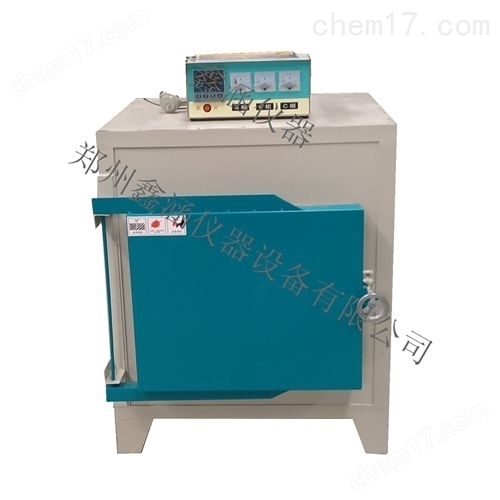
High temperature heat treatment furnace - a professional engine that empowers material performance transformation
Date: 2025-11-14Read: 0
In the mechanical manufacturing, automotive, aerospace, and tool mold industries, improving the hardness, strength, wear resistance, and toughness of metal parts through precise control of heat treatment processes is a key link in endowing products with core competitiveness.High temperature heat treatment furnaceIt is a specialized industrial furnace designed specifically for this mission, which goes beyond simply providing high temperatures and is a "professional engine" that integrates precise atmosphere control and advanced process management, driving the transformation of material properties.
Compared with general industrial resistance furnaces, the name heat treatment furnace emphasizes its functional purpose more - to perform professional heat treatment processes such as quenching, tempering, annealing, normalizing, carburizing, nitriding, etc. These processes not only require the highest temperature, but more importantly, have extremely strict and precise control requirements for heating rate, holding time, cooling rate, and furnace atmosphere.
1. Accurate atmosphere control capability: In order to achieve non oxidation, non decarburization heating, or chemical heat treatment (such as carburizing), the furnace must be able to accurately control the composition and flow of protective atmosphere (such as nitrogen based atmosphere, endothermic atmosphere) or active atmosphere (such as carburizing atmosphere, ammonia gas). The furnace body adopts a special sealing design to ensure stable atmosphere, which directly determines the quality and performance of the workpiece surface.
2. Efficient cooling system integration: Many heat treatment processes (such as quenching) require workpieces to be quickly transferred to the cooling medium after high-temperature insulation. For this reason, many high-temperature heat treatment furnaces (such as box furnaces and well furnaces) integrate rapid quenching mechanisms (oil tanks, water tanks, or high-pressure gas quenching systems) to achieve seamless connection between heating and cooling, ensuring the desired metallographic structure and mechanical properties are obtained.
3. Uniformity of furnace temperature: For large or high-capacity heat treatment furnaces, it is crucial to ensure that the temperature at each point in the furnace is highly uniform (such as ± 5 ℃). Any temperature deviation can lead to uneven performance of the same batch of parts, resulting in scrap. For this reason, the heat treatment furnace has been deeply optimized in terms of airflow design, heating element arrangement, and insulation structure to ensure the reproducibility of the process.
4. High degree of process automation and traceability: Modern heat treatment furnaces are typically equipped with advanced computer control systems that can store hundreds of heat treatment process curves. The system can automatically record and store key data such as actual temperature curves and atmosphere parameters for each furnace, achieving full traceability of product quality and meeting the strict quality management standards of industries such as aerospace and automotive.
High temperature heat treatment furnaces are the "forging masters" of material properties. It elevates heat treatment from a "skill" to a "science" that can be precisely controlled through precise temperature, atmosphere, and cooling control.