-
E-mail
2044525453@qq.com
-
Phone
15136134901
-
Address
Building 6, Innovation Park, Power Plant Road, West Third Ring Road, Zhongyuan District
Zhengzhou Ketan Instrument Equipment Co., Ltd
Dielectric barrier discharge plasma experimental device
Date: 2025-12-19Read: 2
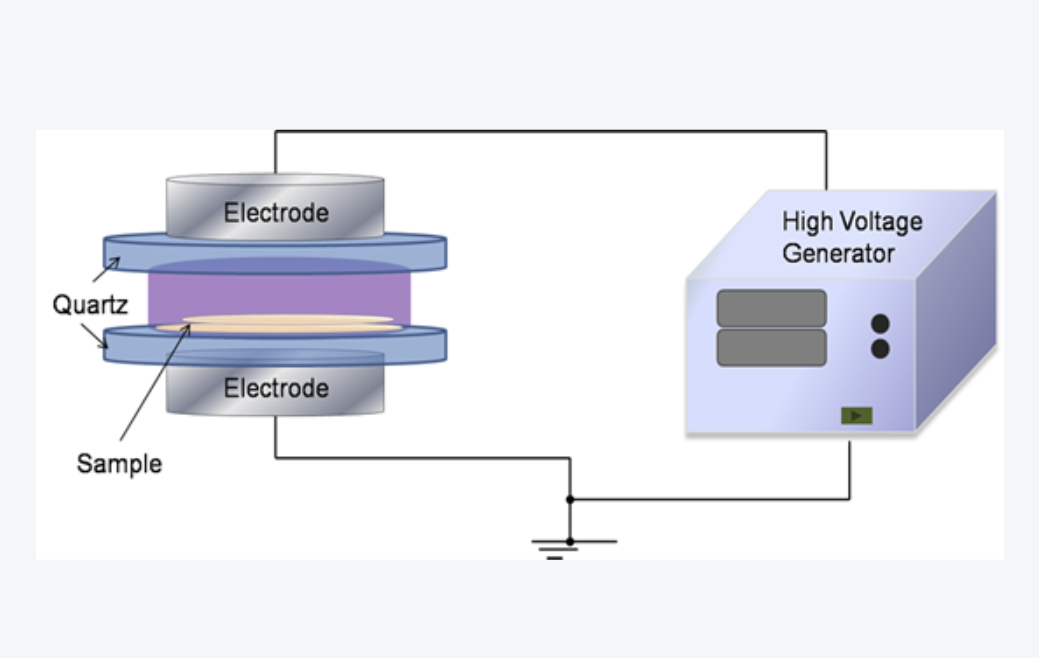
Dielectric Barrier Discharge (DBD) plasma has the advantages of low temperature, non-equilibrium, easy amplification, and can operate over a large area and at atmospheric pressure. It has been widely used in the fields of gas-phase/surface reactions and catalysis. Below are the main uses, typical examples, advantages, and challenges summarized by application direction and mechanism, to facilitate your selection and design in research or engineering applications.
1) Catalytic/purification of VOCs and harmful gases
-Application content: Utilizing the high-energy electrons generated by DBD, active neutral groups (O, O3, OH, N, NOx, etc.), and short-lived free radicals to directly or synergistically catalyze the decomposition of volatile organic compounds (VOCs), carbon monoxide, nitrogen oxides, etc.
-Typical examples: Oxidative degradation of organic waste gases such as toluene, benzene, acetone, etc; Selective reduction of NOx (in conjunction with reducing agents).
-Advantages: Rapid degradation at normal pressure and room temperature, simple device, and ability to treat low concentration exhaust gas.
-Challenge: Energy efficiency (high energy consumption); By products (ozone, aldehydes, intermediates); It needs to be coupled with catalysts (such as precious metals, transition metal oxides, molecular sieves) to improve selectivity and reduce energy consumption.
2) Plasma catalytic coupling (plasma assisted catalysis/catalytic enhancement)
-Application content: DBD provides active species and changes the catalyst surface (oxidation state, defects, surface hydroxyl groups, etc.), synergistically improving reaction rate and selectivity with traditional catalysts (metal/oxide, support).
-Typical reactions: low-temperature CO oxidation, partial oxidation of methane, activation of ammonia synthesis precursors, CO2 electro/thermochemical catalytic hydrogenation reduction (such as CO2 → CO/hydrocarbons), NOx reduction, selective oxidation (SCO), hydrogenation/dehydrogenation assistance, etc.
-Mechanism highlights: Plasma can activate difficult to react molecules (C-H, N ≡ N, CO2) at low temperatures, and generate enhanced catalytic sites such as surface unsaturated sites, metal nanoclusters, and oxygen vacancies.
-Advantages: It can significantly improve activation efficiency at low temperatures, reduce the amount of precious metals used, and improve starting/ignition performance.
-Challenge: Long term stability (catalyst sintering, carbon deposition, plasma induced structural changes); Non uniformity of discharge and optimization of energy consumption.
3) CO2 Conversion and Utilization
-Application content: DBD is used to activate CO2 and couple it with H2/CH4/olefins to produce products such as CO, methanol, hydrocarbons, synthesis gas, or carbon monoxide.
-Typical pathways: CO2 decomposition, CO2 hydrogenation (coupled with catalyst), methane reforming (CO2+CH4 → 2CO+2H2).
-Advantage: It can partially replace thermochemical pathways under normal pressure and low temperature conditions, promoting CO2 cracking and activation.
-Challenge: Selectivity and energy efficiency (currently high energy consumption, requiring catalyst coordination and optimization of electrical parameters).
4) Selective oxidation/reduction reactions (organic synthesis, fine chemistry)
-Application content: Utilizing plasma to activate substrates/oxidants, achieving low-temperature selective oxidation (such as alcohol → aldehyde) or selective reduction (such as nitro compounds).
-Typical examples: Local oxidation of aromatic hydrocarbons, preparation of aldehydes and ketones through alcohol oxidation, and epoxidation of olefins (combined with catalysts to improve selectivity).
-Advantage: Reduce the demand for high temperature/strong oxidants, which may result in selectivity different from thermal catalysis.
-Challenge: Side reaction control (peroxidation, fragmentation), intermediate stability.
5) Surface modification and catalyst preparation
-Application content: DBD is used for catalyst surface functionalization (introducing oxygen vacancies, changing chemical valence states), low-temperature in-situ reduction of metal precursors, assisting in the deposition of nanoparticles, cleaning and activating surfaces.
-Typical application: Preparation of small-sized highly dispersed metal particles on carbon carriers or metal oxides by plasma synthesis; Defects are formed on the surface of the catalyst to enhance activation energy.
-Advantages: It can obtain highly active surfaces at low temperatures, control surface functional groups, and reduce solvents or chemical reagents.
-Challenge: Process uniformity, repeatability, and surface stability.
6) Biological/chemical treatment (disinfection, degradation, surface catalysis)
-Application content: DBD activated oxygen/nitrogen species can effectively sterilize, degrade pollutants, and oxidize organic residues, often combined with catalysts or catalytic surfaces to improve efficiency.
-Typical examples: degradation of organic pollutants in water treatment (coupled with catalysts or photocatalysis), surface disinfection, and preparation of antibacterial coatings.
-Attention: When dealing with water bodies, attention should be paid to the generation and secondary pollution of ozone and active chlorine species.
7) Nitrogen fixation and ammonia synthesis assistance
-Application content: DBD can activate N2 (form active nitrogen species) and combine with H2 source to synthesize ammonia or nitrogen containing chemicals at low temperature, or act as a pretreatment to promote the adsorption activation of N2 catalyst.
-Current situation: Some studies have shown feasibility at the laboratory scale, but overall energy efficiency and economies of scale still need to be improved.
8) Plasma catalysis for combustion upgrading and pollution control
-Application content: Adding DBD units before and after combustion or engine exhaust treatment can improve combustion efficiency, reduce NOx or harmful hydrocarbons.
-Typical examples: plasma assisted combustion, plasma catalyst synergistic treatment of exhaust gas (DOC+DPF+SCR coupling).
9) Multiphase catalysis (solid gas interface) promotes adsorption/activation
-Application content: In solid gas catalytic reactors, DBD enhances the adsorption of gas-phase reactants on the catalyst surface and generates short-lived active species, improving conversion rates.
-Application scenarios: methane activation, selective oxidation, low-temperature catalytic reactions.
10) Emerging direction: coupling plasma synthesis and in-situ characterization
-Concept: Utilizing DBD to synthesize novel catalytic materials (such as single atom catalysts, amorphous oxides) at low temperatures and combining in-situ spectroscopy/electron microscopy to characterize plasma catalytic dynamics.
-Meaning: To provide possibilities for revealing plasma induced catalytic sites and reaction pathways, and to promote fine control.
Suggestions and Precautions
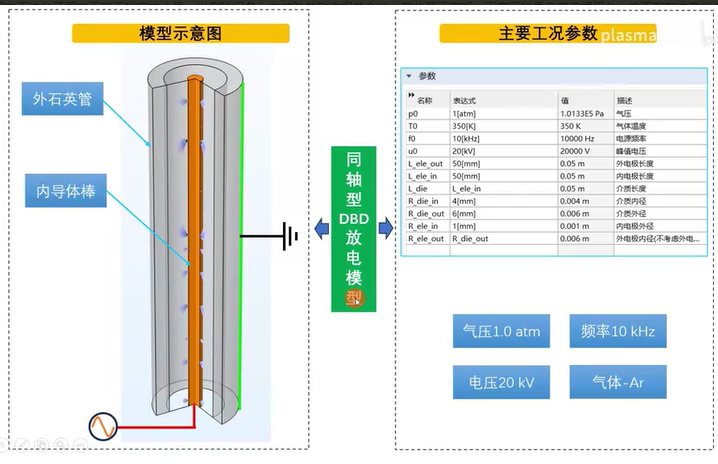
-Energy consumption and efficiency: DBD provides low-temperature activation pathways in many reactions, but typically consumes more energy than thermal catalysis - it is necessary to evaluate energy efficiency (eV/mol or kJ/mol) and optimize discharge parameters (frequency, voltage, duty cycle, dielectric material, and geometry).
-Synergistic optimization of plasma parameters and catalysts: Frequency, waveform (pulse/continuous), discharge gap, gas composition, and flow rate all affect the generation of active species and the state of the catalyst, requiring joint optimization.
-By products and stability control: ozone NOx、 Intermediate toxic products or carbon accumulation may become limiting factors that require post-treatment or catalytic selective control.
-Discharge uniformity and scalability: Industrialization requires addressing large-area discharge uniformity, modular expansion, and long-term stability.
-Safety and materials: High voltage discharge, ozone, and active free radicals require attention to safety design and material durability (insulation, oxidation resistance).
If you have specific target reactions or application scenarios (such as CO2 hydrogenation to methanol, partial oxidation of methane to formaldehyde, deep oxidation of VOCs, or catalyst preparation), please let me know the specific reactants, operating conditions, and indicators of concern (conversion rate, selectivity, energy consumption limit, etc.). I can provide more specific research routes, key points of reaction mechanisms, possible catalyst systems, and experimental design suggestions.