-
E-mail
sales@ybabkj.com
-
Phone
18961615445
-
Address
No. 3 Xichang Road, Xizhang Industrial Park, Huishan District, Wuxi City, Jiangsu Province
Wuxi Yubang Security Technology Co., Ltd
Guidelines for Avoiding Pits in Hazardous Chemical Container Management
Date: 2025-12-04Read: 0
Hazardous chemical management is the "lifeline" of enterprise safety production; As a line of defense for storing hazardous chemicals, the management details of hazardous chemical cabinets directly affect the safety compliance and personnel safety of enterprises.
However, in daily inspections, it is found that more than 90% of enterprises will fall into "pitfalls" in the management of hazardous chemical cabinets, ranging from labeling errors to improper record keeping. These seemingly insignificant details are often the spark of safety accidents.
For this reason, we have compiled a highly practical "avoiding pitfalls" guide for the 7 most prone details in hazardous chemical cabinet management, to help you plug security loopholes and stay away from compliance risks!
Pit point 1: The signs are posted in a variety of ways, and key information cannot be found in emergency situations
❌ Common mistakes
Many companies post unclear or incomplete labels on hazardous chemical cabinets - some only label "hazardous chemicals" without specifying the specific category; Some have affixed expired security labels; Some also mix the labels of different hazardous chemicals, which makes it difficult for employees to quickly identify risks in emergency situations.
✔ The correct approach
According to the "Regulations on the Compilation of Chemical Safety Labels" (GB 15258), hazardous chemical cabinets must be labeled with "one book, one signature": Safety Technical Data Sheet (SDS) and safety labels. The safety label should include chemical identification, warning words, hazard statements, preventive measures, manufacturer information, etc., and should be clear, eye-catching, and not easily detached. At the same time, warning signs such as "No Smoking" and "No Open Flames" should be posted outside the cabinet door, and specific labels of hazardous chemicals stored should be posted on each floor inside the cabinet.
Pit 2: The signs are posted in a variety of ways, and key information cannot be found in emergency situations
❌ Common mistakes
In order to save space, many companies store acidic and alkaline hazardous chemicals, oxidants and reducing agents, flammable liquids and wet flammable materials in the same hazardous chemical cabinet, ignoring the "taboo compatibility" requirements. For example, if sulfuric acid and sodium hydroxide are mixed together, once leaked, a neutralization reaction will occur, generating a large amount of heat and causing damage to the cabinet.
✔ The correct approach
Strictly store according to the principle of "classification, zoning, and storage", and divide the storage area based on the physical and chemical properties of hazardous chemicals (such as flammability, corrosiveness, toxicity, etc.). For example, flammable liquid cabinets are specifically designed to store flammable materials such as ethanol and acetone; The corrosive chemical cabinet stores corrosive substances such as sulfuric acid and hydrochloric acid; The toxic goods cabinet stores toxic substances such as arsenic compounds. The safety distance between cabinets for hazardous chemicals of different taboo categories should not be less than 1 meter.
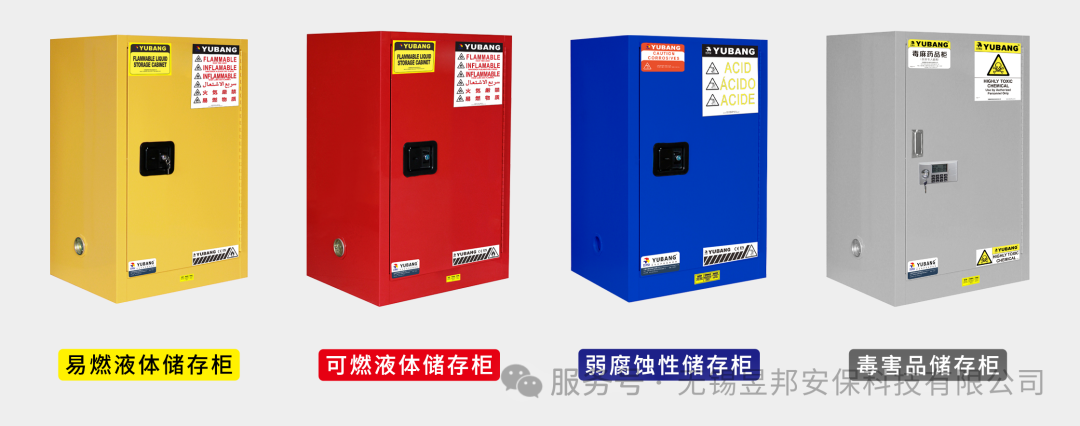
Four colors are used to distinguish the storage of different types of chemicals
Yellow cabinets represent flammable chemical storage cabinets, red cabinets represent flammable chemical storage cabinets, blue cabinets represent weakly corrosive chemical storage cabinets, and white cabinets represent toxic substance storage cabinets
Pit point 3: Cabinet selection is only based on price, ignoring material and explosion-proof requirements
❌ Common mistakes
Some companies, when purchasing hazardous chemical cabinets, are tempted by cheap prices and choose ordinary iron or wooden cabinets, unaware that these cabinets do not have explosion-proof, anti-corrosion, anti-static and other functions. For example, if a cabinet storing flammable liquids does not have an anti-static grounding device, the static electricity generated by the flow of the liquid may cause sparks and lead to explosions.
✔ The correct approach
Select the cabinet body with the corresponding material according to the type of hazardous chemicals stored: the flammable liquid cabinet should be made of cold-rolled steel plate material, which has explosion-proof, anti-static, and leak proof functions, and there should be a leak proof tray at the bottom of the cabinet; The corrosive chemical cabinet should be made of polypropylene (PP) material, which is resistant to acid and alkali corrosion; Hazardous chemical cabinets in high-temperature environments need to have high temperature resistance. At the same time, the cabinet must comply with the "Basic Requirements for Safety Technology of Hazardous Chemical Trading Enterprises" (GB 18265) and come with a nationally recognized testing report.
Pit point 4: "Excessive storage" has become the norm, exceeding the load-bearing limit of the cabinet
❌ Common mistakes
Anyway, the cabinet can hold it, it's okay to put a little more "- this is a misconception among many enterprise administrators. Some hazardous chemical cabinets are piled up with items that not only exceed the rated load-bearing capacity of the cabinet, but also block the ventilation openings and even cause the cabinet doors to fail to close properly.
✔ The correct approach
The storage capacity of hazardous chemical cabinets must strictly follow the principle of "storage": the storage capacity of hazardous chemical cabinets temporarily stored in the workshop should not exceed the usage capacity of the shift; The storage capacity of hazardous chemical cabinets in the warehouse should not exceed 80% of the cabinet volume, and the distance between each layer of goods and the top of the cabinet should not be less than 10 centimeters, leaving ventilation and emergency operation space. At the same time, it is necessary to regularly inspect the cabinet structure to avoid deformation and damage caused by excessive storage.
Pit 5: The ventilation system is virtually non-existent, with a high risk of toxic gas accumulation
❌ Common mistakes
Some companies, although equipped with ventilation devices for hazardous chemical cabinets, either do not open them for a long time, or the ventilation ducts are blocked or damaged, resulting in the accumulation of toxic and harmful gases inside the cabinets. Especially for cabinets storing volatile hazardous chemicals such as formaldehyde and benzene, inadequate ventilation can pose a serious threat to employee health.
✔ The correct approach
The hazardous chemical cabinet must be equipped with an effective ventilation system, which can be natural ventilation or mechanical ventilation. The mechanical ventilation system should be turned on at least twice a day, with each ventilation session lasting no less than 30 minutes, and ventilation records should be kept. Ventilation ducts need to be regularly inspected and cleaned to ensure unobstructed flow; For hazardous chemical cabinets containing toxic gases, ventilation outlets should be kept away from personnel work areas and air intakes to avoid gas backflow.
Pipeline free clean gas safety cabinet
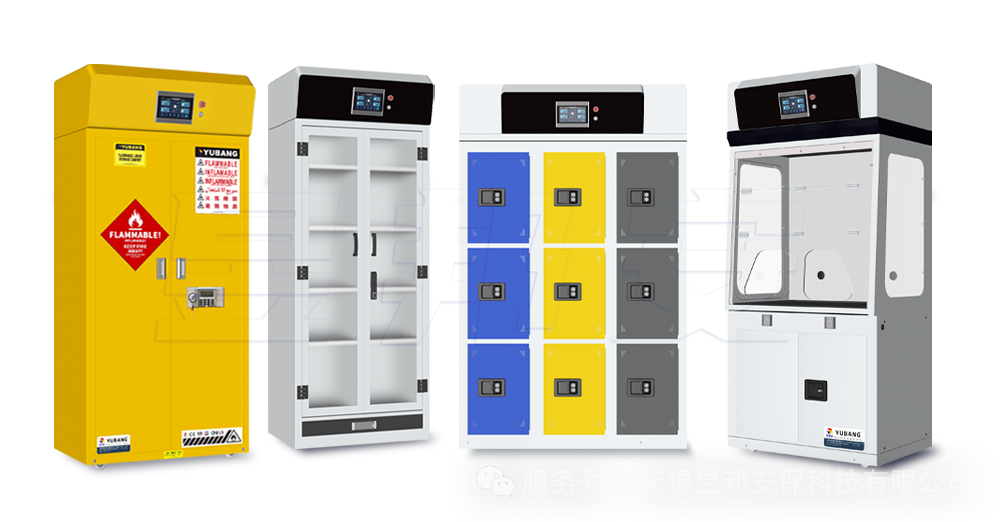
Working principle of pipeline free clean gas cabinet
Harmful gases and particles generated based on efficient air filtration and purification technology are inhaled by the negative pressure system inside the cabinet, processed by multiple layers of filters and purification devices, effectively removed or reduced to a safe level, and discharged into the laboratory environment
Pit point 6: Key management is "arbitrary", anyone can open the cabinet to retrieve items
❌ Common mistakes
The keys to the hazardous chemical cabinet are either randomly placed in drawers or kept by multiple people without registration, resulting in a chaotic situation where "anyone can open and no one cares". Once hazardous chemicals are lost or mistakenly taken, it is difficult to trace responsibility.
✔ The correct approach
Establish a strict key management system for hazardous chemical cabinets: keys should be kept by dedicated personnel who possess hazardous chemical management qualifications; When receiving keys, the recipient, time of receipt, purpose of receipt, and return time must be registered; It is strictly prohibited to copy keys or lend them to others without authorization. For cabinets storing highly toxic and hazardous chemicals, double person double lock management should be adopted, and the cabinet can only be opened when two people are present at the same time.
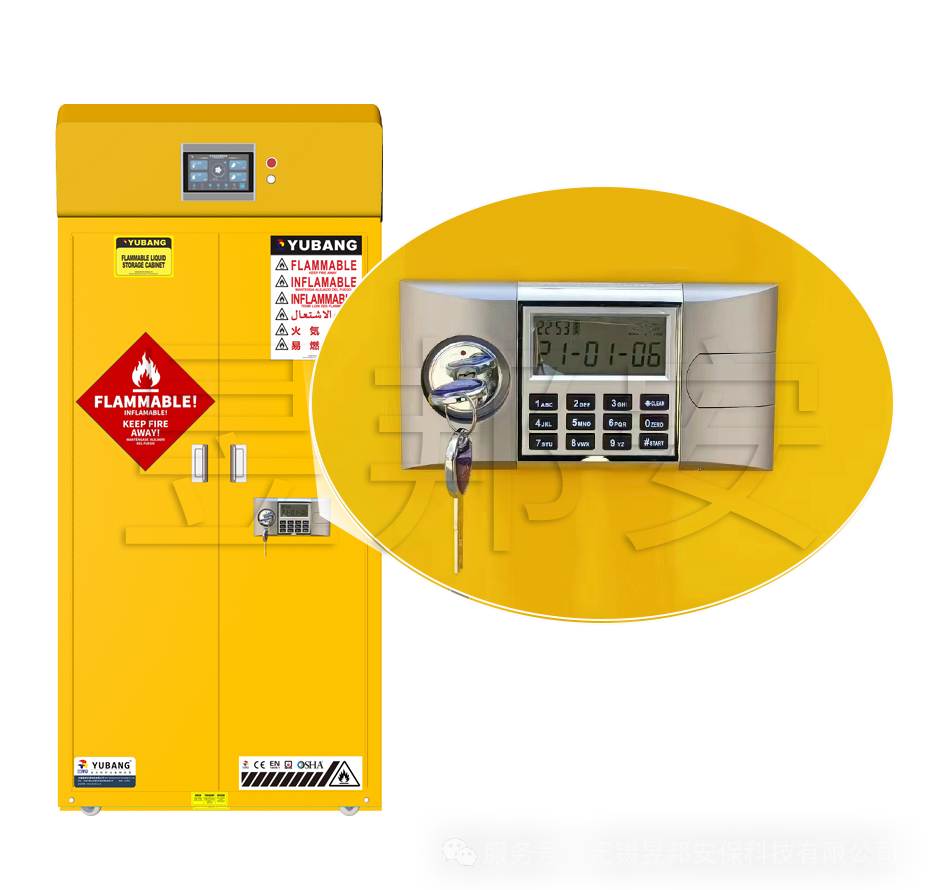
Mechanical lock+password lock+three-point linkage door, double lock physical structure with tongue lock, improves safety management performance and security, and strengthens the locking security of the door. The mechanical lock key and electronic password lock password should be kept separately by two people, and both people should be present at the same time when opening
Pit point 7: The ledger storage is "perfunctory" and there is no evidence to trace back
❌ Common mistakes
The hazardous chemical ledger either has incomplete records, with only inbound records and no outbound records; Either the records are arbitrarily altered, and key information (such as supplier, batch, expiration date, etc.) is missing; Some companies also use paper ledgers, which are prone to loss and damage, resulting in regulatory authorities being unable to provide complete traceability evidence during inspections.
✔ The correct approach
Establish a "full lifecycle" hazardous chemical ledger, including the name, specifications, quantity, date of receipt, supplier information, date of release, personnel responsible for receiving, destination of use, expiration date, and disposal status of hazardous chemicals. The ledger should be cleared and settled on a daily basis. Paper ledgers should be properly kept for at least 3 years, while electronic ledgers should be backed up and archived to ensure traceability. At the same time, the ledger records must have clear handwriting and cannot be altered. Any modifications must be signed for confirmation.
RFID intelligent reagent cabinet
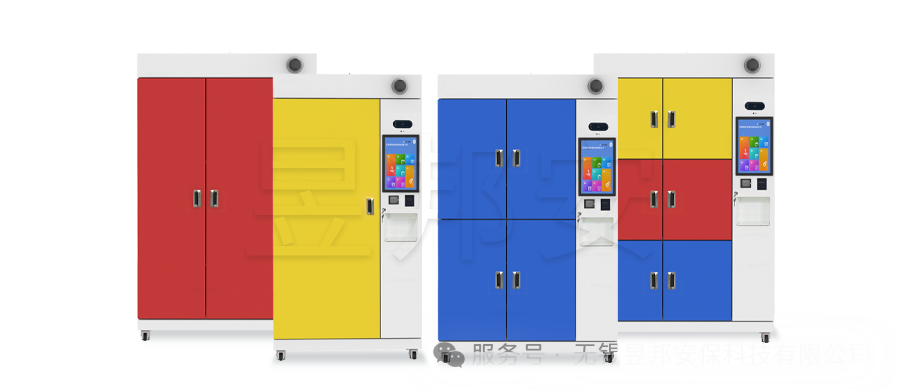
RFID central control management platform

RFID central control system management is an efficient and intelligent management system based on RFID (Radio Frequency Identification) technology. The platform integrates hardware devices such as RFID tags and readers, as well as professional software management systems, to achieve comprehensive monitoring and management of hazardous chemicals
Last Article: Precautions for installation of explosion-proof safety cabinet
Next Article: Cleaning method for purifying fume hood