-
E-mail
willnano@163.com
-
Phone
18550201458
-
Address
3rd Floor, North Building A1, Biological Nanotechnology Park, No. 218 Xinghu Street, Suzhou Industrial Park
Suzhou Micro Flow Nano Biotechnology Co., Ltd
Common wear parts and replacement cycle of jet homogenizer
Date: 2025-12-12Read: 0
Regarding the jet homogenizerRelying on high-speed jet fluid to generate shear and collision to achieve homogenization, its core components are prone to wear due to long-term exposure to high pressure and high flow rate conditions. Understanding key wear parts and their replacement cycles is crucial for ensuring the stable operation of equipment.
The primary worn component is the nozzle assembly (including the perforation plate or nozzle sleeve). It is usually made of hard alloy or ceramic, but when dealing with slurries containing solid particles (such as battery slurries and traditional Chinese medicine extracts), small particles will continue to wash away the pore walls, causing the pore size to expand and the flow rate to be uneven, ultimately affecting the homogenization effect. It is recommended to check the changes in pore size after processing materials for 500-1000 hours. If the particle size distribution widens or the pressure drops abnormally, it should be replaced immediately.
Next is the sealing components (such as plunger seals and O-rings). Frequent starting and stopping of high-pressure pumps or impurities in the medium can accelerate the aging of rubber or PTFE seals, leading to leaks. It is recommended to replace it every 3-6 months for routine maintenance. If the medium temperature is high or corrosive, the cycle should be shortened to 1-2 months.
The third is the pump head and one-way valve. The reciprocating motion of the plunger causes the valve ball to repeatedly collide with the valve seat, resulting in dents or seal failure after long-term use, manifested as flow fluctuations or unstable pressure. After 2000 hours of operation, the valve group of general industrial equipment needs to be inspected, and laboratory small-scale machines can be extended to 3000 hours.
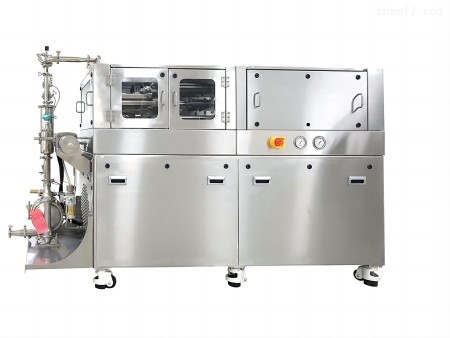
In addition,Regarding the jet homogenizerThe pressure sensor interface and pipeline joints are not directly worn parts, but they are prone to loosening due to vibration and need to be tightened regularly. To extend the lifespan of the components, it is recommended to strictly filter the feed (≤ 5 μ m) before use and avoid dry operation. Establish equipment operation logs to record changes in parameters such as pressure, flow rate, and temperature, which can predict wear trends in advance and achieve preventive maintenance.