-
E-mail
info@chinazerentools.com
-
Phone
18123966210
-
Address
103, No. 3, Lane 4, Lou Nan, Lou Gang Avenue, Songgang Street, Bao'an District, Shenzhen
Shenzhen Zeren Technology Co., Ltd
Dumont Microscopic Tweezers Selection Guide
Date: 2025-12-09Read: 52
SwitzerlandDumont microscope tweezersWith ultra-high precision technology, it is widely suitable for fine operation scenarios such as medical biology, microelectronics, watches, and jewelry. The selection should focus on the three core dimensions of application scenarios, core parameters, and material characteristics, and be accurately matched based on practical needs. The following are specific guidelines.
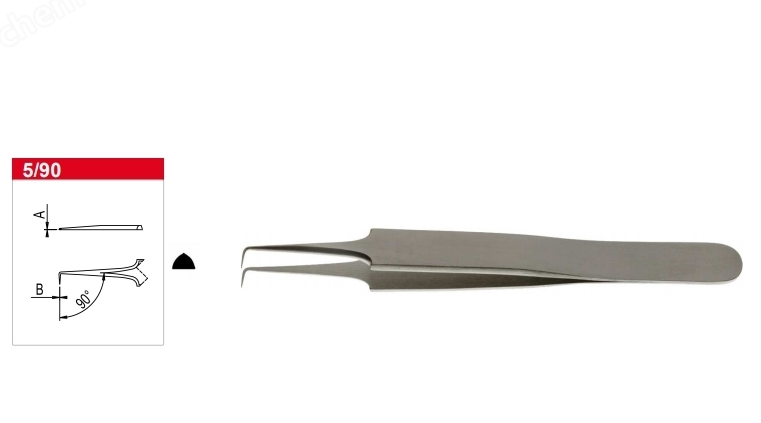
1. Lock product series according to application scenarios. This pair of tweezers is distinguished by its model prefix for core application areas, and the selection can prioritize the series. In the field of medical biology, choose models starting with 02, such as 0208-5-PO, which can be sterilized at high temperatures and is suitable for operations such as cell clamping under a microscope and minimally invasive surgery; Adapt to electronic industry scenarios with models starting with 03, capable of handling precise assembly of chips and electronic components; For clock and jewelry processing, choose the 01 series, which is suitable for clamping small parts. In addition, the 5A micro curved model is suitable for operating in narrow spaces, while the 0508-5-PO model with serrations is suitable for scenarios that require stable clamping.
2. Select sharp ends and dimensions based on accuracy requirements. Microscopic operation requires high precision for sharp ends and needs to be matched with the size of the operating object. For biological experiments such as cell extraction, models with a sharp end thickness of 0.01mm can be selected, such as 0203-5-PO; for electronic component assembly, models with a sharp end thickness of 0.05-0.1mm can be selected; If clamping larger parts, you can choose the serrated version with a size of 0.06 × 0.10mm. In terms of length, 110-115mm is suitable for handheld operation under a microscope, while 120mm is suitable for scenes that require slightly distant operation to avoid hand obstruction of the field of view.
3. Select the corresponding material to adapt to the working conditions. Different materials determine the temperature resistance, corrosion resistance, and other properties of tweezers. Dumostar alloy material is preferred for high-temperature sterilization scenarios, with a high temperature resistance of up to 500 ℃ and acid alkali resistance, such as 0209-5-PO; Inox 08 medical stainless steel is commonly used in medical scenarios, which can be sterilized at 180 ℃ and resistant to salt corrosion; If demagnetization is required for biological experiments, 0207-5TI-PO made of titanium alloy material can be selected; For ordinary precision operations, choose Dumoxel alloy material, which balances cost-effectiveness and accuracy.
4. Pay attention to details and adapt to practical needs. In terms of operating angle, the straight head model is suitable for conventional flat operations, the elbow model is suitable for side clamping or deep pit operations, and the 5A model with a 5 ° slight bend is suitable for complex angle operations. In terms of surface craftsmanship, the polished version has a smooth operation and is suitable for scenarios that avoid scratching the sample; Matte anti slip design, suitable for long-term handheld operation. In addition, if frequent disinfection or exposure to acidic and alkaline environments is required, ordinary stainless steel should be avoided and alloy or titanium alloy materials should be preferred to prevent corrosion from affecting accuracy.
By following the above points, it is possible to accurately match the core requirements of different microscopic operations and fully utilize themDumont microscope tweezersThe advantage of precise operation is to avoid sample damage or operational errors caused by improper selection.