-
E-mail
suas@suastest.com
-
Phone
13302210258
-
Address
1st Floor, Factory Building, No. 47 Yangtaishan Road, Guantian Community, Shiyan Street, Bao'an District, Shenzhen
Shenzhen Shengsi Yiwei Technology Co., Ltd. (formerly Shenzhen Sansi Testing Machine Co., Ltd.)
How to determine the maximum range required for an electronic universal tensile testing machine?
Date: 2025-11-03Read: 1
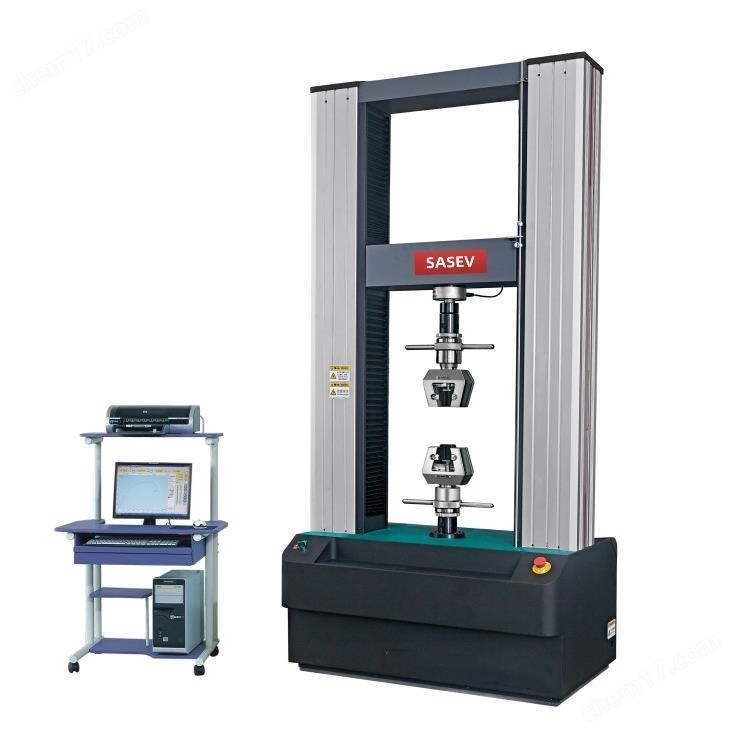
The maximum testing force of an electronic universal testing machine is the core parameter for equipment selection. Choosing too small, unable to complete testing or even damaging equipment; Choosing too large will significantly reduce measurement accuracy and resolution. Scientific determination of range requires systematic consideration, and the following are key steps and recommendations.
1、 Core principle: strike a balance between accuracy and safety
The Golden Rule: Based on the expected maximum destructive force of the sample to be tested, select equipment that falls within the range of 10% -90% of the sensor range.
Why should it be greater than 10%? Avoid measuring points that are too close to the lower limit of the sensor. The relative error in the low load area is large, the signal-to-noise ratio is low, and the data is unreliable.
Why should it be less than 90%? To ensure safety margin, prevent sample breakage or accidental overload from impacting the sensor, protect the equipment and ensure the safety of operators.
2、 Key step: Four step method to accurately determine the range
Step 1: Clarify the testing standards and sample specifications
Different international/national/industry standards have clear regulations on sample size and preparation. It is necessary to first determine the standards to be followed and prepare representative samples based on them.
Step 2: Theoretical estimation and empirical reference
Theoretical estimation: Preliminary calculations are made based on the known typical strength of the material (such as tensile strength) and the cross-sectional area of the sample.
Estimated maximum force=Typical tensile strength of the material multiplied by the cross-sectional area of the sample
Step 3: Consider the type of test and peak force
The type of experiment directly affects the maximum force value that may occur:
1. Tensile failure test: The maximum force is the peak force before the sample fractures.
2. Compression test: The maximum force may be the crushing force or the force at which a certain deformation specified by the standard is reached.
3. Bending test: The maximum force is the force at which the sample fractures or reaches the specified deflection.
4. Elastic modulus test: It only needs to be conducted during the elastic stage of the material, and the maximum force required is much lower than the destructive force.
Step 4: Plan for future demand and configuration flexibility
Will the range of materials be expanded? If it is possible to test stronger or weaker materials in the future, models with wider ranges or switchable sensors should be selected.
Do we need multiple tests? If the same device needs to undergo multiple tests such as stretching, compression, bending, etc., the range must meet the maximum requirements in all tests.
Prioritize equipment with multiple sensors or high range sensors: For research or testing centers, choosing a testing machine that can automatically switch multiple sensors (such as 1kN, 10kN, 50kN) is an ideal solution to achieve high accuracy and wide applicability.
3、 Advanced considerations: Special applications and configurations
1. Micro force measurement: For weak force samples such as films, fibers, and biological tissues (<100N), specialized micro force sensors (such as 10N, 50N) are required, which cannot be accurately measured by ordinary large tonnage testing machines.
2. Dynamic testing and fatigue testing: If dynamic or fatigue testing is required, the selected range also needs to consider the dynamic performance indicators of the equipment, and usually requires a larger safety margin than static testing.
4、 Practical Suggestions and Summary
1. Conservative principle: When there is no definite certainty, it is better to be big than small. You can choose a device with a slightly larger range and use high-precision sensors when testing small force values. Modern advanced testing machines typically support automatic switching of multiple sensors.
2. Consult the manufacturer: Inform the technical engineers of the equipment supplier of your material type, sample size, and testing standards, and they can provide professional range recommendations.
3. Verification testing: After the equipment is in place, use a standard spline with known performance to test and verify the rationality of the equipment range selection.
In summary, determining the range of an electronic universal testing machine is a comprehensive decision-making process based on scientific calculations, standard compliance, and future planning. Keep in mind the golden rule of 10% -90%, and fully consider the scalability of the application, so as to invest in an efficient equipment that can not only meet the current demand, but also maintain the progressiveness technology in the next few years.