-
E-mail
suas@suastest.com
-
Phone
13302210258
-
Address
1st Floor, Factory Building, No. 47 Yangtaishan Road, Guantian Community, Shiyan Street, Bao'an District, Shenzhen
Shenzhen Shengsi Yiwei Technology Co., Ltd. (formerly Shenzhen Sansi Testing Machine Co., Ltd.)
What is the relationship between the stretching speed of the electronic universal tensile testing machine and?
Date: 2025-10-27Read: 2
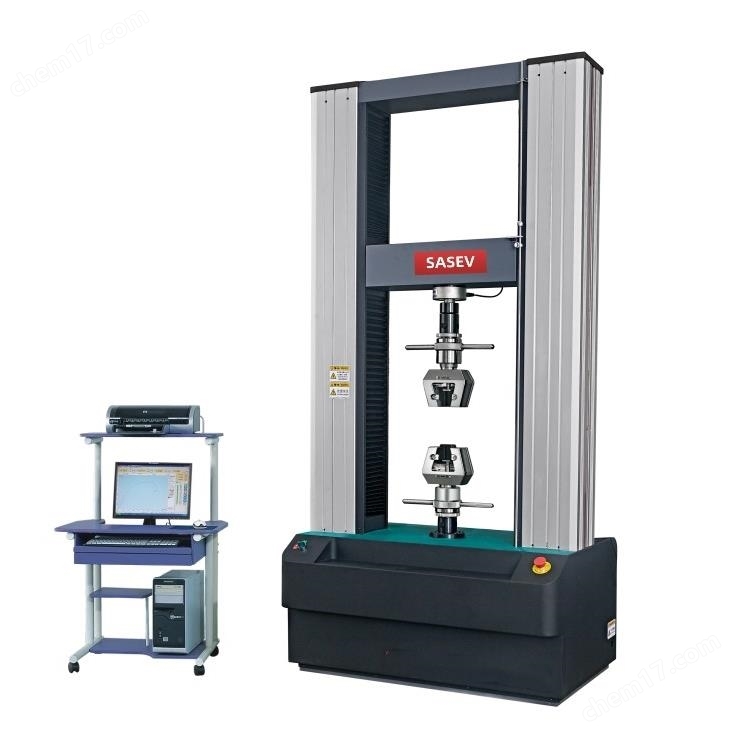
In the field of material mechanics performance testing,Electronic universal tensile testing machineLike a rigorous referee, their stretching speed is one of the key factors affecting the accuracy and reliability of the judgment results. Exploring in depth what the stretching speed of the electronic universal tensile testing machine is related to can help us better utilize this precision instrument and obtain accurate and valuable test data.
The control system of the equipment plays a central role. Advanced intelligent control modules can accurately adjust motor operating parameters based on preset program instructions, thereby achieving precise setting and stable maintenance of stretching speed. Whether it is slow and uniform testing of basic materials or special working conditions such as high-speed impact simulation, a powerful control system can ensure the accuracy and consistency of speed, ensuring that every stretching action strictly follows the set specifications.
The load situation cannot be ignored either. When the specimen is subjected to a large tensile force, in order to ensure the safety of the testing process and the validity of the data, the testing machine will automatically adapt to the corresponding slower tensile speed. This is because excessive speed may cause instantaneous fracture or abnormal deformation of the sample, which cannot truly reflect the performance characteristics of the material under actual stress conditions. On the contrary, for lightweight and low strength materials, the stretching speed can be appropriately increased to improve efficiency, but it should also be within a reasonable range to avoid introducing errors due to excessive speed.
In addition, different testing standards have clear requirements for tensile speed. The standardized specifications developed by various industries both internationally and domestically, based on extensive scientific research and practical experience, specify the speed range that should be used for tensile testing of specific materials or products. For example, metal materials, rubber products, plastic products, etc. all have their corresponding standard speed ranges. Following these standards can ensure comparability and universality of test results, facilitating data exchange and sharing between different laboratories.
Environmental factors can also subtly affect the performance of stretching speed. Changes in temperature, humidity, and other conditions may alter the physical properties of materials, indirectly affecting the selection of appropriate stretching speeds. In high temperature environments, certain materials may become soft, and it may be necessary to reduce the stretching speed to prevent excessive deformation; In low-temperature environments, material brittleness increases, and careful adjustment of speed is also necessary to ensure smooth testing.
The stretching speed of an electronic universal tensile testing machine is a result of comprehensive consideration of multiple factors. From advanced control systems of equipment to load characteristics of samples, from strict testing standards to complex environmental conditions, every link is closely connected. We rely on technological processes and rich industry experience to carefully build each testing machine, enabling it to accurately control the stretching speed under various working conditions, providing strong guarantees for your material performance research and product quality testing, and helping you steadily move forward on the path of scientific research innovation and production manufacturing.