-
E-mail
topthreegeoscience@163.com
-
Phone
18302175139
-
Address
Minhang Industrial Park, Shanghai
Sanjia Diyan (Shanghai) Instrument Equipment Co., Ltd
How can handheld infrared spectrometers assist customs?
Date: 2025-08-18Read: 4
1Hazardous Substance Screening (HHXRF):
The regulations implemented by government agencies such as the China RoHS Directive (ACPEIP), the US Consumer Product Safety Improvement Act (CPSIA) (HR404), California Proposition 65, and the EU RoHS Directive (2011/65/EU) aim to protect the public from the hazards of toxic pollutants present in consumer and electronic products. In the application of monitoring whether consumer products meet regulatory requirements, our portable analyzer is an important tool for establishing reasonable testing items as it can perform rapid and non-destructive screening of consumer products on site.
Portable analyzers can detect toys and consumer products within seconds by using custom pass/fail operator commands. As shown in the figure on the right, the imported tea set tested contained 1.47% lead element, exceeding the RoHS limit (1000 ppm), and the test result showed "Fail". If consumers frequently come into contact with tea sets that exceed heavy metal standards, the risk of danger is significant.
Customs inspectors can use portable analyzers to screen consumer products and detect lead (Pb), cadmium (Cd), arsenic (As), mercury (Hg), chromium (Cr), and other toxic metals to determine whether the product meets RoHS requirements. These consumer products include but are not limited to toys, jewelry, small accessories, clothing, sports goods, decorative tableware, candy packaging paper, curtain fabrics, cars, car seats, leather, fibers, and so on.
2、 Verification of import product tariff rates (HHXRF&p-XRD):
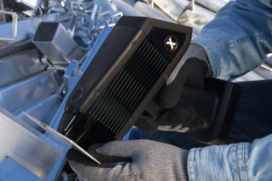
Due to the significant differences in tariff rates of products, some illegal elements often make false reports, false declarations, and false declarations of product types in order to evade taxes. When customs officers conduct spot checks on imported products, they can use Seppus handheld alloy analyzers and handheld near-infrared spectrometers to conduct on-site spot checks and analysis, which can quickly determine whether the products match the customs declaration information on site.
The handheld alloy spectrometer can provide information on the chemical composition of materials and can quickly and accurately identify metal alloy grades. At present, the handheld alloy spectrometer is equipped with more than 750 metal alloy grades, including stainless steel, low-alloy steel, copper alloy, etc., which can perform element quantitative analysis and grade matching on different alloys and materials such as welding rods and wires.
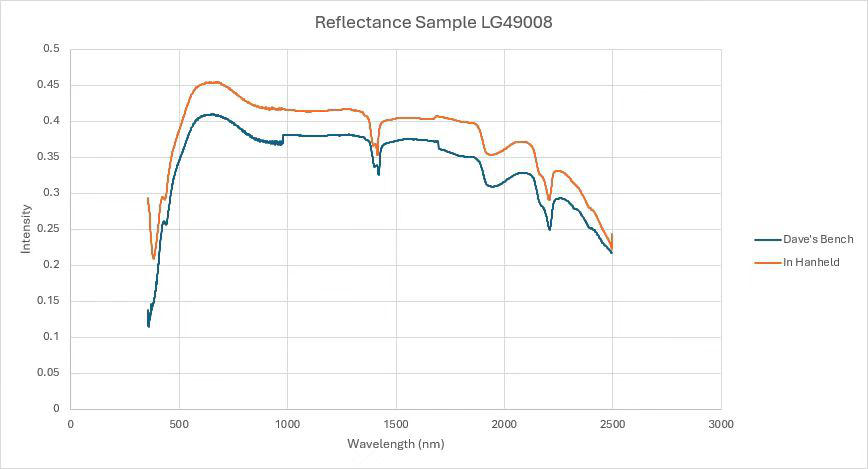
Handheld near-infrared spectrometer can quickly analyze the compound composition information of substances on site, including a wide variety of substance types such as drugs, food, chemical materials, etc. Indonesian customs has purchased multiple handheld near-infrared spectrometers for the detection of cat food, to distinguish between dicalcium dihydrogen phosphate and calcium dihydrogen phosphate, due to the significant difference in tariff rates between the two.

Detection of unknown hazardous materials:
Handheld near-infrared spectrometer can be used to analyze dangerous goods/unknown substances, such as explosives, anesthetics, and counterfeit drugs, etc. It can analyze dangerous goods materials in a timely and rapid manner on site. Customs and regulatory departments need a fast method to detect illegal substances entering the country, and this device is an analyzer that can meet this demand. Some fingerprint information can quickly and efficiently identify suspicious materials.


